
The harnesses were still cold when I hung them, stiff in a way they don’t get above minus ten, and the dogs had gone quiet in the kennel the way they do when they’re tired enough to settle without fussing, and I was standing by the truck letting my hands come back before I drove home when the notification came through on my phone. Someone had shared an article. “Thought of you!” the message said.
“A Rescue Greyhound Nobody Wanted Just Finished Hiking the Continental Divide Trail. Her Story Will Move You.”
I read it four times. Not because I didn’t understand it. Because I was counting what was wrong with it.
Nobody wanted her. Her story will move you. The dog as object. The dog as instrument of feeling for someone else. That’s where I always get snagged, the framing that turns an animal’s life into a delivery system for human emotion, and I’ve been snagged on it enough times to know it’s not going anywhere. So I clicked through and read the actual story, because the story is usually different from the headline.
This one was.
The part that stopped me was a photograph from the San Juans.
I know what greyhounds are built for. Speed over short ground. A quarter mile or less, everything in the body organized around explosive fast-twitch effort and then rest. They carry almost no fat. Their skin is thin enough that you can see the muscle structure underneath, the ribs, the hip bones. They don’t have the double coat my Siberians have, the undercoat that traps warmth, the outer coat that sheds ice and moisture. They get cold fast and they get hurt by cold in ways that a working dog doesn’t.
The San Juans in that photograph had real snow on them. Not light snow. The kind that sits in the passes well into July, compacted and blue-shadowed and serious. And this dog was standing in it, looking back at the camera, and her coat was doing nothing to protect her from any of it, and she had been doing this for months.
That’s where my clean opinion fell apart.

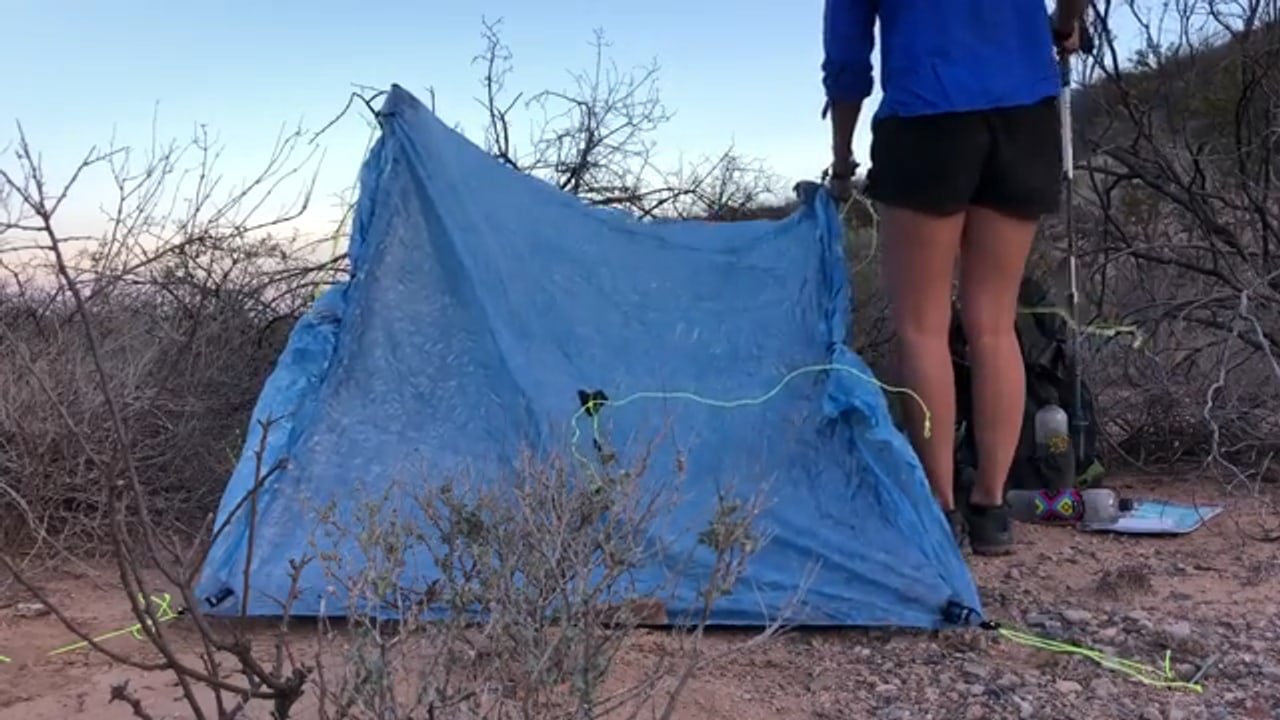
Here’s what I also know about greyhounds. Their cardiovascular system is extraordinary. Their heart, proportionally, is larger than almost any other breed. They are built to move, and when you take an animal built to move and give it months of daily movement, something happens that isn’t exactly what the breed was designed for but isn’t wrong either. Not sled dog work, not purpose-bred endurance. Something else. Adaptation that looks, if you’re watching the dog and not the story around the dog, like a kind of rightness.
She wasn’t racing. She was doing something the breed has no history for. And she finished.
I don’t know what her paws looked like at mile 3,000. I don’t know how many nights she shivered through, how much body weight she dropped on the high sections, whether the cold hit her system in ways that left damage no photograph can show. Those things matter and no article told me about them.
What I kept coming back to was the photograph. Not the snow. Not the human in the frame. The dog looking back at the camera with the flat, present expression dogs have when they are not in distress and not in excitement and not performing anything for anyone. Just there. In the body she has, on the ground she’s on.
That expression is not a story. It’s not inspiration. It’s just a dog being a dog at the end of a hard day on hard terrain, and I’ve seen it ten thousand times in my own yard and it means one thing: this animal is functional and accounted for and not suffering right now, and that’s all it means.
The headline said nobody wanted her.
The dog in that photograph didn’t look like something nobody wanted. She looked like something that had been covering ground for months and was not done covering it. She looked like an animal who had no idea she was a rescue or a story or a vehicle for anyone’s feelings.
That part was real. Whatever the headline did with it, that part the dog earned herself.

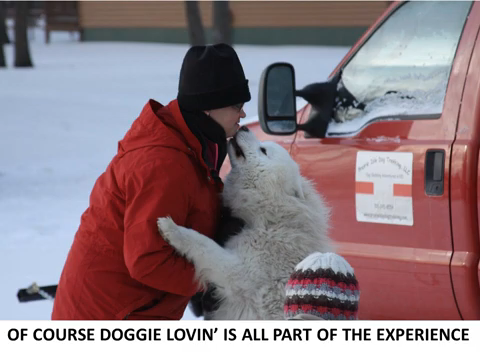
Helen L. Corlew runs a team of Samoyeds, Alaskan malamutes and Alaskan huskies. I am a Tellington TTouch practitioner and use this mode of work with training and living with my dogs.
Helen Corlew founded Prairie Isle Dog Trekking in Petersburg, North Dakota in 2010, and has spent the fifteen years since doing something most people only read about: teaching real dog sledding on real prairie terrain, at the edge of a landscape that doesn’t apologize for being difficult.
She is not a weekend enthusiast. She harnesses working dogs in January cold, trains handlers who have never touched a sled, and has built one of the only hands-on mushing education programs on the Northern Great Plains — from a single address on Highway 2, with no marketing budget and no shortcuts.
Her writing on Prairie Isle Dog Trekking reflects the same philosophy. Whether she is covering trail safety across the Rockies, breed behavior in extreme conditions, or what it actually takes to trek with a dog in the Alps, Helen writes from the position of someone who has done the work before writing the sentence.
She lives and runs dogs in Nelson County, North Dakota.
Kindly follow me on Social Media!