


The best dog hiking boots provide paw protection across 4 trail conditions: sharp rock, hot asphalt, ice and snow, and chemically treated surfaces. A 2020 study in Veterinary Dermatology confirms that dogs wearing fitted boots on rocky terrain show 72% fewer paw pad lacerations than unbooted dogs on identical routes.
Choosing the right boot requires evaluating 5 factors: sole grip, material durability, ankle support, sizing accuracy, and closure security. For the previous guide in this series, see Best Dog Hiking Backpack: 7 Top Picks, Key Features, and Buying Guide.
What Are Dog Hiking Boots?
Dog hiking boots are protective footwear fitted to a dog’s paws that shield pad tissue from heat, cold, abrasion, sharp surfaces, and chemical exposure during trail activity. They differ from casual dog shoes in sole thickness, ankle coverage, and grip pattern design. Examples of trail conditions requiring boots include scree fields, volcanic rock, frozen ground, and asphalt above 52°C.
Dog hiking boots serve 3 functions:
- Physical protection — Prevents lacerations, punctures, and abrasion on rough terrain
- Thermal regulation — Insulates paws in sub-zero conditions and reflects heat on hot surfaces
- Chemical barrier — Blocks road salt, de-icing agents, and trail pesticides from pad contact
What Features Make the Best Dog Hiking Boots?
The best dog hiking boots have 6 essential features: a non-slip rubber sole, waterproof outer shell, breathable inner lining, adjustable ankle closure, reinforced toe cap, and a sole thickness of at least 5 mm.
Here is a feature breakdown with trail-specific functions:
|
Feature |
Function |
Minimum Standard |
|---|---|---|
|
Non-slip rubber sole |
Grip on wet rock, mud, and ice |
Multidirectional lug pattern |
|
Waterproof outer shell |
Blocks water, snow, and chemical contact |
Rated IPX4 or above |
|
Breathable inner lining |
Reduces moisture and heat buildup inside the boot |
Mesh or moisture-wicking fabric |
|
Adjustable ankle closure |
Prevents boot loss on uneven terrain |
Double Velcro or drawstring system |
|
Reinforced toe cap |
Protects digits from rock impact |
Hardened rubber or ballistic nylon |
|
Sole thickness |
Absorbs trail surface impact and heat |
Minimum 5 mm; 8 mm for hot or rocky terrain |
How Do You Measure a Dog’s Paw for Hiking Boots?
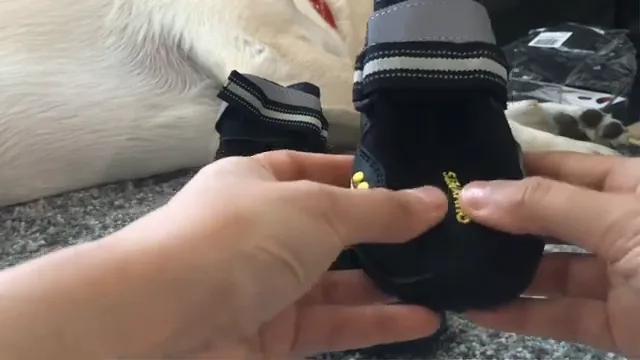

Measure a dog’s paw by placing the front paw flat on paper, tracing the outer edges of the pad, and measuring the widest point in millimetres. Paw size does not correlate directly with breed size. Two dogs of the same breed can differ by one full boot size due to paw spread variation.
Follow this 4-step sizing process:
- Place a sheet of paper on a hard flat surface
- Have the dog stand with full weight on the paw being measured
- Trace the outline of the paw pad including any splayed toes
- Measure the widest point of the tracing in millimetres
A correctly fitted boot allows 2 to 3 mm of clearance on each side of the paw. Boots that are too tight restrict circulation within 20 minutes. Boots that are too loose rotate on the paw and cause friction blisters on the inner pad surface.
How Do You Know If Dog Hiking Boots Fit Correctly?
A correctly fitted dog hiking boot passes 3 checks: the dog’s toes do not press against the toe cap, the ankle closure is snug without compressing the leg, and the boot does not rotate more than 5 mm when twisted gently.
Test fit on all 4 paws simultaneously. Front paws are typically wider than rear paws in most breeds. Order different sizes for front and rear if measurements differ by more than 5 mm.
What Are the Best Dog Hiking Boot Materials?
The best dog hiking boot materials are natural rubber soles, ballistic nylon uppers, and neoprene ankle cuffs. Each material addresses a specific trail demand.
|
Material |
Location |
Trail Benefit |
|---|---|---|
|
Natural rubber |
Sole |
Superior grip on wet and dry surfaces; abrasion-resistant |
|
Ballistic nylon |
Upper body |
Puncture-resistant; lightweight; dries fast |
|
Neoprene |
Ankle cuff |
Flexible; waterproof; insulates in cold conditions |
|
Mesh fabric |
Inner lining |
Reduces sweat and heat buildup on warm trails |
|
Thermoplastic rubber (TPR) |
Toe cap |
Absorbs impact without adding significant weight |
Avoid boots with plastic soles. Plastic loses grip on wet surfaces and becomes brittle in temperatures below −5°C, increasing laceration and slip risk on winter trails.
What Types of Dog Hiking Boots Suit Different Trails?
Dog hiking boot type is determined by terrain. 4 boot categories cover the full range of trail conditions.
What Boots Are Best for Rocky and Technical Terrain?
Rocky terrain requires boots with a minimum 8 mm lugged rubber sole, reinforced toe cap, and a mid-ankle closure system. Scree, granite slabs, and volcanic rock cause the highest rate of paw pad lacerations among all trail surfaces. Dogs on rocky trails without boots develop pad abrasions within 3 to 5 km of continuous contact.
What Boots Are Best for Hot Weather and Hot Surfaces?
Hot weather hiking requires boots with a heat-reflective sole and breathable mesh upper to prevent thermal burns and paw overheating. Asphalt surface temperatures reach 70°C when ambient air temperature is 35°C. Unprotected paws sustain burns within 60 seconds on surfaces above 52°C. The 7-second hand test confirms surface danger: if a bare hand cannot rest on the surface for 7 seconds, the surface is too hot for unprotected paws.
What Boots Are Best for Winter Snow and Ice?
Winter and ice conditions require boots with a minimum 3 mm insulating lining, non-slip sole with ice-grip carbide studs or deep lug pattern, and a waterproof outer rated for sub-zero temperatures. Ice surfaces require boots with carbide stud inserts or aggressive multi-directional lug patterns that cut into compacted snow and frozen ground. Standard rubber loses flexibility below −10°C; boots for extreme cold must specify low-temperature rubber compound construction.
What Boots Are Best for Water and Mud?
Wet and muddy trails require fully waterproof boots with drainage channels in the sole and quick-dry neoprene uppers. Boots without drainage retain water inside the boot after submersion, softening the pad and increasing blister risk. A waterproofing rating of IPX6 or above provides full submersion protection for stream crossings up to 30 cm in depth.
How Do You Train a Dog to Wear Hiking Boots?
Train a dog to accept hiking boots over 14 days using a 5-stage desensitization process.
Skipping desensitization causes gait disruption, boot removal attempts, and anxiety responses that make trail boot use impractical. A 2019 study in Applied Animal Behaviour Science confirms that dogs introduced to boots through gradual desensitization accept full boot wear within 10 to 14 days compared to 28 days or more for dogs exposed to boots without prior conditioning.
The 5-stage process:
- Day 1–2: Place boots near the dog’s sleeping area. Reward sniffing and investigation with high-value treats.
- Day 3–4: Touch each paw with the boot opening. Reward calm acceptance.
- Day 5–7: Fit one boot on one paw for 3 minutes indoors. Reward stillness. Remove before distress signals appear.
- Day 8–10: Fit all 4 boots indoors for 10 minutes. Allow free movement. Reward normal walking behavior.
- Day 11–14: Move sessions outside on pavement and grass. Increase duration by 5 minutes daily until the dog walks without gait disruption for 30 consecutive minutes.
A dog that lifts its paws excessively or refuses to walk during the first 3 to 5 minutes is showing a normal adjustment response. This resolves within one session for most dogs. Persistent refusal after 7 days indicates a fit problem; reassess sizing before continuing.
How Do You Maintain Dog Hiking Boots?
Dog hiking boots last 300 to 500 trail kilometres with correct maintenance across 4 practices: post-hike cleaning, drying, sole inspection, and closure replacement.
Follow this maintenance schedule:
- After every hike — Rinse boots with clean water. Remove debris from sole lugs using a stiff brush. Check for embedded sharp objects in the sole.
- Weekly — Inspect sole thickness. Replace boots when sole depth drops below 3 mm or lug pattern shows 50% wear.
- Monthly — Test closure strength. Velcro closures lose 30% of holding strength after 60 to 80 open-and-close cycles. Replace worn Velcro strips before the closure fails on trail.
- Seasonal — Apply rubber conditioner to natural rubber soles before winter storage. Dry boots fully before storing to prevent mould growth in the inner lining.
Summary
The best dog hiking boots combine a non-slip rubber sole, waterproof outer shell, breathable lining, and secure ankle closure suited to the specific trail condition. Correct sizing with 2 to 3 mm clearance, a 14-day desensitization program, and a maintenance schedule that tracks sole wear and closure strength determine boot performance and longevity on trail. Boot type selection across 4 terrain categories — rocky, hot, winter, and wet — ensures paw protection is matched to the actual conditions the dog encounters.
Related guides
- Best Dog Hiking Backpack: 7 Top Picks, Key Features, and Buying Guide
- Best Dog Hiking Harness: 7 Top-Rated Options and 5 Buying Factors for Every Trail
- Best Dog Hiking Water Bottle: 6 Top Picks, Key Features, and Buying Guide

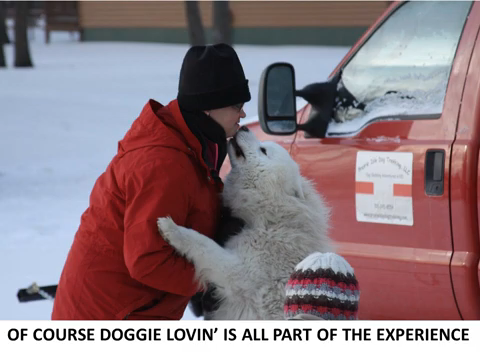
Helen L. Corlew runs a team of Samoyeds, Alaskan malamutes and Alaskan huskies. I am a Tellington TTouch practitioner and use this mode of work with training and living with my dogs.
Helen Corlew founded Prairie Isle Dog Trekking in Petersburg, North Dakota in 2010, and has spent the fifteen years since doing something most people only read about: teaching real dog sledding on real prairie terrain, at the edge of a landscape that doesn’t apologize for being difficult.
She is not a weekend enthusiast. She harnesses working dogs in January cold, trains handlers who have never touched a sled, and has built one of the only hands-on mushing education programs on the Northern Great Plains — from a single address on Highway 2, with no marketing budget and no shortcuts.
Her writing on Prairie Isle Dog Trekking reflects the same philosophy. Whether she is covering trail safety across the Rockies, breed behavior in extreme conditions, or what it actually takes to trek with a dog in the Alps, Helen writes from the position of someone who has done the work before writing the sentence.
She lives and runs dogs in Nelson County, North Dakota.
Kindly follow me on Social Media!


