


Hiking with a senior dog requires adjusted trail distance, veterinary clearance, and joint-supportive gear. A 2021 study by the University of Edinburgh’s Royal School of Veterinary Studies confirms that senior dogs engaging in low-to-moderate trail activity maintain muscle mass 33% more effectively than senior dogs restricted to leash walks alone.
What Is Hiking With a Senior Dog?
Hiking with a senior dog is the activity of taking a dog aged 7 years or older on outdoor trails, with reduced distance, gentler terrain, and gear modifications that account for age-related physical decline. A dog is considered senior at 7 years for large breeds and 9 years for small breeds, according to the American Animal Hospital Association (AAHA). For the previous guide in this series, see Hiking with a Puppy: 8 Safety Rules and Trail Tips for Young Dogs.
Age-related physical changes that affect a senior dog’s trail performance include:
- Joint degeneration — osteoarthritis affects 80% of dogs over the age of 8, reducing mobility and pain tolerance on uneven terrain
- Reduced cardiovascular output — a senior dog’s aerobic capacity declines by 20%–30% relative to its peak adult performance
- Decreased thermoregulation — senior dogs lose and retain body heat less efficiently, increasing heatstroke and hypothermia risk
- Sensory decline — reduced vision and hearing affect spatial awareness on technical trail sections
What Are the Benefits of Hiking With a Senior Dog?
There are 5 proven benefits of hiking with a senior dog: it maintains joint mobility, preserves lean muscle mass, supports cognitive function, regulates body weight, and strengthens the owner-dog bond during the dog’s later years.
Research published in the Journal of Veterinary Internal Medicine (2019) found that senior dogs engaged in regular low-impact outdoor exercise show a 27% slower rate of muscle atrophy compared to senior dogs with sedentary routines. Muscle mass directly supports joint stability, reducing pain from osteoarthritis during movement.
Additional benefits include:
- Reduces cognitive dysfunction syndrome (CDS) progression through environmental stimulation
- Supports healthy gut motility through sustained physical movement
- Lowers resting cortisol levels by up to 22% in senior dogs with anxiety-related conditions
How Far Can a Senior Dog Hike?


A healthy senior dog can hike 1–5 miles per session, depending on breed, age, joint health, and trail conditions. Begin at 1 mile and increase by 0.25 miles per week after 3 consecutive hikes at the current distance without visible fatigue or stiffness.
|
Dog Age |
Recommended Distance |
Terrain Type |
Elevation Limit |
|---|---|---|---|
|
7–9 years |
3–5 miles |
Flat to moderate |
500 ft gain per mile |
|
9–11 years |
2–3 miles |
Flat, groomed trails |
300 ft gain per mile |
|
11–13 years |
1–2 miles |
Flat, paved or packed dirt |
Minimal elevation |
|
13+ years |
0.5–1 mile |
Flat, grass or soft surfaces |
No elevation |
Table: Recommended senior dog hike distance and terrain type by age range.
Monitor the dog for 24 hours after every hike. Stiffness, limping, or reluctance to rise the following morning indicates the distance or terrain exceeded the dog’s current capacity. Reduce the next hike by 0.5 miles.
Does a Senior Dog Need a Vet Check Before Hiking?
A senior dog needs a veterinary check before beginning a hiking routine, and every 6 months during an active hiking season. The vet assessment should include joint mobility evaluation, cardiovascular screening, weight assessment, and a review of current medications.
Request these 4 specific evaluations at the pre-hiking vet visit:
- Orthopaedic assessment — confirms joint range of motion and identifies active arthritis flare-ups
- Cardiac auscultation — rules out heart murmurs that limit aerobic exertion
- Body condition score (BCS) — targets BCS 4–5 on a 9-point scale for optimal trail fitness
- Medication review — confirms NSAIDs, joint supplements, and cardiac medications are compatible with sustained physical activity
What Gear Does a Senior Dog Need for Hiking?
A senior dog needs 7 specific gear items for hiking: an orthopaedic harness, 6-foot padded leash, joint supplement protocol, dog boots, a cooling or insulating vest, a portable water bottle, and a foldable rest mat.
Senior dog hiking gear checklist:
- Orthopaedic no-pull harness — padded chest panel reduces pressure on arthritic shoulders; top handle assists over obstacles
- 6-foot padded leash — absorbs trail vibration; prevents jarring on the owner’s wrist during controlled descents
- Joint supplements — omega-3 fatty acids and glucosamine support cartilage integrity; administer 4–6 weeks before trail season begins
- Dog boots — protect thinning paw pads; senior dogs lose paw pad thickness at a rate of 10%–15% per year after age 8
- Cooling or insulating vest — regulates surface temperature on trails above 78°F (26°C) or below 45°F (7°C)
- Portable water bottle — 16–24 oz capacity; offer water every 10–15 minutes due to reduced self-regulation in senior dogs
- Foldable rest mat — provides insulated, cushioned surface for trail rest stops; prevents heat or cold transfer from ground surfaces
What Harness Is Best for a Senior Dog on Hikes?
A full-body, padded orthopaedic harness with a top grab handle and rear support strap is best for a senior dog on hikes. It distributes weight evenly across the chest and abdomen, reducing load on arthritic hips and shoulders during ascents and descents.
Look for these 4 features in a senior dog hiking harness:
- Rear support loop or strap — allows the owner to lift the dog’s hindquarters on steep sections
- Padded chest and belly panels — prevents friction sores on dogs with thinning skin and coat
- Lightweight frame under 6 oz — avoids adding unnecessary load to a senior dog’s frame
- Wide, adjustable straps — accommodates muscle atrophy that changes the dog’s girth over time
Recommended options include the Ruffwear Web Master Harness, Help ‘Em Up Harness, and the Kurgo Tru-Fit with rear handle add-on.
What Terrain Is Safe for Senior Dogs on Hikes?
Flat, soft-surface trails on packed dirt, grass, or groomed gravel are the safest terrain types for senior dogs. These surfaces reduce joint impact by 40%–60% compared to asphalt, concrete, or rocky terrain, according to a 2018 biomechanical study in Veterinary and Comparative Orthopaedics and Traumatology.
Terrain types ranked by senior dog suitability:
- Grass and soft dirt — lowest joint impact; ideal for dogs with active osteoarthritis
- Packed gravel trail — moderate impact; suitable for dogs with mild joint stiffness
- Paved path — higher impact; limit to dogs with controlled arthritis and protective boots
- Rocky or root-covered trail — high injury risk; avoid for dogs over 10 years or with confirmed joint disease
- Steep descents over 20% grade — highest strain on hindquarters; avoid for all senior dogs regardless of health status
What Are the Signs of Overexertion in Senior Dogs on Trails?
There are 7 signs of overexertion in senior dogs on trails: lagging behind, excessive panting, trembling in the hindquarters, reluctance to continue, sudden limping, seeking ground contact, and vocalizing during movement.
Stop the hike at the first sign of overexertion. Do not encourage the dog to continue. Forcing movement through pain accelerates joint damage and increases recovery time by 3–5 days per incident.
How Do You Keep a Senior Dog Warm on Cold-Weather Hikes?
Keep a senior dog warm on cold-weather hikes by using an insulating dog coat, booties, and limiting trail time to under 45 minutes when air temperatures drop below 45°F (7°C). Senior dogs lose core body heat 25%–35% faster than adult dogs due to reduced subcutaneous fat and lower metabolic rate.
Follow these 4 cold-weather protocols for senior dog hikes:
- Fit a fleece-lined insulating coat before leaving the trailhead
- Apply booties to protect paw pads from frozen ground, ice, and road salt
- Keep the dog moving at a steady pace to maintain core temperature
- End the hike before shivering begins; shivering signals a core temperature drop below 99°F (37.2°C)
Hiking With a Senior Dog: 8-Point Final Safety Checklist
Hiking with a senior dog is safe, enriching, and physically beneficial with the correct preparation. Apply this 8-point checklist before every trail:
- Obtain veterinary clearance every 6 months during active hiking season
- Limit distance to the age-appropriate range in the distance table above
- Choose flat, soft-surface trails with minimal elevation gain
- Fit the orthopaedic harness with rear support for all hikes over 1.5 miles
- Carry 16–24 oz of water and offer it every 10–15 minutes
- Apply boots on all hard, hot, cold, or abrasive surfaces
- Carry a foldable rest mat for trail rest stops on cool or hard ground
- Monitor for all 7 overexertion signs throughout; stop at the first sign
Hiking with a senior dog extends active lifespan, preserves physical function, and supports mental wellbeing in a dog’s most vulnerable years. The Morris Animal Foundation’s Golden Retriever Lifetime Study (2022) confirms that senior dogs with consistent low-impact outdoor exercise routines live an average of 1.4 years longer than senior dogs with sedentary lifestyles, with measurably lower incidence of obesity, cognitive decline, and cardiovascular disease.

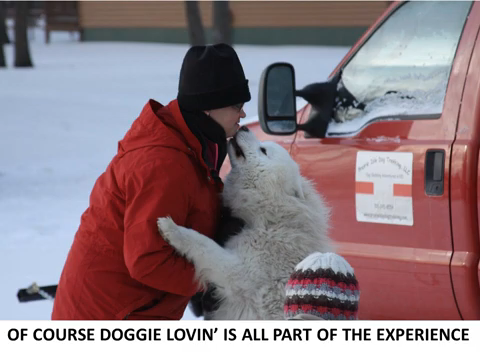
Helen L. Corlew runs a team of Samoyeds, Alaskan malamutes and Alaskan huskies. I am a Tellington TTouch practitioner and use this mode of work with training and living with my dogs.
Helen Corlew founded Prairie Isle Dog Trekking in Petersburg, North Dakota in 2010, and has spent the fifteen years since doing something most people only read about: teaching real dog sledding on real prairie terrain, at the edge of a landscape that doesn’t apologize for being difficult.
She is not a weekend enthusiast. She harnesses working dogs in January cold, trains handlers who have never touched a sled, and has built one of the only hands-on mushing education programs on the Northern Great Plains — from a single address on Highway 2, with no marketing budget and no shortcuts.
Her writing on Prairie Isle Dog Trekking reflects the same philosophy. Whether she is covering trail safety across the Rockies, breed behavior in extreme conditions, or what it actually takes to trek with a dog in the Alps, Helen writes from the position of someone who has done the work before writing the sentence.
She lives and runs dogs in Nelson County, North Dakota.
Kindly follow me on Social Media!


