
There’s a particular look a working dog gets when it’s locked onto a job. Not excitement. Not the frantic energy people mistake for enthusiasm. Something quieter and more total than that. I was watching one of my lead dogs work out a tangle in the gangline last March, the way she approached it, the stillness before she moved, the economy of it, and I thought about it again later when someone showed me Maple.
Four point two million people follow a Border Collie on Instagram. The dog hikes trails with her owner somewhere in the Pacific Northwest, and the account has been running long enough to have a merch line and a publishing deal and a calendar with a waiting list.
I looked at it for a long time.
Border Collies work. That’s the short version of what they are. The longer version is that they are a breed built over centuries to move livestock across difficult terrain using intelligence, endurance, and a specific kind of focused intensity that other dogs don’t have. Stockmen call it the eye. That fixed, unblinking stare that stops a sheep cold and holds it there. A Border Collie without a job doesn’t just get bored. It reassigns the job to whatever’s available. Children. Cars. Shadows. The pattern in carpet. An under-stimulated Border Collie is not a happy dog. It’s a high-drive machine running without load, and that wears a dog down in ways that don’t always show on the outside.
So I was prepared to be straightforwardly critical of a Border Collie with a merch line.
Then I watched one of the videos.
Maple is moving. Not posing on a summit with good light behind her, though there’s that too. Moving. Twenty miles, some of the captions say. Thirty on big days. The dog in the video is covering ground the way Border Collies cover ground when they’re right, fluid and relentless and not performing anything for anyone, and then the camera catches her face and that’s where it got complicated.
She’s looking at the camera with the eye.
Not the soft look of a pet who’s learned that looking at the human produces treats. The actual eye. Fixed, focused, total. She has redirected the full intensity of a working dog’s attention onto a phone lens, and I stood there watching it and didn’t know what to do with that.

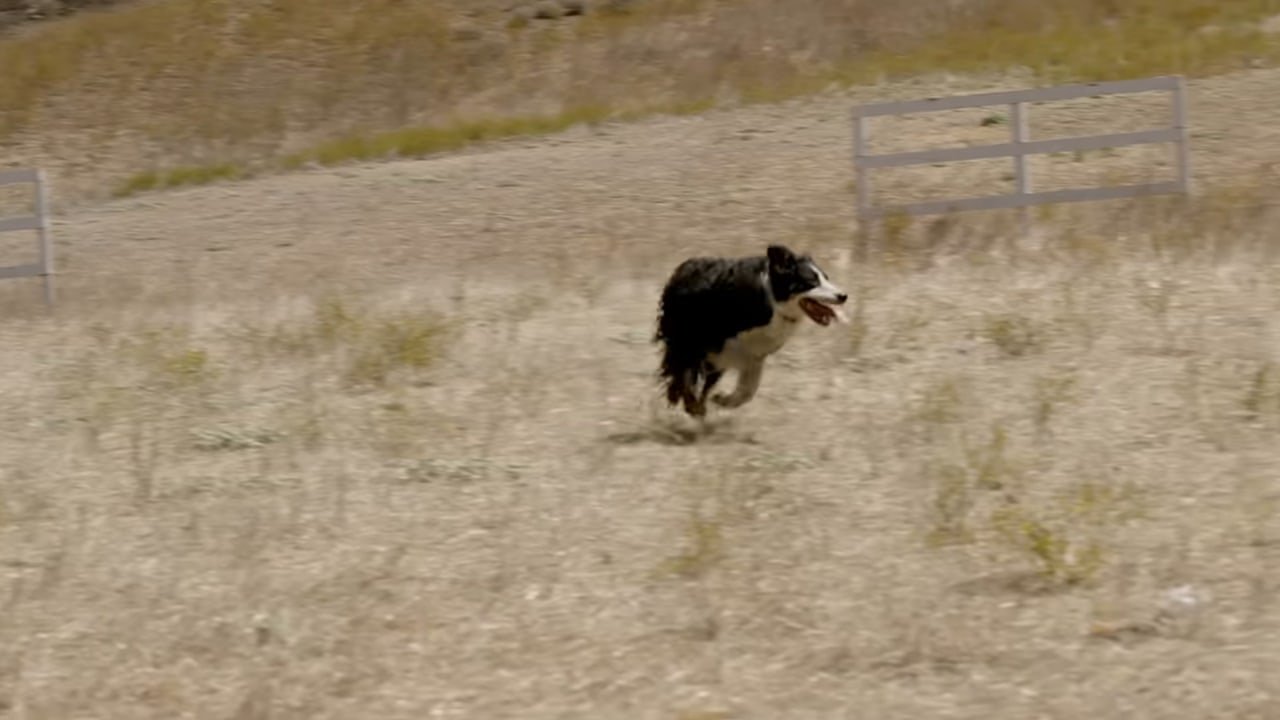
Because it’s not wrong. It’s not the Border Collie spinning in a kennel or herding the kids at a birthday party or pacing a fence line until the fur wears off its shoulder. She’s covering thirty miles and then locking onto a target with everything she has. The miles are real. The intensity is real. It’s just that what she’s pointing all of that at is a brand.
That’s the part I keep circling.
The 4.2 million people following Maple are not following a working dog. They’re following a human’s careful arrangement of a working dog, the right light and the right trail and the right moment when the dog looks back over her shoulder at the camera, and none of those people are wrong to find it beautiful because it is beautiful. But the thing that’s beautiful is the dog’s nature, centuries of selective work distilled into one animal moving through terrain, and that part exists completely independent of the account.
Maple would be Maple on a trail with no camera. The miles would be the same. The eye would be the same. The following is a human project layered over a dog project, and the dog doesn’t know one from the other.
That’s not a criticism. That’s just what it is.
Minus twenty this morning, the kind of cold where the inside of your nose burns on the inhale and the exhale both and there’s nothing to look at in any direction but flat white going all the way to the edge of the sky. My team was quiet before the run in the way they only get when they’re ready, that particular held-breath silence of fifteen dogs who know what’s coming, and then I called up and the silence broke and there was nothing curated about any of it.
Nobody was watching. It happened anyway.
That’s the thing about a working dog. The work doesn’t need an audience to be real.

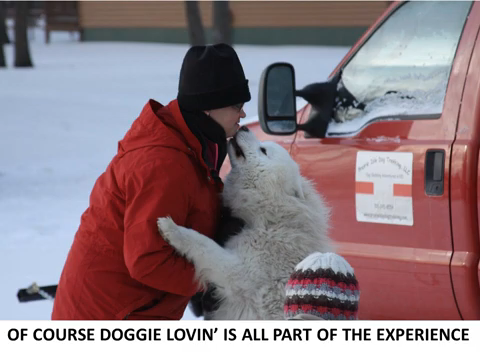
Helen L. Corlew runs a team of Samoyeds, Alaskan malamutes and Alaskan huskies. I am a Tellington TTouch practitioner and use this mode of work with training and living with my dogs.
Helen Corlew founded Prairie Isle Dog Trekking in Petersburg, North Dakota in 2010, and has spent the fifteen years since doing something most people only read about: teaching real dog sledding on real prairie terrain, at the edge of a landscape that doesn’t apologize for being difficult.
She is not a weekend enthusiast. She harnesses working dogs in January cold, trains handlers who have never touched a sled, and has built one of the only hands-on mushing education programs on the Northern Great Plains — from a single address on Highway 2, with no marketing budget and no shortcuts.
Her writing on Prairie Isle Dog Trekking reflects the same philosophy. Whether she is covering trail safety across the Rockies, breed behavior in extreme conditions, or what it actually takes to trek with a dog in the Alps, Helen writes from the position of someone who has done the work before writing the sentence.
She lives and runs dogs in Nelson County, North Dakota.
Kindly follow me on Social Media!