


Dogs need a rabies shot at 12 to 16 weeks of age, a booster 1 year later, and then every 1 to 3 years after that. The exact interval depends on state law and the vaccine product used. Rabies vaccination is required by law in most U.S. states. A dog is considered protected 28 days after the first dose.
For related reading, see Colitis in Dogs from Stress: Symptoms, Best Food for Diarrhea, and Home Remedies.
What Is the Rabies Vaccine Schedule for Dogs?
For veterinary context, see this reliable source.
The rabies vaccine schedule has 3 stages. These are the initial dose, a mandatory 1-year booster, and ongoing adult boosters.
| Stage | Age or Timing | Frequency |
|---|---|---|
| First dose | 12 to 16 weeks of age | Once |
| First booster | 1 year after first dose | Once |
| Adult boosters | After the 1-year booster | Every 1 to 3 years |
The interval for adult boosters depends on 2 factors. These are state law and the vaccine product the veterinarian carries. Some states require annual rabies boosters. Others permit 3-year vaccines for adult dogs.
What Is the Difference Between a 1-Year and 3-Year Rabies Vaccine?
A 1-year and 3-year rabies vaccine contain the same ingredients. The difference is how long the manufacturer tested the vaccine's efficacy. A 3-year label means the manufacturer confirmed protection for up to 3 years in clinical testing. A study published in the National Library of Medicine on 65 beagles found that rabies vaccines provide measurable immunity for more than 3 years. Most regulatory agencies do not accept a rabies antibody titer as a legal substitute for vaccination.
Which Dog Vaccines Are Absolutely Necessary?
Dogs need 2 categories of vaccines. These are core vaccines and non-core vaccines. Core vaccines are necessary for all dogs. Non-core vaccines are recommended based on the dog's lifestyle, location, and health status.
What Are Core Dog Vaccines?
There are 4 core vaccines for dogs. These are rabies, distemper, adenovirus (hepatitis), and parvovirus. The last 3 are combined into a single injection called DHPP or DAPP. Some formulations include parainfluenza (DHPP) or leptospirosis (DHLPP). Leptospirosis is increasingly classified as core in many regions.
| Core Vaccine | What It Prevents | Schedule |
|---|---|---|
| Rabies | Fatal viral infection (legally required) | 12-16 weeks, 1-year booster, then every 1-3 years |
| DHPP (Distemper, Hepatitis, Parvovirus, Parainfluenza) | 4 contagious viral diseases | Puppy series 6-16 weeks, 1-year booster, then every 1-3 years |
| Leptospirosis (core in high-risk areas) | Bacterial kidney and liver disease | Annual after initial 2-dose series |
Core vaccine costs range from $20 to $30 for rabies and $20 to $60 for the DHPP combination per shot. Costs vary by location and clinic.
What Are Non-Core Dog Vaccines?
There are 4 common non-core vaccines for dogs. These are Bordetella, Lyme disease, canine influenza, and rattlesnake vaccine. A veterinarian recommends non-core vaccines based on the dog's environment, activities, and local disease prevalence.
| Non-Core Vaccine | Recommended For | Frequency |
|---|---|---|
| Bordetella (kennel cough) | Dogs that board, groom, or attend daycare | Annual or semi-annual |
| Lyme disease | Dogs in tick-prone areas or hiking regions | Annual after initial 2-dose series |
| Canine influenza | Dogs frequenting kennels, shelters, or shows | Annual |
| Rattlesnake | Dogs in high-risk snake habitats | Annual |
What Is the Complete Dog Vaccine Schedule by Age?
The table below shows the full recommended vaccine schedule from puppy to adult, based on guidelines from UC Davis School of Veterinary Medicine.
| Age | Vaccines Due | Notes |
|---|---|---|
| 6 to 8 weeks | DHPP (first dose) | Begin puppy series |
| 10 to 12 weeks | DHPP (second dose), Bordetella | 3 to 4 week interval from first dose |
| 14 to 16 weeks | DHPP (third dose), Rabies (first dose) | Complete puppy core series |
| 12 to 16 months | DHPP booster, Rabies booster | Mandatory 1-year boosters |
| Adult (ongoing) | DHPP every 1 to 3 years, Rabies every 1 to 3 years | Based on state law and vaccine product |
| Adult (annual) | Bordetella, Leptospirosis, Lyme, Canine influenza | Based on lifestyle and risk |
Puppy boosters are given every 3 to 4 weeks until 16 to 20 weeks of age. This interval allows maternal antibodies to wane before the final dose takes full effect.


What Is the 4Dx Test for Dogs?
The 4Dx test is a blood screening that checks for 4 diseases in dogs. These are heartworm disease, Lyme disease, Ehrlichiosis, and Anaplasmosis. The test is popularized by IDEXX under the name SNAP 4Dx Plus and delivers results in 8 minutes using a small blood sample drawn at the vet clinic.
Annual 4Dx testing is recommended for all dogs over 6 months of age. Tick-borne diseases are more prevalent than heartworm in 49 out of 50 U.S. states. IDEXX data shows Anaplasma is detected in 1 in 15 dogs, Lyme in 1 in 20, and Ehrlichia in 1 in 30.
| Disease Tested | Transmission | What a Positive Means |
|---|---|---|
| Heartworm | Mosquito bites | Active adult worm infection |
| Lyme disease | Deer tick bites | Antibody exposure, confirmed with follow-up |
| Ehrlichiosis | Tick bites | Antibody exposure, requires clinical assessment |
| Anaplasmosis | Tick bites | Antibody exposure, requires clinical assessment |
The heartworm component detects antigen (active infection). The 3 tick-borne components detect antibodies, which indicate exposure rather than confirmed active infection. A positive tick-borne result requires follow-up assessment by a veterinarian before treatment begins. The 4Dx test costs approximately $40 to $65 at a veterinary clinic.
Heartworm treatment, if an infection is confirmed, costs $500 to $1,000 and requires a 6-month treatment course. Annual 4Dx testing catches infections before symptoms appear, when treatment outcomes are best.
What Is the Distemper Shot for Dogs?
The distemper shot is a core vaccine that protects dogs against canine distemper virus (CDV). CDV is a highly contagious virus that attacks the respiratory, gastrointestinal, and nervous systems. It is one of the leading preventable causes of death in unvaccinated dogs.
The distemper vaccine is not given as a standalone shot. It is combined with adenovirus, parvovirus, and parainfluenza into the DHPP injection. Puppies receive DHPP 3 times in the first 16 weeks of life. Adults receive a booster at 1 year, then every 1 to 3 years depending on the veterinarian's recommendation and local protocol.
The distemper vaccine is well tolerated by both puppies and adult dogs. Serious reactions are rare. Some dogs experience mild lethargy or soreness at the injection site for up to 24 hours, which is a normal immune response.

What Are the Side Effects of Dog Vaccines?
Dog vaccines produce side effects in 2 categories. These are mild reactions, which are normal and expected, and serious reactions, which are rare but require immediate veterinary attention.
What Are Normal Vaccine Side Effects in Dogs?
There are 5 common mild side effects after dog vaccination. These are lethargy, mild fever, reduced appetite, soreness at the injection site, and small swelling or lump at the injection site. These reactions are caused by the immune system responding to the vaccine. They are a sign that the vaccine is working.
- Lethargy and low energy: normal for up to 24 hours
- Mild fever: normal; dog's temperature should remain under 104°F
- Reduced appetite: normal for up to 24 hours
- Soreness or swelling at injection site: resolves within a few days
- Mild sneezing or runny nose: common after intranasal Bordetella vaccine
Side effects that persist beyond 24 to 48 hours are not typical and warrant a call to the veterinarian.
What Are Signs of a Serious Vaccine Reaction in Dogs?
Serious vaccine reactions are rare but are medical emergencies. There are 6 warning signs that require immediate veterinary care. These are facial swelling, hives, vomiting, difficulty breathing, collapse, and difficulty walking.
These signs indicate anaphylaxis, a severe allergic reaction. Anaphylaxis can occur within minutes to 48 hours after vaccination. Dogs that have had a previous vaccine reaction should be monitored at the clinic for 30 to 60 minutes after vaccination. VCA Animal Hospitals recommends informing the veterinarian of any prior reactions before vaccination so that pre-treatment with antihistamines or corticosteroids can be considered.
Why Is My Dog Sick 4 Days After Vaccination?
Mild side effects from dog vaccines are normal for up to 24 to 48 hours. A dog still showing symptoms 4 days after vaccination is outside the expected recovery window. This warrants a veterinary examination.
Possible reasons a dog is sick 4 days after vaccination include a delayed immune reaction, an unrelated illness that coincides with the vaccination date, or a more significant adverse response. Signs that require same-day veterinary contact after 4 days include continued lethargy, persistent vomiting or diarrhea, swelling that is growing, loss of appetite lasting more than 2 days, or any difficulty breathing.
PetMD notes that giving multiple vaccines on the same visit increases the risk of adverse reactions. Separating vaccines by at least 2 weeks reduces this risk and makes it easier to identify which vaccine caused the response if a reaction does occur.
What Is a Titer Test for Dogs?

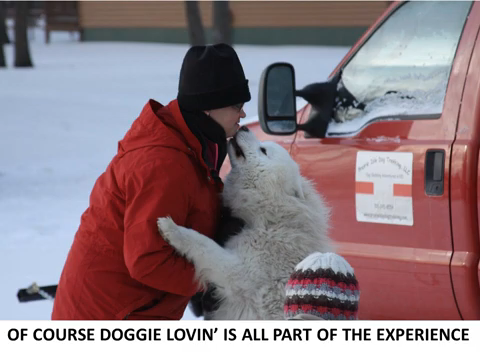
Helen L. Corlew runs a team of Samoyeds, Alaskan malamutes and Alaskan huskies. I am a Tellington TTouch practitioner and use this mode of work with training and living with my dogs.
Helen Corlew founded Prairie Isle Dog Trekking in Petersburg, North Dakota in 2010, and has spent the fifteen years since doing something most people only read about: teaching real dog sledding on real prairie terrain, at the edge of a landscape that doesn’t apologize for being difficult.
She is not a weekend enthusiast. She harnesses working dogs in January cold, trains handlers who have never touched a sled, and has built one of the only hands-on mushing education programs on the Northern Great Plains — from a single address on Highway 2, with no marketing budget and no shortcuts.
Her writing on Prairie Isle Dog Trekking reflects the same philosophy. Whether she is covering trail safety across the Rockies, breed behavior in extreme conditions, or what it actually takes to trek with a dog in the Alps, Helen writes from the position of someone who has done the work before writing the sentence.
She lives and runs dogs in Nelson County, North Dakota.
Kindly follow me on Social Media!


