
There were six inches of fresh snow on the ground and Mack was moving wrong. Not lame, not favoring anything, just moving without purpose, which in a working dog is its own kind of wrong. He’d been off his feed two days and I’d already ruled out the obvious things, so I did what I do when I don’t know what’s wrong: I unclipped him and walked. No destination. No trail. Just out into the field east of the yard, into the flat white silence of it, and I let him go where he wanted to go.
He spent forty minutes with his nose in the snow. Slow, meandering, doubling back, stopping so long in one spot that I got cold standing there waiting. My hands were starting to go stiff before I thought to pull them into my sleeves. But I waited. And somewhere in those forty minutes something settled in him, some pressure behind his eyes released, and by the time we came back to the yard he was himself again. I never did find out what was wrong. He ate that night and ran clean the next morning.
I thought about Mack when I started seeing the articles. The Japanese technique. The ancient method for walking your dog that American owners are finally discovering, spreading through dog parks and lifestyle blogs and short videos of golden retrievers sniffing hydrangeas while their owners stand beatifically nearby. Let the dog lead. Follow the nose. Surrender the agenda.
The technique has a clean, exported quality to it. A name. A framework. Steps you can follow and a philosophy you can describe at a dinner party.
Here is what it actually is: walking a dog without controlling where the dog goes.
Dogs have been asking for this since before anyone had a name for it. What’s new is that we stopped dismissing them.
I’ve had beginners out here who death-grip the leash from the parking lot. Constant correction. Constant redirection. The dog surges, the person pulls, the dog surges again, and by the time they reach the team the animal is wound so tight it can’t hear anything. I watch that and I know the next two hours are going to be harder than they need to be. Not because the person did anything wrong, exactly, but because they never stopped talking long enough to let the dog say anything back.
The prairie is good at exposing that. There’s nowhere to be distracted out here. Minus fifteen and no wind yet and the silence before the team starts is so complete it has texture. You can hear a tug line go slack from thirty yards. You can hear a dog shift its weight. People come out here from cities where noise is constant and they go very still in that silence and some of them, not all of them, start actually watching the dogs instead of managing them.

That’s when things get interesting.
I’m not skeptical of what this technique produces. I’m skeptical of what it takes to package a natural thing and sell it as a discovery. The dog already knew. That’s the part the articles leave out. They frame it as a gift the owner gives the dog, this radical permission to just be a dog for twenty minutes. What they don’t say is that the dog has been trying to give you something too, if you’d held still long enough to take it.
Mack came back to himself in a snowy field in North Dakota because I stopped having a plan for him and he could feel that. Nothing Japanese about it. Nothing ancient or trending or technique-shaped. He needed to use his nose and I needed to shut up and stand in the cold and let him.
A woman came out last March with a border collie she’d had for four years. Trained, titled, responsive to fifteen commands. Beautiful to watch. And at the end of the session she said, quietly, that she didn’t know him as well as she thought she did. I didn’t ask what she meant. I knew.
You can teach a dog to do a lot of things without ever once finding out who it is.
That’s the thing no technique will fix for you. You have to stand in the cold and wait.

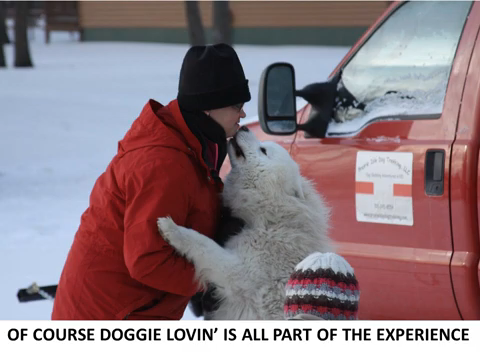
Helen L. Corlew runs a team of Samoyeds, Alaskan malamutes and Alaskan huskies. I am a Tellington TTouch practitioner and use this mode of work with training and living with my dogs.
Helen Corlew founded Prairie Isle Dog Trekking in Petersburg, North Dakota in 2010, and has spent the fifteen years since doing something most people only read about: teaching real dog sledding on real prairie terrain, at the edge of a landscape that doesn’t apologize for being difficult.
She is not a weekend enthusiast. She harnesses working dogs in January cold, trains handlers who have never touched a sled, and has built one of the only hands-on mushing education programs on the Northern Great Plains — from a single address on Highway 2, with no marketing budget and no shortcuts.
Her writing on Prairie Isle Dog Trekking reflects the same philosophy. Whether she is covering trail safety across the Rockies, breed behavior in extreme conditions, or what it actually takes to trek with a dog in the Alps, Helen writes from the position of someone who has done the work before writing the sentence.
She lives and runs dogs in Nelson County, North Dakota.
Kindly follow me on Social Media!