
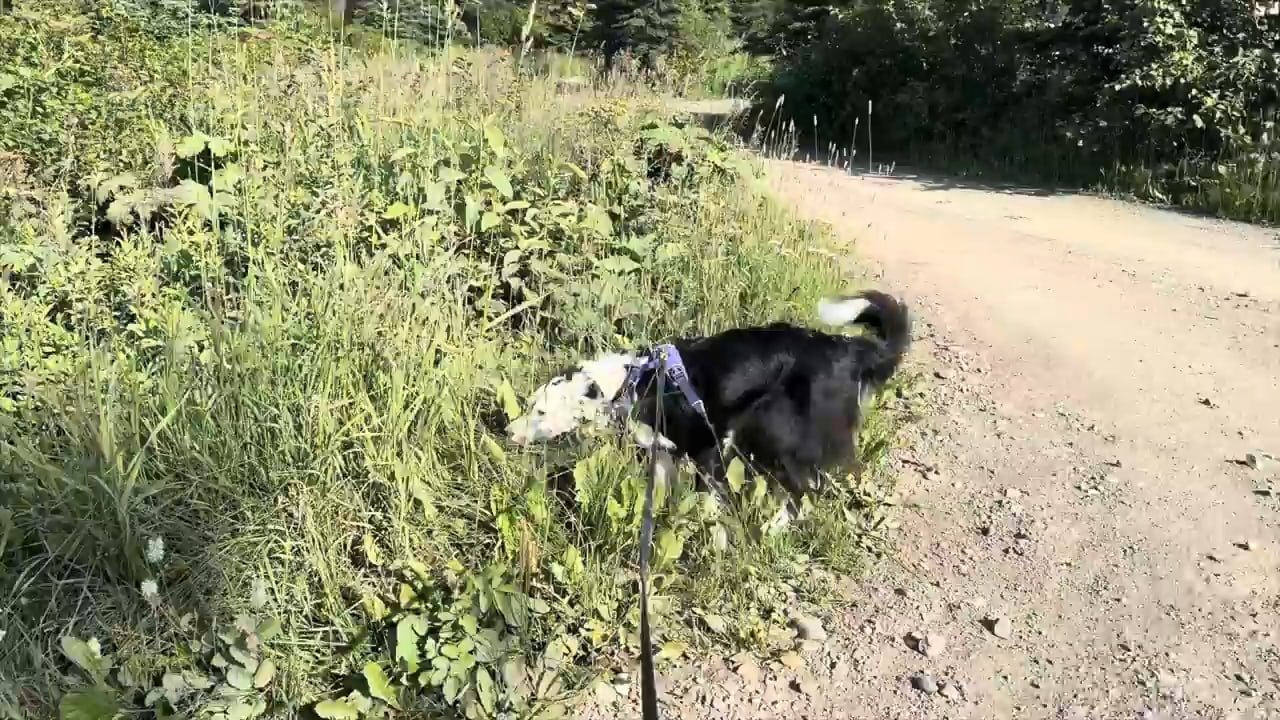
The dog stopped. Just stopped, mid-trot, and dropped her nose into a patch of crusted snow at the edge of the trail. Kiska. Seven years old, one of my best leaders, and she was standing there reading something in the ground like it was the most urgent text she’d ever received. I gave her thirty seconds. Then I said her name. She didn’t move.
I stood there in the particular silence of flat prairie before a run, the kind of silence that has weight to it, and I thought about how many times I’d corrected that exact behavior. Head up. Forward. Let’s go. That’s the language of sled work. A dog who stops to sniff mid-run is a dog who breaks the team’s rhythm, and rhythm on a long run is not optional.
But we weren’t running. We were just walking the perimeter that morning, loose, no sled, and I had nowhere to be. So I let her finish.
She spent four minutes on that patch of snow. I watched her work it, nostrils moving in that rapid, almost mechanical way, the rest of her body gone completely still while her nose did something her brain was entirely absorbed in. When she finally lifted her head, she looked different. Not calmer exactly. More present. Like she’d just had a conversation I wasn’t part of and it had satisfied something.
I’ve been running dogs since 2010 and I’d watched that happen a thousand times without really seeing it.
Now there’s a name for it. Sniff walks. The internet has decided that letting your dog follow its nose is a wellness trend, and there are articles and Instagram accounts and probably a podcast, and the people writing about it frame it as a revelation, this idea that a dog’s nose is the primary way it experiences the world and that letting a dog sniff is a form of enrichment that tires them mentally in ways that physical exercise alone doesn’t. None of that is wrong. All of it is roughly thirty years late.
Working dog people have known this forever because we couldn’t ignore it. When a sled dog comes off a hard run and you put her in a yard with loose snow and scrub brush and the wind carrying whatever it’s carrying that day, she doesn’t sleep first. She sniffs first. She processes. The run and the smell are both part of the same thing to her.
What bothers me isn’t the trend. Let people discover things however they discover them.

What bothers me is the word quiet in how people talk about it now, the way it gets framed as this gentle gift you give a tired pet, a leisurely stroll where you let Labrador stop at every fire hydrant. Like it’s passive. Like you’re just dropping the leash and stepping back.
Kiska standing in that snow wasn’t passive. She was working. Her nose was running a thousand calculations I don’t have the biology to run, processing scent molecules I can’t detect, building a picture of something that happened there, some animal or some shift in the ground or some information carried in on the last weather system, and the effort of that concentration was real. The cold burned the inside of my nose clean and sharp that morning, the minus-fifteen kind of cold that doesn’t smell like anything because it kills smell at the source, and she was still finding things in it that I couldn’t.
A harness left outside overnight smells like frozen nylon and dog sweat and the particular staleness of work. Kiska smelled all of that every morning before I even picked it up. She smelled who had worn it last and how hard and whether anything had changed. She was doing that constantly, every minute, in every direction.
The trend isn’t wrong to celebrate that. It’s just soft about what it’s celebrating.
When I take beginners out now, families mostly, kids who’ve never touched a working dog, I let the dogs set a pace on the walk out to the yard before we harness. I tell people to stop talking and just watch where the dog’s nose goes. Not as a lesson. Just because if you watch it long enough, you start to understand that you are enormously less aware of your environment than you assumed you were, and the dog has been politely tolerating that gap this entire time.
That’s not a wellness trend. That’s just the truth about what you’re sharing your house with.

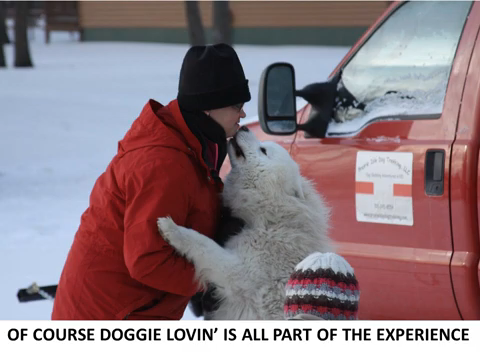
Helen L. Corlew runs a team of Samoyeds, Alaskan malamutes and Alaskan huskies. I am a Tellington TTouch practitioner and use this mode of work with training and living with my dogs.
Helen Corlew founded Prairie Isle Dog Trekking in Petersburg, North Dakota in 2010, and has spent the fifteen years since doing something most people only read about: teaching real dog sledding on real prairie terrain, at the edge of a landscape that doesn’t apologize for being difficult.
She is not a weekend enthusiast. She harnesses working dogs in January cold, trains handlers who have never touched a sled, and has built one of the only hands-on mushing education programs on the Northern Great Plains — from a single address on Highway 2, with no marketing budget and no shortcuts.
Her writing on Prairie Isle Dog Trekking reflects the same philosophy. Whether she is covering trail safety across the Rockies, breed behavior in extreme conditions, or what it actually takes to trek with a dog in the Alps, Helen writes from the position of someone who has done the work before writing the sentence.
She lives and runs dogs in Nelson County, North Dakota.
Kindly follow me on Social Media!