
Friendly
A father came out two winters ago with his son and his dog. The dog was a goldendoodle named Biscuit, which told me most of what I needed to know before I’d said hello. The man was prepared in the way that people who research things are prepared, printed confirmation email, right boot layers, a screenshot on his phone of a trail app that had rated our route three paw prints out of four for winter accessibility. He showed it to me. I looked at it. I handed his phone back.
The app had our stretch of Highway 2 corridor listed as moderately challenging, good for active dogs, with a note about wind exposure in open sections. The temperature that morning was minus seventeen. Not wind chill. Actual temperature. The kind of cold where the inside of your nose stops burning and just goes numb, which is the point where you should already be inside.
Biscuit was not a working dog. Biscuit was a pet, which is not a criticism, it’s just a fact, and pets have different relationships with cold than dogs bred to work in it. I told the man I could take him and his son on a modified route, shorter, more sheltered, and that Biscuit should stay in the truck with the heat running. He looked at his phone. He looked at me. He put Biscuit in the truck.
We had a good run. His son held the gangline on the return and talked to the dogs the whole way back in a low steady voice that the team responded to, which surprised the father and didn’t surprise me at all. Kids sometimes have the frequency right without knowing it.
Biscuit was fine. Warm in the truck, delighted to see them when they came back, none the worse for missing the adventure. The right call for that dog on that morning.
But I kept thinking about the app. The three paw prints. The note about wind exposure as though wind exposure out here is a feature to flag rather than a condition to respect. Someone had driven this corridor, or looked at a map of it, and assigned it a rating, and that rating was now living on fourteen thousand trails across the country in a database that people consult before they go outside with their dogs.
The woman who built it is apparently meticulous. The piece about her was detailed and the project is genuinely impressive as a project, the scale of it, the commitment. She has walked trails in forty-nine states and crowdsourced the rest and built something that didn’t exist before and that people use constantly. I’m not questioning her work ethic or her intentions.


What I’m questioning is the word friendly.
Friendly means the place will accommodate you. It means the trail has been assessed and found acceptable for the category of creature you’re bringing. It means someone has stood between you and the land and said: this is okay, you can come here, you and your dog are welcome.
The prairie is not friendly. It isn’t hostile either. It simply doesn’t register you. Minus twenty and the sky is white and the flat goes in every direction without apology and the dogs know it and work with it and you either know it too or you find out. That’s the deal. It has always been the deal. No app changes it.
A rating system for trails works fine when the variable is terrain. Steep or flat. Rocky or smooth. Those things are stable. What it can’t rate is weather, which out here is the whole question, or the gap between a dog who can work in serious cold and a dog who is going to need boots and a jacket and a shorter route and a warm truck waiting. That gap is not a data problem. It’s a judgment problem. And judgment doesn’t have a paw print scale.
Biscuit was a good dog in the truck. The boy who talked to my team in that low steady voice is probably still thinking about it. The father looked at his phone and then looked at me and made the right call when it counted.
The app didn’t do that. He did.
Fourteen thousand trails, and the one thing that matters most on any of them still comes down to the person standing at the trailhead, looking at the sky, deciding whether they actually know where they are.

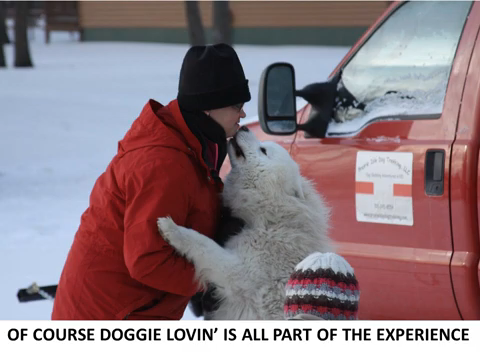
Helen L. Corlew runs a team of Samoyeds, Alaskan malamutes and Alaskan huskies. I am a Tellington TTouch practitioner and use this mode of work with training and living with my dogs.
Helen Corlew founded Prairie Isle Dog Trekking in Petersburg, North Dakota in 2010, and has spent the fifteen years since doing something most people only read about: teaching real dog sledding on real prairie terrain, at the edge of a landscape that doesn’t apologize for being difficult.
She is not a weekend enthusiast. She harnesses working dogs in January cold, trains handlers who have never touched a sled, and has built one of the only hands-on mushing education programs on the Northern Great Plains — from a single address on Highway 2, with no marketing budget and no shortcuts.
Her writing on Prairie Isle Dog Trekking reflects the same philosophy. Whether she is covering trail safety across the Rockies, breed behavior in extreme conditions, or what it actually takes to trek with a dog in the Alps, Helen writes from the position of someone who has done the work before writing the sentence.
She lives and runs dogs in Nelson County, North Dakota.
Kindly follow me on Social Media!