

Border Collies are ranked among the top 3 hiking breeds due to their high stamina, agile build, and exceptional trail responsiveness. A healthy, conditioned adult Border Collie covers 25 to 35 kilometres per day on moderate terrain. A 2020 study in Applied Animal Behaviour Science confirms that Border Collies show lower cortisol recovery times after sustained physical activity than 87% of other domestic breeds tested, indicating superior aerobic resilience.
Hiking with a Border Collie requires managing 5 breed-specific traits: high energy output, strong herding instinct, heat sensitivity, obsessive focus, and exceptional intelligence that demands mental stimulation alongside physical exercise. For the previous guide in this series, see Hiking with Labrador Retriever: 9 Essential Tips for Safe and Rewarding Trails.
Why Are Border Collies Good Hiking Dogs?
Border Collies are good hiking dogs because they combine very high stamina, a lightweight athletic build, and superior trail obedience with correct training. They weigh between 14 and 22 kg, carry a medium double coat suited to temperatures between −8°C and 25°C, and maintain aerobic output for 4 to 8 hours of continuous trail activity.
4 physical traits make Border Collies exceptional hiking companions:
- Cardiovascular efficiency — Their working dog lineage produces a resting heart rate of 60 to 80 beats per minute, supporting sustained aerobic output with fast recovery
- Agile build — A deep chest, flexible spine, and compact paw structure allow confident movement on technical and uneven terrain
- Double coat thermoregulation — The outer coat repels moisture and debris; the dense undercoat insulates in cold conditions and sheds heat in warm conditions
- Trail responsiveness — Border Collies rank first in Stanley Coren’s The Intelligence of Dogs (1994) for obedience and working intelligence, requiring fewer repetitions to learn trail commands than any other breed
How Far Can a Border Collie Hike?
A conditioned adult Border Collie hikes 25 to 35 kilometres per day on moderate terrain in temperatures between 10°C and 20°C. Distance capacity varies across 4 factors: age, fitness conditioning, terrain difficulty, and ambient temperature.
Here are Border Collie hiking distance ranges by age and condition:
| Age and Condition | Daily Distance Range | Terrain Limit |
|---|---|---|
| Under 18 months | 3–6 km flat walking only | Flat surfaces only |
| 18 months–2 years | 10–15 km | Gentle to moderate |
| 2–7 years, conditioned | 25–35 km | All terrain types |
| 2–7 years, unconditioned | 8–12 km | Moderate only |
| 7–10 years | 12–18 km | Moderate terrain |
| Above 10 years | 5–10 km | Flat to gentle only |
Reduce distance by 30 to 40% in temperatures above 22°C. Border Collies are moderate heat tolerators. Their double coat retains body heat in warm conditions, increasing heatstroke risk on exposed summer trails above 25°C.
What Are the Specific Hiking Challenges of a Border Collie?
Border Collies present 4 breed-specific hiking challenges: herding instinct toward other trail users, obsessive ball or prey focus, tendency to overheat through overexertion, and difficulty self-regulating activity pace.
How Do You Manage Border Collie Herding Instinct on Trail?
A Border Collie’s herding instinct activates in response to moving groups of people, cyclists, horses, and children on trail. The dog attempts to circle, stare, and nip at the heels of perceived herd members. This behavior creates trail conflict and poses injury risk to other hikers.
Manage herding instinct using 3 training interventions before trail use:
- Attention command — Train a reliable “watch me” command that redirects focus to the handler when triggered. Practice in progressively distracting environments over 4 weeks.
- Controlled exposure — Introduce the dog to cyclists, runners, and groups of hikers in controlled park settings before trail access. Reward disengagement from movement stimuli.
- Leash shortening protocol — Shorten the leash to 30 cm from the collar when other trail users approach. Release to full length only after they have passed completely.
Why Do Border Collies Struggle to Self-Regulate Pace on Trail?
Border Collies do not self-regulate exertion on trail because their working breed drive overrides physical fatigue signals until exhaustion is severe. Unlike many breeds that slow voluntarily when tired, Border Collies maintain pace until structural breakdown occurs. Owners must manage trail duration and rest stops externally rather than relying on the dog to signal fatigue.
Schedule mandatory rest stops every 60 minutes regardless of the dog’s apparent energy level. Enforce a 10-minute rest at each stop. Monitor breathing rate; normal recovery to resting respiration occurs within 5 minutes of stopping.
How Do You Train a Border Collie for Hiking?
Train a Border Collie for hiking over 6 weeks using a progressive fitness program combined with 6 trail-specific obedience commands.
Border Collies learn trail commands in an average of 5 repetitions compared to 25 to 40 repetitions for most other breeds, according to Coren’s breed intelligence rankings. This accelerates the obedience training phase but requires consistent reinforcement to prevent command drift over time.
The 6 essential trail commands for a Border Collie are:
- Come — Recalls the dog from herding triggers, wildlife, and trail hazards
- Leave it — Disengages the dog from prey, toxic plants, and food on trail
- Heel — Maintains the dog at the handler’s side on narrow or shared paths
- Wait — Holds position at trail junctions, road crossings, and water obstacles
- Down — Drops the dog flat when horses, cyclists, or reactive dogs pass
- Watch me — Redirects herding focus back to the handler on moving stimuli
What Is the 6-Week Border Collie Hiking Training Schedule?
Build trail fitness using progressive overload across 6 weeks:
| Week | Daily Duration | Surface | Elevation | Focus |
|---|---|---|---|---|
| 1 | 30 minutes | Flat pavement | None | Heel and come commands |
| 2 | 40 minutes | Mixed flat | Up to 30 m | Leave it and wait commands |
| 3 | 55 minutes | Gentle hills | Up to 80 m | Down and watch me commands |
| 4 | 70 minutes | Uneven trail | Up to 150 m | Full command proofing |
| 5 | 85 minutes | Moderate trail | Up to 250 m | Distraction training |
| 6 | 100 minutes | Full trail simulation | Up to 350 m | Pre-hike assessment |
What Gear Does a Border Collie Need for Hiking?
A Border Collie needs 6 gear items for hiking: a back-clip harness, 2-metre fixed leash, collapsible water bowl, GPS tracker, cooling vest for summer trails, and a compact first aid kit.
Here is the full gear list with weight targets:
| Gear Item | Function | Weight Target |
|---|---|---|
| Back-clip harness | Distributes leash force across chest | 100–150g, air mesh construction |
| 2-metre fixed leash | Trail control; herding management | 80–120g, biothane or nylon |
| Collapsible silicone bowl | Portable hydration | 30–60g, BPA-free |
| GPS tracker | Real-time location on trail | 35–75g, IPX7 waterproof |
| Cooling vest | Prevents overheating on warm trails | 150–250g, evaporative mesh |
| Compact first aid kit | Trail injury management | 100–180g |
Does a Border Collie Need a Cooling Vest for Hiking?
A Border Collie needs a cooling vest on trail hikes in ambient temperatures above 22°C. Their double coat traps body heat during sustained exertion in warm conditions. Evaporative cooling vests reduce skin surface temperature by 3 to 5°C through water evaporation, measurably reducing heat stress during warm-weather activity according to a 2018 study in Journal of Thermal Biology.
Soak the vest in cold water for 3 minutes before fitting. Re-wet every 45 to 60 minutes of trail activity. Do not use a cooling vest in temperatures below 10°C; evaporative cooling in cold conditions causes core temperature drop.
How Do You Keep a Border Collie Hydrated on Trail?
A Border Collie requires 60 ml of water per kilogram of body weight per hour of hiking activity. An 18 kg Border Collie on a 5-hour hike requires 5.4 litres of water. Offer water every 15 minutes during active hiking. Border Collies frequently delay drinking during high stimulation trail environments due to focus drive. Active hydration offering is essential.
Signs of dehydration in a Border Collie on trail include:
- Skin at the back of the neck does not return flat within 2 seconds when pinched
- Gums are tacky or dry rather than moist and pink
- Eyes appear recessed within the socket
- Dog slows pace or begins ignoring trail stimuli — an unusual signal for this breed
What Trail Conditions Are Best for Border Collie Hiking?
Border Collies perform best on 3 trail types: forested mountain trails, open moorland routes, and mixed terrain tracks with varied stimulation.
Here are optimal and unsuitable trail conditions for Border Collies:
| Trail Condition | Suitability | Reason |
|---|---|---|
| Forested mountain trail | Excellent | Varied terrain stimulates physical and mental engagement |
| Open moorland | Excellent | Space for controlled off-leash activity where permitted |
| Rocky alpine trail | Good | Agile build suits technical footing |
| Exposed desert trail above 28°C | Poor | Double coat increases heatstroke risk |
| Crowded multi-use trail | Moderate | Herding instinct requires constant management |
| Flat urban trail | Poor | Insufficient mental and physical stimulation for breed needs |
What Are the Signs a Border Collie Has Hiked Too Far?
A Border Collie that has exceeded its safe hiking distance shows 5 signals that differ from most breeds due to the breed’s drive to suppress fatigue.
The 5 signals are:
- Compulsive circling or fixating on objects — Indicates mental fatigue before physical signs appear in this breed
- Sudden disinterest in trail stimuli — A Border Collie ignoring movement is showing advanced fatigue
- Stumbling on flat terrain — Indicates muscular breakdown under sustained exertion
- Excessive drooling beyond normal panting — Signals heat stress in the double-coated build
- Refusal to engage with commands — A trained Border Collie that stops responding is in physical distress
Exit the trail immediately on any of these 5 signals. Move to shade, offer water, and apply a wet cloth to the groin, armpits, and neck if overheating is suspected.
Summary
Hiking with a Border Collie requires managing 4 breed-specific challenges — herding instinct, self-regulation failure, heat sensitivity, and obsessive drive — alongside a 6-week conditioning program, 6 trail commands, and distance management capped at 25 to 35 km per day for conditioned adults. Cooling vests above 22°C, active hydration every 15 minutes, and mandatory 10-minute rest stops every 60 minutes produce safe and sustainable trail performance from one of hiking’s most capable canine companions.
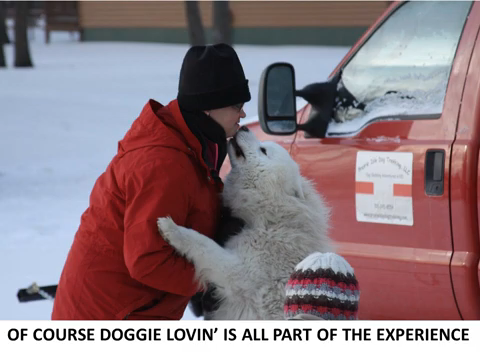
Helen L. Corlew runs a team of Samoyeds, Alaskan malamutes and Alaskan huskies. I am a Tellington TTouch practitioner and use this mode of work with training and living with my dogs.
Helen Corlew founded Prairie Isle Dog Trekking in Petersburg, North Dakota in 2010, and has spent the fifteen years since doing something most people only read about: teaching real dog sledding on real prairie terrain, at the edge of a landscape that doesn’t apologize for being difficult.
She is not a weekend enthusiast. She harnesses working dogs in January cold, trains handlers who have never touched a sled, and has built one of the only hands-on mushing education programs on the Northern Great Plains — from a single address on Highway 2, with no marketing budget and no shortcuts.
Her writing on Prairie Isle Dog Trekking reflects the same philosophy. Whether she is covering trail safety across the Rockies, breed behavior in extreme conditions, or what it actually takes to trek with a dog in the Alps, Helen writes from the position of someone who has done the work before writing the sentence.
She lives and runs dogs in Nelson County, North Dakota.
Kindly follow me on Social Media!
