

A dog stroller for large dogs is a wheeled mobility carrier that supports dogs weighing between 50 and 170 pounds who cannot walk long distances due to age, surgery recovery, hip dysplasia, or injury. This guide covers 8 products for dogs with mobility needs or training goals, including front leg braces, hip dysplasia braces, harnesses by size and breed, slip leads, weight vests, and training collars.
For related reading, see Ringworm in Dogs: Pictures, What It Looks Like, and How to Tell It Apart from Mange.
What Is the Best Dog Stroller for Large Dogs?
The best dog stroller for large dogs is one with a weight capacity of at least 80 to 100 pounds, all-terrain wheels with suspension, a lockable safety leash inside the cabin, and a foldable frame that fits in a standard car trunk.
Large dog strollers are used for 4 primary situations:
- Post-surgical recovery where the dog must restrict movement
- Senior dogs with arthritis, hip dysplasia, or hind limb weakness
- Dogs with amputations or neurological conditions affecting gait
- Long-distance outings where the dog tires before the walk ends
What Features Should a Large Dog Stroller Have?
There are 7 features to evaluate before buying a stroller for a large dog:
- Weight capacity: Aim for at least 80 to 100 pounds for large breeds. Several models support up to 130 to 170 pounds.
- Interior cabin dimensions: The dog must be able to sit, stand, and turn around. Measure your dog's length and height before selecting a model.
- Wheel type: All-terrain rubber wheels with shock absorption handle grass, gravel, and uneven pavement. Plastic wheels are suitable for smooth indoor or paved surfaces only.
- Entry design: Rear-entry strollers are easier for senior or mobility-impaired dogs. Dual-entry models allow dogs to walk in from one side and out the other without turning.
- Safety tether: An interior leash clip or safety tether prevents the dog from jumping out while in motion.
- Folding mechanism: A one-click fold is essential for travel. Check the folded dimensions against your vehicle's boot space before purchasing.
- Ventilation: Mesh panels on at least 2 sides prevent overheating. A UV-reflective or water-resistant canopy adds weather protection.
How Do Large Dog Strollers Compare by Weight Limit?
| Stroller Type | Weight Limit | Best For |
|---|---|---|
| Standard large dog stroller | Up to 70 lbs | Medium-large breeds, e.g. Labrador |
| Heavy-duty stroller | Up to 110 lbs | Large breeds, e.g. German Shepherd |
| XL / bariatric stroller | Up to 170 lbs | Giant breeds, e.g. Great Dane, Saint Bernard |
| Jogging stroller | Up to 70 lbs | Active owners, off-road terrain |
| 3-in-1 stroller/carrier/car seat | Up to 75 lbs | Travel-focused owners |
Add at least 10 pounds buffer above your dog's current weight when selecting a capacity. Dogs carrying extra weight from post-surgery swelling or muscle atrophy may weigh more than their healthy baseline.
What Is a Dog Front Leg Brace?
A dog front leg brace is a supportive orthotic wrap applied to a dog's front leg or wrist joint to stabilise a sprain, ligament injury, fracture recovery, or carpus (wrist) hyperextension. It limits excessive movement at the joint while allowing controlled weight-bearing.
Front leg braces are used for 5 conditions:
- Carpal hyperextension (most common front leg condition in older dogs)
- Ligament sprain or partial tear in the carpus or elbow
- Post-surgical support after orthopaedic repair
- Joint instability from trauma or repetitive strain
- Developmental conditions in puppies causing abnormal limb alignment
What Should a Dog Front Leg Brace Include?
A properly constructed front leg brace includes rigid or semi-rigid lateral supports (often metal or thermoplastic), a breathable neoprene body, adjustable velcro closures, and anti-slip lining to prevent the brace from rotating during movement. NeoAlly and Ortocanis both manufacture veterinarian-approved front leg brace designs with metal support rails.
A front leg brace is not a substitute for veterinary diagnosis. A vet or veterinary physiotherapist should confirm the injury type and recommend whether bracing, restricted rest, or surgery is the appropriate treatment.
What Are the Best Leg Braces for Dogs with Hip Dysplasia?
A leg brace for a dog with hip dysplasia is more accurately described as a hip support brace. It applies bilateral compression to the hip joints and lower back to reduce pain, stabilise the femoral heads, and improve gait during activity.
Hip dysplasia braces are appropriate for dogs with:
- Mild to moderate hip dysplasia where surgery is not indicated or not yet scheduled
- Arthritis alongside hip dysplasia
- Post-surgical recovery from femoral head osteotomy (FHO) or total hip replacement
- General hind limb weakness or lower back pain in senior dogs
- Lumbosacral instability
Hip braces are not recommended for dogs with degenerative myelopathy (DM) or neurological/neuromuscular disorders, as they do not provide neurological support and cannot substitute for physiotherapy in those cases.
How Do You Size a Hip Dysplasia Brace for a Dog?
Measure the circumference of the leg at the groin and the chest circumference just behind the front legs. Most manufacturers use the following sizing:
| Brace Size | Breed Examples | Weight Range |
|---|---|---|
| XS | Dachshund, Miniature Poodle, Fox Terrier | 11 to 20 lbs (5 to 9 kg) |
| S | Cavalier King Charles Spaniel, Cocker Spaniel | 21 to 35 lbs (10 to 16 kg) |
| M | Border Collie, Springer Spaniel | 36 to 63 lbs (17 to 29 kg) |
| L | Labrador, German Shepherd | 64 to 110 lbs (30 to 50 kg) |
| XL | Saint Bernard, Great Dane | Over 110 lbs (over 50 kg) |
Sizing charts are brand-specific. Always measure before ordering. A brace that is too loose migrates during movement and provides no compression benefit.
What Is the Best Dog Harness for a Dachshund?
The best dog harness for a dachshund is a step-in or vest-style no-pull harness that distributes pressure across the chest and shoulders rather than the neck. Dachshunds are prone to intervertebral disc disease (IVDD) due to their elongated spine. Any collar or harness that applies pressure to the neck increases the risk of spinal injury.
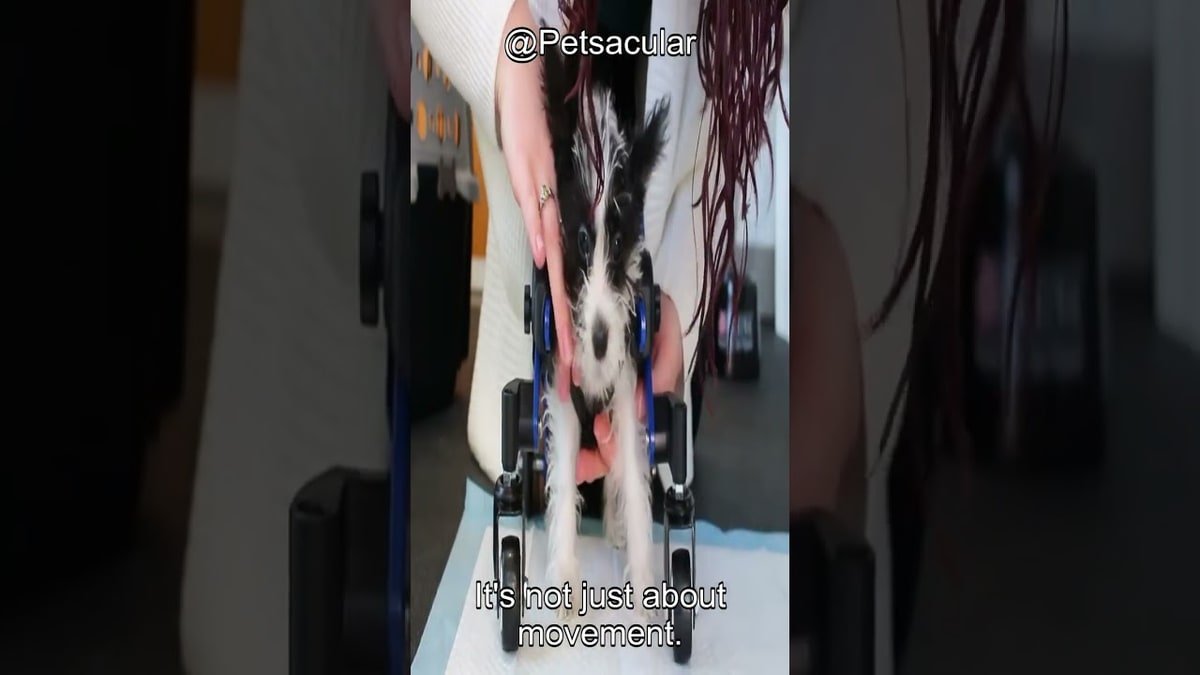
A dachshund harness should have 4 characteristics:
- No neck contact: The harness must not press on the throat or cervical spine under any leash tension
- Broad chest panel: A wide padded front panel spreads load across the sternum, not a single point
- Back clip attachment: Reduces forward pulling leverage, which can strain the spine
- Adjustable girth and chest bands: Dachshunds have a distinctive deep chest and short legs, requiring a non-standard fit
What Is an Extra Small Dog Harness?
An extra small dog harness is a harness sized for dogs weighing 2 to 8 pounds, such as Chihuahuas, Toy Poodles, Yorkshire Terriers, and Pomeranians. At this size, harness construction quality matters more than in larger sizes because thin straps can concentrate pressure on small bones.
Key features to look for in an extra small harness:
- Weight-appropriate strap width (at least 0.5 inches wide to avoid cutting into skin)
- Lightweight hardware that does not exceed 5% of the dog's body weight
- Breathable mesh or padded lining
- D-ring positioned on the back, not the chest, for small breed neck protection
- Machine-washable materials for hygiene
A standard small harness will be too large for a toy breed even if the strap adjusts down. Check the chest girth range listed in the product specifications, not just the size label.
What Are the Best Dog Harnesses for Large Dogs?
Dog harnesses for large dogs should support weight-bearing assistance for mobility-impaired dogs or provide no-pull control for strong, active breeds. There are 2 distinct harness categories for large dogs:
Mobility and Support Harnesses for Large Dogs
Used for dogs with hip dysplasia, post-surgical recovery, hind limb weakness, or neurological conditions. These harnesses include a rear lift handle to assist dogs up stairs, into vehicles, or during transfers. The handle is positioned over the hips or lower back and must be reinforced with thick webbing.
Features of a quality large dog mobility harness:
- Padded chest panel and abdominal sling
- Rear lift handle with stitched reinforcement
- Non-slip underside fabric
- Multiple adjustment points for a secure fit without restricting breathing
- Available in sizes up to fit a 120-pound dog
No-Pull Harnesses for Large Dogs
Used for training and walking control. A front-clip harness redirects a pulling dog sideways rather than allowing forward momentum. A dual-clip harness (front and back clip) gives more control options across different training contexts.

What Are Slip Leads for Dogs?
A slip lead is a leash and collar combined into a single loop that tightens around the dog's neck when tension is applied and loosens when the dog stops pulling. It is the standard handling tool used in veterinary clinics, shelters, and show rings.
Slip leads are appropriate for 3 uses:
- Temporary control for a dog that has slipped its collar
- Handling during veterinary procedures where speed of application matters
- Training to communicate leash pressure cues in experienced hands
Slip leads are not recommended as everyday walking equipment for dogs prone to tracheal collapse, brachycephalic breeds (Bulldogs, Pugs, French Bulldogs), or dogs with any history of neck or cervical spine injury. Prolonged neck pressure from a slip lead in these dogs carries documented risk of tracheal, thyroid, and ocular pressure damage.
The correct position for a slip lead is high on the neck, just behind the ears, not mid-neck or at the base of the neck where tracheal pressure is greatest.
What Is a Dog Weight Training Vest?
A dog weight training vest is a weighted jacket worn during exercise to build muscle mass, improve cardiovascular conditioning, and support post-injury rehabilitation. Vests add resistance during walks, increasing the work required by the dog's core, hind, and forelimb muscles.
Weight training vests are used for 3 purposes:
- Rehabilitation: Dogs recovering from orthopaedic surgery or hind limb weakness rebuild functional muscle with controlled loaded movement
- Fitness: Working, sporting, and high-drive breeds maintain conditioning with short loaded walks
- Anxiety management: Some dogs respond to the proprioceptive input of a snug-fitting vest similarly to a compression shirt
The total vest weight should not exceed 5% of the dog's body weight according to general canine rehabilitation guidelines. A 60-pound dog should wear no more than 3 pounds of added weight to start, increasing only if the dog shows no signs of fatigue or gait change. Always consult a veterinary physiotherapist before beginning a weighted exercise programme for a dog in recovery.
What Is a Small Dog Training Collar?
A small dog training collar is a collar used to deliver communication cues during obedience training for dogs weighing under 20 pounds. The most appropriate options for small breeds are flat buckle collars, martingale collars, and limited-slip collars.
Flat buckle collars are suitable for identification and casual use. They are not effective training tools for dogs that pull.
Martingale collars tighten to a fixed limit when tension is applied, preventing collar escape without applying full choke pressure. They are the recommended training collar for small dogs because the tightening degree is controlled by the loop length, making pressure application more predictable than a standard slip collar.
Avoid prong collars and standard slip chains on small breeds. Small breed necks are anatomically fragile. Dogs under 10 pounds are at elevated risk of tracheal injury, cervical disc herniation, and thyroid gland damage from collar-applied neck pressure.
Which Mobility Product Does Your Dog Need?
| Condition | Recommended Product |
|---|---|
| Cannot walk long distances (senior / post-surgery) | Large dog stroller |
| Front leg injury or carpal instability | Dog front leg brace |
| Hip dysplasia, arthritis, hind limb weakness | Hip dysplasia brace |
| Long-spine breed (Dachshund, Basset) | Dachshund-specific step-in harness |
| Toy or miniature breed under 8 lbs | Extra small harness |
| Large breed, mobility or pulling issues | Large dog support or no-pull harness |
| Quick control without dedicated collar | Slip lead (by experienced handler only) |
| Post-surgery muscle rebuilding | Weight training vest (vet-supervised) |
| Small breed obedience training | Martingale or limited-slip collar |
Consult a veterinarian or certified canine rehabilitation therapist before purchasing any brace, support harness, or weighted vest for a dog with a diagnosed condition. Products used incorrectly can worsen injury or delay recovery.
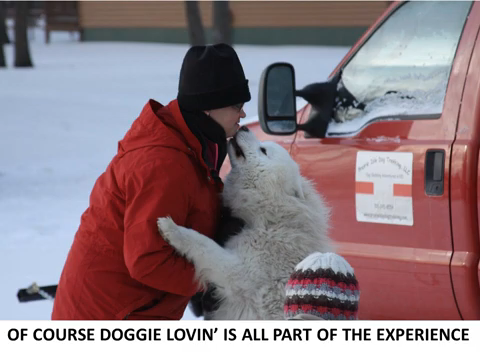
Helen L. Corlew runs a team of Samoyeds, Alaskan malamutes and Alaskan huskies. I am a Tellington TTouch practitioner and use this mode of work with training and living with my dogs.
Helen Corlew founded Prairie Isle Dog Trekking in Petersburg, North Dakota in 2010, and has spent the fifteen years since doing something most people only read about: teaching real dog sledding on real prairie terrain, at the edge of a landscape that doesn’t apologize for being difficult.
She is not a weekend enthusiast. She harnesses working dogs in January cold, trains handlers who have never touched a sled, and has built one of the only hands-on mushing education programs on the Northern Great Plains — from a single address on Highway 2, with no marketing budget and no shortcuts.
Her writing on Prairie Isle Dog Trekking reflects the same philosophy. Whether she is covering trail safety across the Rockies, breed behavior in extreme conditions, or what it actually takes to trek with a dog in the Alps, Helen writes from the position of someone who has done the work before writing the sentence.
She lives and runs dogs in Nelson County, North Dakota.
Kindly follow me on Social Media!
