

Why Do Dogs Walk in Circles Before Lying Down? 5 Reasons Explained
Dogs walk in circles before lying down because of inherited instincts from wild ancestors. The behaviour served 5 purposes: flattening the ground, detecting predators, marking territory, managing body temperature, and mentally transitioning from an active to a resting state.
What Are the Main Reasons Dogs Circle Before Lying Down?
Dogs circle before lying down due to a combination of survival instincts inherited from wild wolves and practical comfort-seeking behaviour. The behaviour pre-dates domestication by thousands of years. It persists in domestic dogs today because it is genetically hardwired rather than learned.
Dog behaviorist and veterinarian Dr. Christopher Pachel describes the behaviour as most likely associated with preparing the ground for a comfortable resting spot, with a secondary “unwinding” aspect as the dog transitions from an active state to rest.
Is It a Nesting Instinct?
Yes. The primary reason dogs circle before lying down is to create a comfortable sleeping space, a behaviour inherited from wild wolves that had no beds and slept on grass, soil, and uneven ground.
Wild wolves and early canids used circular movement to flatten tall grass, pat down vegetation, and remove hazards from a sleeping area. The circular motion smoothed out rocks, sticks, thorns, and insects before the animal lay down. Dr. Leslie Irvine, author of “If You Tame Me: Understanding Our Connection With Animals,” confirms that in the wild, circling would flatten grasses or snow and drive out snakes or large insects from the sleeping area.
Behavioural research supports this explanation. Studies show that dogs are more likely to circle before lying down when presented with a soft, uneven surface than a flat, firm one. The circling impulse activates in direct response to the texture and unevenness of the surface.
Modern dogs retain this instinct even when sleeping on flat, soft beds. The behaviour is compulsive rather than rational. It continues regardless of whether the surface requires preparation.
Is It About Detecting Predators?
Yes. Circling also served as a predator-detection mechanism for wild wolves. Wildlife biologists note that wolves sleep with their noses oriented toward the wind to detect incoming scents signalling danger.
Circling allowed the wolf to identify wind direction and position its nose accordingly before settling. A sleeping animal facing downwind would have no warning of an approaching threat. A few rotations allowed the wolf to identify the correct orientation before lying down.
The behaviour also functioned as a final environmental scan. Circling gave the animal a 360-degree view of the surrounding area. It allowed a last check for threats before committing to a vulnerable sleeping position.
Domestic dogs no longer face predator threats in most environments. The instinct persists regardless, because evolutionary behaviours do not disappear when the original threat is removed.
Is It About Territory Marking?
Yes. Circling before lying down also communicated territorial ownership to other pack members. Flattening a specific area created a visible sign that a sleeping spot was already claimed.
Dr. Leslie Irvine notes that circling and flattening the area would have left a visible mark to other wolves that the territory was already taken. This reduced confrontation within the pack over sleeping positions. It established a clear signal without the need for aggression.
Dogs also have scent glands in their paws. Walking in circles over a surface deposits scent from these glands, creating an olfactory mark in addition to the physical one. In multi-dog households, circling helps each dog assert ownership of a specific sleeping area without direct confrontation.
Is It a Comfort and Temperature Behaviour?
Yes. Circling helps dogs optimise their body position for thermal comfort. Wild canids used the shape and orientation of their resting position to retain or release heat.
Circular motion before lying down allows the dog to adjust the direction it faces and the position of its limbs, fur, and belly. Curling tightly retains heat. Stretching out with the belly exposed releases heat. The circling that precedes lying down is part of the process of finding the optimal orientation for the current temperature.
This thermoregulatory function is particularly visible in cold weather, when dogs take longer to circle and curl more tightly once settled. It is also visible in hot weather, when dogs circle to locate the coolest patch of ground before lying flat.
Circling also relieves pressure on joints and muscles before settling. This is especially relevant for senior dogs and dogs with arthritis or hip dysplasia, who may circle longer than younger dogs while finding a pain-free position.
Is It a Mental Transition Behaviour?
Yes. Circling serves a psychological function as well as a physical one. Dr. Pachel identifies an “unwinding” component to the behaviour, in which the dog uses the ritual to shift from an active, alert state to a calm, resting one.
The repetitive circular motion functions similarly to a wind-down routine. It signals to the dog’s nervous system that the period of activity is ending. This mental transition reduces arousal levels and prepares the dog for sleep.
Dogs commonly display this behaviour after high-activity periods such as play sessions, outdoor walks, or social interaction. The circling frequency and duration increase after stimulating activity because the dog requires a longer transition period to calm down before resting.
Is Circling Before Lying Down Normal in Dogs?
Yes. Circling before lying down is a normal, instinctive behaviour in all dog breeds. The number of circles varies between individual dogs, typically between 1 and 4 rotations before settling. No specific number of circles is more normal than another.
The behaviour is observed across all dog breeds regardless of size, coat length, or domestication history. It occurs on all surface types, including flat dog beds, sofas, blankets, outdoor grass, and bare floors.
When Is Circling Before Lying Down a Health Concern?
Circling becomes a health concern when it is excessive, compulsive, or accompanied by difficulty settling. 4 specific signs indicate that circling requires veterinary attention.
| Warning Sign | Possible Cause |
|---|---|
| Spinning for unusually long periods without lying down | Pain, cognitive dysfunction, vestibular disease |
| Getting up repeatedly after lying down and re-circling | Arthritis, hip dysplasia, joint pain |
| Circling in a fixed direction only (always clockwise or always counterclockwise) | Neurological condition, vestibular disease |
| Trouble walking in a straight line between circling episodes | Inner ear disorder, stroke, brain lesion |
Cognitive dysfunction syndrome is a condition in dogs comparable to dementia in humans. It causes disorientation and repetitive movements including pacing and circling. Senior dogs over the age of 10 are at higher risk.
Vestibular disease affects the inner ear and disrupts a dog’s sense of balance. It produces circling, head tilting, and loss of coordination. It is common in older dogs and typically appears suddenly.
See a vet if circling behaviour has changed noticeably from the dog’s established pattern, if it appears combined with any of the signs in the table above, or if the dog shows visible discomfort when lowering itself to lie down.
Do All Dogs Circle Before Lying Down?
Most dogs circle before lying down, but not all do. Individual variation is normal. Some dogs settle immediately with no preparation behaviour. Others circle 4 or more times before lowering themselves to the ground.
Factors that affect how frequently and extensively a dog circles include:
- Age: Puppies and senior dogs tend to circle more than adult dogs.
- Surface texture: Uneven or soft surfaces produce more circling than firm, flat ones.
- Energy level before rest: Dogs coming off high-activity periods circle more than dogs resting at a usual time.
- Breed: Working breeds, such as Border Collies and German Shepherds, and breeds with strong pack instincts tend to display more pronounced pre-rest rituals.
Why Do Dogs Scratch the Bed Before Lying Down?
Dogs scratch the bed before lying down for the same reasons they circle: to flatten the surface, regulate temperature, and mark territory with scent from paw glands. The 2 behaviours frequently occur together.
Scratching activates the scent glands in the paws more directly than circling alone. It also allows the dog to physically reshape softer surfaces such as blankets, duvets, and cushions into a preferred contour.
Both circling and scratching are classified as nesting behaviours. Both are inherited from wild ancestors that slept on natural, uneven terrain. Both persist in domestic dogs as instinctive rituals that serve comfort, safety, and territorial functions simultaneously.
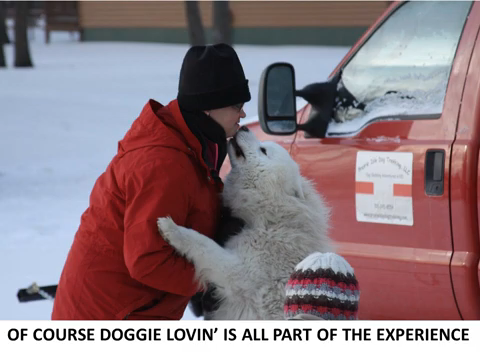
Helen L. Corlew runs a team of Samoyeds, Alaskan malamutes and Alaskan huskies. I am a Tellington TTouch practitioner and use this mode of work with training and living with my dogs.
Helen Corlew founded Prairie Isle Dog Trekking in Petersburg, North Dakota in 2010, and has spent the fifteen years since doing something most people only read about: teaching real dog sledding on real prairie terrain, at the edge of a landscape that doesn’t apologize for being difficult.
She is not a weekend enthusiast. She harnesses working dogs in January cold, trains handlers who have never touched a sled, and has built one of the only hands-on mushing education programs on the Northern Great Plains — from a single address on Highway 2, with no marketing budget and no shortcuts.
Her writing on Prairie Isle Dog Trekking reflects the same philosophy. Whether she is covering trail safety across the Rockies, breed behavior in extreme conditions, or what it actually takes to trek with a dog in the Alps, Helen writes from the position of someone who has done the work before writing the sentence.
She lives and runs dogs in Nelson County, North Dakota.
Kindly follow me on Social Media!
