


The best dog breeds for hiking combine high endurance, joint durability, and strong heat or cold tolerance. Research from the University of Helsinki’s Canine Genetics Research Group identifies stamina, body structure, and coat type as the 3 primary physical traits that determine a breed‘s trail suitability.
What Are the Best Dog Breeds for Hiking?
The best dog breeds for hiking are Labrador Retrievers, Siberian Huskies, Australian Shepherds, Vizslas, Border Collies, German Shepherds, Bernese Mountain Dogs, Weimaraners, Rhodesian Ridgebacks, and Portuguese Water Dogs. Each breed demonstrates high physical endurance, stable temperament, and structural fitness for extended outdoor activity. For the previous guide in this series, see Lightweight Dog Hiking Gear: Essential Kit, Weight Limits, and Trail-Ready Equipment.
These 10 breeds excel on trails for 3 shared reasons:
- High aerobic capacity — sustained cardiovascular output over distances of 5–15 miles
- Joint durability — low incidence of hip and elbow dysplasia relative to breed weight
- Trainability — responsive recall and leash manners reduce off-trail safety risks
What Traits Make a Dog Breed Good for Hiking?
A dog breed suited for hiking has 5 key traits: high stamina, a lean muscular build, breed-appropriate coat insulation, sound joint structure, and a stable temperament. Each trait directly affects trail performance and safety.
|
Trait |
Why It Matters on the Trail |
|---|---|
|
High stamina |
Sustains physical output over 5+ mile distances |
|
Lean muscular build |
Reduces joint stress on uneven and steep terrain |
|
Breed-appropriate coat |
Regulates body temperature across weather conditions |
|
Sound joint structure |
Lowers risk of injury on descents and rocky surfaces |
|
Stable temperament |
Supports safe interaction with wildlife, hikers, and dogs |
Table: 5 key hiking traits and their trail relevance for dog breeds.
What Are the Best Large Dog Breeds for Hiking?

The 6 best large dog breeds for hiking are Labrador Retrievers, German Shepherds, Siberian Huskies, Bernese Mountain Dogs, Weimaraners, and Rhodesian Ridgebacks. These breeds weigh between 45 lbs and 115 lbs and sustain trail distances of 8–20 miles per day.
Labrador Retriever
The Labrador Retriever is the most versatile large hiking breed. It tolerates temperatures from 20°F (−7°C) to 90°F (32°C), covers 10–14 miles per hike, and adapts to terrain types including forest trails, coastal paths, and mountain routes.
Labs weigh 55–80 lbs and have a water-resistant double coat. Hip dysplasia affects 12.6% of the breed, according to the Orthopedic Foundation for Animals (OFA). Annual hip screenings are recommended for Labs used on steep terrain.
Siberian Husky
The Siberian Husky is the best large breed for cold-weather and long-distance hiking. It covers 10–20 miles per day and maintains performance in temperatures as low as −60°F (−51°C).
Huskies weigh 35–60 lbs and have a dense double coat designed for sub-zero environments. Limit Husky hikes to below 75°F (24°C). Their double coat traps heat rapidly in warm conditions, increasing heatstroke risk.
German Shepherd
The German Shepherd is the best large breed for technical and mountainous trails. It has a muscular, agile build suited to elevation changes of 2,000–5,000 feet per hike.
German Shepherds weigh 50–90 lbs. The OFA reports hip dysplasia in 19.8% of the breed. Joint supplements and regular vet screenings are essential for German Shepherds hiking over 8 miles per session.
Bernese Mountain Dog
The Bernese Mountain Dog is best suited for moderate trails in cool climates. It performs optimally in temperatures between 35°F (2°C) and 65°F (18°C) and covers 5–10 miles per hike.
Berners weigh 70–115 lbs. Their thick tri-color coat provides insulation in alpine environments. Avoid summer midday hikes with this breed. Heat exhaustion risk increases above 70°F (21°C).
Weimaraner
The Weimaraner is the best large breed for high-speed trail running and endurance hiking. It sustains a pace of 5–8 mph over distances of 10–15 miles and thrives in temperate climates between 50°F (10°C) and 85°F (29°C).
Weimaraners weigh 55–90 lbs and have a short, low-maintenance coat. Their lean frame reduces thermal retention, making them one of the most heat-tolerant large hiking breeds.
Rhodesian Ridgeback
The Rhodesian Ridgeback is the best large breed for hot, dry trail environments. It tolerates temperatures up to 95°F (35°C) and covers 8–12 miles in arid and semi-arid terrain.
Ridgebacks weigh 70–85 lbs. Their short coat and African origins give them superior heat management relative to double-coated breeds of similar size.
What Are the Best Small Dog Breeds for Hiking?
The 4 best small dog breeds for hiking are Australian Terriers, Jack Russell Terriers, Beagles, and Miniature Australian Shepherds. These breeds weigh between 10 lbs and 30 lbs and cover 4–8 miles per hike.
- Jack Russell Terrier — 13–17 lbs; high energy; suited to rocky and woodland trails up to 6 miles
- Beagle — 20–30 lbs; strong scenting instinct; excels on forested trail systems with clear boundaries
- Australian Terrier — 14–16 lbs; muscular for its size; handles elevation changes up to 1,500 feet
- Miniature Australian Shepherd — 20–40 lbs; scaled-down stamina of the full-size breed; covers 5–8 miles
Small breed hikers require boots on exposed rock and asphalt surfaces. Paw pads on dogs under 25 lbs are thinner and more susceptible to surface heat and abrasion than those of larger breeds.
What Are the Best Dog Breeds for Mountain Hiking?
The 3 best dog breeds for mountain hiking are the Bernese Mountain Dog, Siberian Husky, and Australian Shepherd. Each breed was selectively developed for cold, high-elevation, or rugged terrain work.
The Australian Shepherd weighs 40–65 lbs and covers 10–15 miles in mountainous terrain. It has a medium-length double coat, strong paw pad durability, and a herding background that produces reliable trail focus and recall.
What Dog Breeds Should Avoid Hiking?
Brachycephalic breeds, giant breeds over 120 lbs, and chondrodystrophic breeds should avoid hiking on moderate to difficult trails. Their physical structures limit oxygen intake, joint tolerance, or spinal flexibility under sustained exertion.
Breeds that are poor trail candidates include:
- Bulldogs and Pugs — shortened airways reduce panting efficiency; heat exhaustion risk begins at 70°F (21°C)
- French Bulldogs — respiratory distress occurs at moderate exertion levels above 1 mile
- Dachshunds — elongated spines are highly susceptible to intervertebral disc disease (IVDD) on uneven terrain
- Basset Hounds — low ground clearance and heavy bone density limit performance on rocky or rooted trails
- Great Danes — joint stress on descents is disproportionate to breed size above 5 miles per hike
A 2019 study in Canine Genetics and Epidemiology found that brachycephalic breeds show measurable oxygen desaturation after 15 minutes of moderate exercise, compared to 45–60 minutes in mesocephalic breeds.
What Health Conditions Limit a Dog’s Hiking Ability?
4 health conditions limit a dog’s hiking ability: hip dysplasia, elbow dysplasia, intervertebral disc disease (IVDD), and brachycephalic obstructive airway syndrome (BOAS). Each condition reduces either joint tolerance or oxygen delivery during sustained physical activity.
Obtain veterinary clearance before beginning a hiking routine for any dog diagnosed with these conditions. Dogs with mild hip dysplasia can hike 2–3 miles on flat, soft surfaces with joint supplements and proper warm-up protocols.
How Do You Choose the Best Dog Breed for Hiking?
Choose the best dog breed for hiking by matching 4 criteria: trail distance goal, climate type, terrain difficulty, and the owner’s activity pace. No single breed excels in every trail environment.
Use this 4-step selection process:
- Define trail distance — short hikes under 5 miles suit most breeds; hikes over 10 miles require high-stamina breeds
- Identify climate — hot climates favor Vizslas and Ridgebacks; cold climates favor Huskies and Berners
- Assess terrain — rocky and steep terrain requires sound joint structure and strong paw pads
- Match activity pace — running-pace hikers suit Border Collies and Weimaraners; moderate-pace hikers suit Labs and Australian Shepherds
Best Dog Breeds for Hiking: Breed Comparison Table
|
Breed |
Weight |
Max Trail Distance |
Best Climate |
Terrain Type |
|---|---|---|---|---|
|
Labrador Retriever |
55–80 lbs |
14 miles |
Temperate |
All terrain |
|
Siberian Husky |
35–60 lbs |
20 miles |
Cold |
Snow, forest, mountain |
|
Australian Shepherd |
40–65 lbs |
15 miles |
Temperate |
Mountain, forest |
|
Vizsla |
44–60 lbs |
12 miles |
Warm |
Open and woodland trails |
|
Border Collie |
30–55 lbs |
15 miles |
Temperate |
All terrain |
|
German Shepherd |
50–90 lbs |
12 miles |
Temperate |
Technical and mountain |
|
Bernese Mountain Dog |
70–115 lbs |
10 miles |
Cool |
Alpine and forest |
|
Weimaraner |
55–90 lbs |
15 miles |
Warm–temperate |
Open and forest trails |
|
Rhodesian Ridgeback |
70–85 lbs |
12 miles |
Hot |
Arid and semi-arid |
|
Portuguese Water Dog |
35–60 lbs |
10 miles |
Temperate |
Coastal and forest |
Table: 10 best hiking dog breeds with weight, maximum trail distance, optimal climate, and best terrain type.
Selecting the right breed for hiking begins with understanding trail conditions, not personal preference alone. The OFA’s 2022 Breed Health Survey confirms that structurally sound dogs matched to appropriate terrain sustain active hiking lives of 8–12 years with consistent veterinary monitoring and correct gear.
Related guides
- Hiking With a Border Collie: Distance, Training, Gear, and Trail Safety
- Hiking with a Large Dog: 9 Essential Tips and Trail Safety Rules

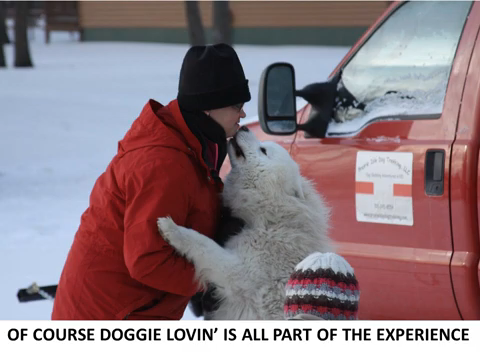
Helen L. Corlew runs a team of Samoyeds, Alaskan malamutes and Alaskan huskies. I am a Tellington TTouch practitioner and use this mode of work with training and living with my dogs.
Helen Corlew founded Prairie Isle Dog Trekking in Petersburg, North Dakota in 2010, and has spent the fifteen years since doing something most people only read about: teaching real dog sledding on real prairie terrain, at the edge of a landscape that doesn’t apologize for being difficult.
She is not a weekend enthusiast. She harnesses working dogs in January cold, trains handlers who have never touched a sled, and has built one of the only hands-on mushing education programs on the Northern Great Plains — from a single address on Highway 2, with no marketing budget and no shortcuts.
Her writing on Prairie Isle Dog Trekking reflects the same philosophy. Whether she is covering trail safety across the Rockies, breed behavior in extreme conditions, or what it actually takes to trek with a dog in the Alps, Helen writes from the position of someone who has done the work before writing the sentence.
She lives and runs dogs in Nelson County, North Dakota.
Kindly follow me on Social Media!


