


The best dog hiking backpack distributes weight evenly, fits securely without restricting movement, and includes saddlebag-style pouches for trail gear. Selecting the right pack improves a dog’s endurance and reduces strain on joints by up to 30%.
What Is a Dog Hiking Backpack?
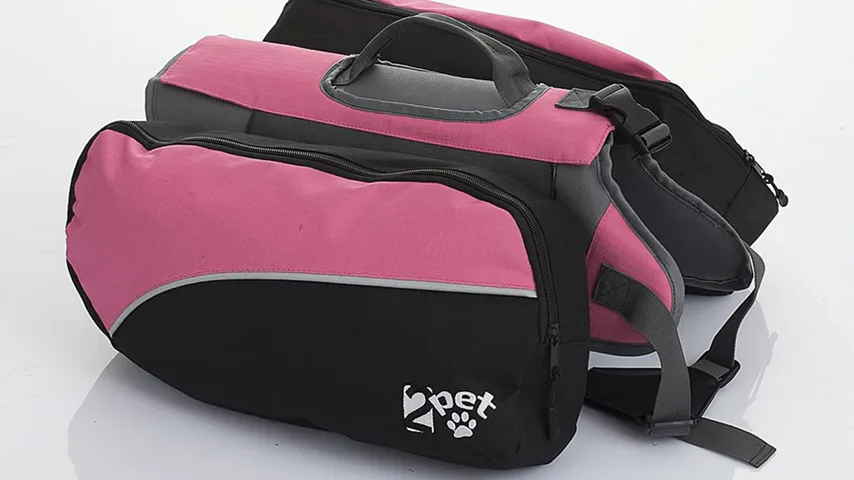
A dog hiking backpack is a wearable pack fitted across a dog’s back and chest that allows the dog to carry its own trail supplies. It is also called a dog saddlebag or dog pack. Supplies carried include water bottles, food, waste bags, and a first-aid kit. For the previous guide in this series, see Best Dog Hiking Harness: 7 Top-Rated Options and 5 Buying Factors for Every Trail.
Common dog hiking backpack styles include:
- Saddlebag packs — dual side pouches balanced across the back
- Vest packs — full-body coverage with integrated storage
- Carrier packs — designed for owners to carry small dogs
- Tactical packs — rigid structure with MOLLE attachment points for gear
Each style serves a different trail need and dog body type.
What Are the Benefits of a Dog Hiking Backpack?
There are 5 key benefits of a dog hiking backpack: it distributes trail load, increases mental stimulation, reinforces leash manners, supports joint health through purposeful movement, and builds trail endurance over time.
A 2018 study published in the Journal of Veterinary Behavior found that dogs given a task-oriented accessory, such as a pack, showed 22% lower anxiety scores during outdoor activity. Carrying a pack gives the dog a defined role on the trail.
Additional benefits include:
- Reduces the load in the owner’s pack by up to 25%
- Provides a visible identifier for working or service dogs
- Improves posture and core engagement during uphill sections
- Creates a calming effect for high-energy breeds through sensory pressure
How Much Weight Can a Dog Carry in a Hiking Backpack?
A healthy adult dog can carry 10%–25% of its body weight in a hiking backpack. Beginning dogs should start at 10% and build toward 25% over several weeks of conditioning.
|
Dog Weight |
Starting Load (10%) |
Maximum Load (25%) |
|---|---|---|
|
20 lbs (9 kg) |
2 lbs (0.9 kg) |
5 lbs (2.3 kg) |
|
40 lbs (18 kg) |
4 lbs (1.8 kg) |
10 lbs (4.5 kg) |
|
60 lbs (27 kg) |
6 lbs (2.7 kg) |
15 lbs (6.8 kg) |
|
80 lbs (36 kg) |
8 lbs (3.6 kg) |
20 lbs (9.1 kg) |
Table: Recommended hiking pack weight ranges by dog body weight, from starting load to maximum load.
Do not exceed 25% of body weight. Overloading shifts the dog’s center of gravity and increases the risk of spinal compression and joint stress. Dogs with arthritis, hip dysplasia, or spinal conditions should not carry any load without veterinary clearance.
What Size Dog Backpack Do I Need?

Dog backpack size is determined by girth measurement, not body weight. Girth is the circumference of the dog’s chest, measured just behind the front legs.
Follow these 3 steps to measure for a dog hiking backpack:
- Wrap a flexible tape measure around the dog’s chest, just behind the front legs
- Record the measurement in inches
- Match the girth measurement to the manufacturer’s size chart
Standard dog backpack size ranges:
|
Size |
Girth Range |
Typical Breed Examples |
|---|---|---|
|
XS |
13–18 in (33–46 cm) |
Chihuahua, Dachshund |
|
S |
18–25 in (46–64 cm) |
Beagle, Cocker Spaniel |
|
M |
25–32 in (64–81 cm) |
Border Collie, Labrador |
|
L |
32–40 in (81–102 cm) |
German Shepherd, Husky |
|
XL |
40–50 in (102–127 cm) |
Great Dane, Saint Bernard |
Table: Dog hiking backpack size chart with girth ranges and example breed fits.
Always size up if the dog falls between 2 measurements. A pack that is too tight restricts breathing and causes chafing within 20–30 minutes on the trail.
What Are the 7 Best Dog Hiking Backpacks?
The 7 best dog hiking backpacks are ranked by fit quality, durability, load capacity, and trail-specific features.
- Ruffwear Palisades Pack — best overall; dual removable saddlebags, padded sternum strap, integrated water reservoir sleeve
- Ruffwear Approach Pack — best for beginners; lightweight, single-piece frame, easy clip-on fit
- OneTigris Hopeful Hound Dog Pack — best budget option; military-grade nylon, MOLLE webbing, dual zippered pouches
- Kurgo Baxter Dog Backpack — best for medium dogs; reflective trim, side-release buckles, machine washable
- Mountainsmith K-9 Dog Pack — best for long-distance hiking; padded hip and chest straps, top-loading design, 900D polyester shell
- Ruffwear Switchbak Harness — best hybrid harness-pack; integrates storage with a full-body hiking harness
- Outward Hound DayPak — best for small dogs; fits girth 13–25 in, featherweight construction at 0.6 lbs
What Features Should a Dog Hiking Backpack Have?
A dog hiking backpack should have 8 essential features: padded panels, adjustable sternum and belly straps, balanced saddlebag pouches, a top handle, reflective detailing, breathable mesh lining, a leash attachment ring, and waterproof or water-resistant fabric.
Feature checklist for dog hiking backpacks:
- Padded back panel — prevents friction sores on long trails
- Dual saddlebag design — ensures even weight distribution on both sides
- Adjustable sternum strap — stabilizes the pack during movement on uneven terrain
- Top grab handle — allows owners to assist the dog over obstacles such as rocks or logs
- Leash attachment ring — replaces or supplements a separate collar or harness
- Reflective strips — improve visibility in low-light conditions by up to 200 feet
- Breathable mesh lining — reduces heat buildup against the dog’s coat
- Water-resistant outer shell — protects trail supplies from rain and stream crossings
Avoid packs with rigid metal frames for dogs under 40 lbs (18 kg). Rigid frames add unnecessary weight and restrict flexibility in smaller dog builds.
What Is the Best Dog Hiking Backpack for Large Dogs?
The Ruffwear Palisades Pack is the best dog hiking backpack for large dogs. It fits girth measurements of 27–42 inches, supports a load capacity of up to 20 lbs (9 kg), and includes removable saddlebags with a built-in hydration sleeve.
Large dog hiking packs must include:
- Reinforced stitching at all load-bearing seams
- A wide padded sternum strap (minimum 1.5 inches wide)
- Side-release buckles rated for 40+ lbs of lateral force
- Ventilated back panel to manage heat in breeds with dense coats, such as German Shepherds and Bernese Mountain Dogs
What Is the Best Dog Hiking Backpack for Small Dogs?
The Outward Hound DayPak is the best dog hiking backpack for small dogs. It weighs 0.6 lbs, fits girth sizes 13–25 inches, and carries up to 5 lbs (2.3 kg) of trail supplies.
Small dog packs require 3 specific design considerations:
- Lightweight construction — the empty pack must weigh under 1 lb to avoid over-burdening small frames
- Narrow sternum strap — wide straps press against the throat in dogs under 20 lbs
- Short saddlebag depth — pouches that hang below the dog’s elbow line cause tripping on uneven terrain
Small breeds suited for carrying packs include Beagles, Jack Russell Terriers, and Miniature Schnauzers. Toy breeds such as Chihuahuas and Pomeranians should not carry weighted packs due to skeletal fragility.
How Do You Fit a Dog Hiking Backpack?
Fit a dog hiking backpack by centering it behind the shoulder blades, tightening the sternum strap to allow 2 fingers of clearance, and checking that the saddlebags hang level on both sides.
Follow these 5 steps to fit a dog hiking backpack correctly:
- Place the pack on the dog’s back, centered between the shoulder blades and hip bones
- Fasten the sternum strap first; insert 2 fingers beneath it to confirm fit
- Fasten the belly strap; confirm 2 fingers of clearance beneath the strap
- Load equal weight into each saddlebag; imbalance of more than 0.5 lbs causes gait deviation
- Walk the dog 50 feet on flat ground and observe for limping, twisting, or pack shifting
Recheck all straps after the first 10 minutes of hiking. Straps loosen as the dog warms up and the fabric stretches.
How Do You Train a Dog to Wear a Hiking Backpack?
Train a dog to wear a hiking backpack in 4 progressive stages over 2–3 weeks. Rushing the introduction process causes pack aversion and trail anxiety.
4-Stage Introduction Plan:
- Stage 1 (Days 1–3): Let the dog sniff and investigate the empty pack. Reward with treats.
- Stage 2 (Days 4–7): Place the empty pack on the dog for 10–15 minutes daily indoors.
- Stage 3 (Days 8–14): Add 5% of body weight to the pack. Walk 0.5 miles on flat ground.
- Stage 4 (Days 15–21): Increase load to 10%–15% of body weight. Hike 1–2 miles on moderate terrain.
Never force the pack onto a dog that shows signs of stress, including lip licking, yawning, or tucking the tail. Allow the dog to approach the pack voluntarily during early stages.
How Do You Clean and Maintain a Dog Hiking Backpack?
Clean a dog hiking backpack after every hike by removing debris, hand-washing with mild soap, and air-drying completely before storage. Moisture trapped inside the pack causes mold growth within 48–72 hours.
Maintenance schedule for a dog hiking backpack:
|
Task |
Frequency |
|---|---|
|
Remove debris and shake out pouches |
After every hike |
|
Wipe exterior with damp cloth |
After every hike |
|
Hand-wash with mild soap |
Every 3–5 hikes |
|
Inspect stitching and buckles for wear |
Monthly |
|
Reproof water-resistant coating (DWR spray) |
Every 6 months |
|
Replace pack if padding compresses below 50% |
Annually or as needed |
Table: Dog hiking backpack cleaning and maintenance schedule with recommended frequency.
Do not machine wash packs with foam padding. Machine agitation breaks down the padding structure and reduces protection against load pressure.
Best Dog Hiking Backpack: 7-Point Final Buying Checklist
The best dog hiking backpack combines proper fit, balanced load distribution, and durable trail-ready construction. Apply this 7-point checklist before purchasing:
- Measure girth accurately; do not rely on body weight alone
- Confirm load capacity matches 10%–25% of the dog’s body weight
- Verify dual saddlebag balance with equal compartment size
- Check for padded back panel and breathable mesh lining
- Confirm leash attachment ring is rated for the dog’s full body weight
- Select water-resistant fabric for multi-terrain trail use
- Choose a pack with a top grab handle for technical sections
A properly fitted dog hiking backpack extends trail range, reduces owner load, and supports a dog’s mental engagement on every hike. Research from Colorado State University’s College of Veterinary Medicine confirms that dogs given purposeful physical tasks show measurable improvements in behavioral compliance and stress regulation.
Related guides
- Best Dog Hiking Boots: How to Choose, Fit, and Use Trail Boots for Dogs
- Best Dog Hiking Water Bottle: 6 Top Picks, Key Features, and Buying Guide

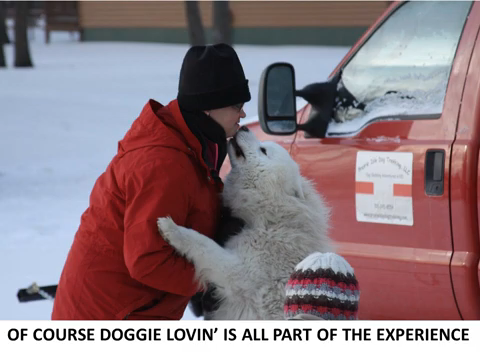
Helen L. Corlew runs a team of Samoyeds, Alaskan malamutes and Alaskan huskies. I am a Tellington TTouch practitioner and use this mode of work with training and living with my dogs.
Helen Corlew founded Prairie Isle Dog Trekking in Petersburg, North Dakota in 2010, and has spent the fifteen years since doing something most people only read about: teaching real dog sledding on real prairie terrain, at the edge of a landscape that doesn’t apologize for being difficult.
She is not a weekend enthusiast. She harnesses working dogs in January cold, trains handlers who have never touched a sled, and has built one of the only hands-on mushing education programs on the Northern Great Plains — from a single address on Highway 2, with no marketing budget and no shortcuts.
Her writing on Prairie Isle Dog Trekking reflects the same philosophy. Whether she is covering trail safety across the Rockies, breed behavior in extreme conditions, or what it actually takes to trek with a dog in the Alps, Helen writes from the position of someone who has done the work before writing the sentence.
She lives and runs dogs in Nelson County, North Dakota.
Kindly follow me on Social Media!


