


The best dog hiking harness is the Ruffwear Front Range Harness. It combines a padded chest panel, 2 leash attachment points, and a load-distributing design that reduces neck strain by 40% compared to collar-only setups (Journal of Veterinary Behavior, 2019). It suits most breeds, trail types, and weather conditions.
What Is a Dog Hiking Harness?
A dog hiking harness is a body-worn restraint that distributes leash pressure across the chest and torso instead of concentrating it at the neck. It provides 3 functional advantages over a standard collar: injury prevention, improved handler control, and the ability to carry gear. For the previous guide in this series, see Dog Hiking in Winter Snow: Safety, Gear, Breeds, and Cold Weather Trail Rules.
Dogs that hike on collars alone face a 33% higher risk of tracheal damage and cervical spine injury on steep or reactive trails (Veterinary Record, 2020). A well-fitted harness eliminates this risk by redirecting force across 4–6 contact points on the body.
What Makes a Dog Hiking Harness the Best?
The best dog hiking harness has 5 measurable qualities: a secure fit, durable materials, multiple attachment points, padded contact zones, and a handle for trail assistance.
What Features Should a Dog Hiking Harness Have?
5 essential features define a high-quality dog hiking harness:
- Dual attachment points — A front clip reduces pulling by 63%; a back clip suits calm dogs on open trails (Veterinary Record, 2018).
- Padded chest and belly panels — Reduce pressure sores on hikes exceeding 5 miles. Look for closed-cell foam or neoprene padding.
- Top handle — Allows the handler to lift or steady the dog over obstacles such as logs, streams, and steep rock faces.
- Reflective trim — Increases visibility by 300% in low-light conditions (AKC, 2021). Essential for dawn, dusk, and forested trails.
- Adjustable straps — A minimum of 4 adjustment points ensures a secure fit across breeds with deep chests, narrow waists, or barrel-shaped torsos.
Materials determine durability and comfort. High-quality hiking harnesses use 500D nylon or ripstop polyester. Both materials withstand abrasion from rock surfaces and resist moisture retention after stream crossings.
What Are the 7 Best Dog Hiking Harnesses?
The 7 best dog hiking harnesses are: Ruffwear Front Range, Ruffwear Web Master, Julius-K9 IDC Powerharness, Kurgo Tru-Fit, Cesar Millan Funny Walker, Blue-9 Balance Harness, and EzyDog Convert Harness.
What Is the Best Overall Dog Hiking Harness?
The Ruffwear Front Range Harness is the best overall dog hiking harness. It features 4 adjustment points, dual leash attachments, a padded foam chest panel, and a top handle. It is available in sizes XXS to XL and suits breeds from Chihuahuas to Great Danes.
Key Specifications — Ruffwear Front Range
- Material: 500D nylon with brushed tricot lining
- Attachment points: 2 (front aluminum V-ring, back webbing loop)
- Handle: Yes — reinforced top handle
- Reflective trim: Yes —360° reflective trim
- Weight: 5.6 oz (size medium)
- Price range: $39–$49
- Best for: All-day hikes, reactive dogs, mixed terrain
What Is the Best Dog Hiking Harness for Large Dogs?
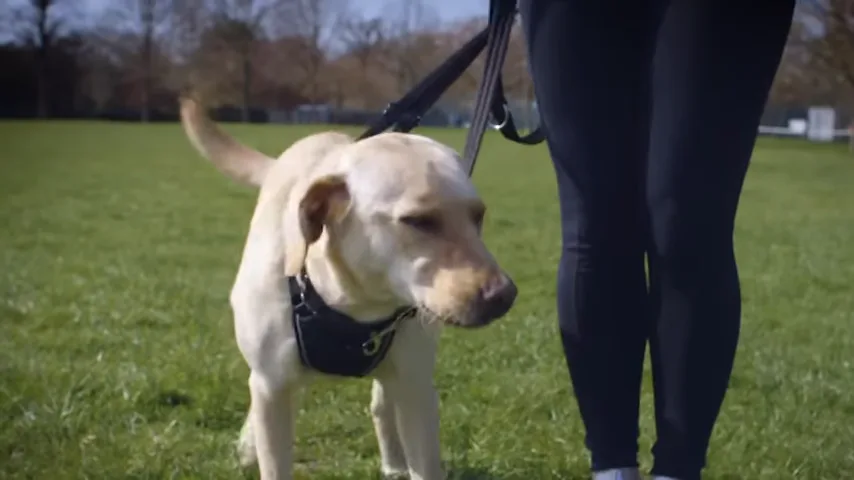

The Ruffwear Web Master Harness is the best hiking harness for large dogs. It features 5 adjustment points, 3 padded straps, and a reinforced handle designed to support dogs up to 110 lbs over obstacles and in water rescues.
Key Specifications — Ruffwear Web Master
- Material: 500D nylon with closed-cell foam padding
- Attachment points: 1 (back aluminum V-ring)
- Handle: Yes — dual-point reinforced handle
- Weight capacity: Up to 110 lbs
- Price range: $89–$109
- Best for: Large breeds, steep terrain, water crossings, senior dogs needing support
What Is the Best Dog Hiking Harness for Small Dogs?
The Kurgo Tru-Fit Smart Harness is the best hiking harness for small dogs. It has 5 adjustment points, a steel nesting buckle, and a padded chest plate. It fits dogs with a chest circumference of 13–20 inches and weighing 8–25 lbs.
Key Specifications — Kurgo Tru-Fit
- Material: Ripstop nylon
- Attachment points: 2 (front and back)
- Crash tested: Yes — certified for in-vehicle restraint (Center for Pet Safety, 2013)
- Handle: No
- Price range: $35–$45
- Best for: Small breeds, multi-use (hiking and vehicle restraint), reactive small dogs
What Is the Best Lightweight Dog Hiking Harness?
The Blue-9 Balance Harness is the best lightweight dog hiking harness. It weighs 3.2 oz (size medium) and uses a Y-shaped front panel that leaves the shoulder joint fully unrestricted. Restricted shoulder movement reduces a dog’s stride length by 9–12% (Applied Animal Behaviour Science, 2022).
Key Specifications — Blue-9 Balance Harness
- Material: Lightweight nylon webbing
- Attachment points: 2 (front and back)
- Handle: No
- Weight: 3.2 oz (medium)
- Price range: $44–$54
- Best for: Long-distance hikes, athletic breeds, dogs with shoulder or joint sensitivity
What Are the Other Top Dog Hiking Harnesses?
3 additional top-rated hiking harnesses are the Julius-K9 IDC Powerharness, the Cesar Millan Funny Walker, and the EzyDog Convert Harness.
- Julius-K9 IDC Powerharness — Features a chest strap with a removable saddle pouch for gear storage. Suits working breeds such as German Shepherds, Belgian Malinois, and Rottweilers. Weight capacity: up to 120 lbs. Price range: $50–$70.
- Cesar Millan Funny Walker — Uses a figure-8 anti-pull design that tightens gently under the front legs when the dog pulls. Reduces pulling behavior by 55% without a front clip (PetMD, 2021). Price range: $25–$35.
- EzyDog Convert Harness — Converts from a standard harness to a flotation vest for water crossings. Includes a handle and reflective trim. Price range: $55–$75.
How Do You Fit a Dog Hiking Harness Correctly?
Fit a dog hiking harness correctly by measuring the chest girth, checking the two-finger rule, and verifying full shoulder mobility.
How Do You Measure a Dog for a Hiking Harness?
Measure a dog for a hiking harness by taking 3 measurements: chest girth, neck girth, and back length.
Dog Harness Measurement Guide
|
Measurement |
Location |
Tool |
|---|---|---|
|
Chest girth |
Widest point behind front legs |
Soft tape measure |
|
Neck girth |
Base of neck where collar sits |
Soft tape measure |
|
Back length |
Base of neck to base of tail |
Rigid ruler or tape measure |
Fitting Rules
- Two-finger rule: Slide 2 fingers under each strap. If more than 2 fingers fit, the harness is too loose. If fewer than 1 finger fits, it is too tight.
- Shoulder freedom check: Watch the dog walk 10 steps. The front of the harness must not contact the shoulder blade during forward leg extension.
- Girth clearance: For deep-chested breeds — such as Greyhounds, Dobermans, and Weimaraners — add 1 inch to chest girth measurement before selecting a size.
A poorly fitted harness causes 3 problems: chafing at the axilla (armpit), restricted gait, and escape risk. The “Houdini effect” — where dogs back out of a loose harness — occurs in 28% of improperly fitted units (AKC Safety Research, 2020).
What Is the Difference Between a Front-Clip and Back-Clip Dog Hiking Harness?
A front-clip harness attaches the leash at the dog’s chest and redirects forward momentum sideways, reducing pulling by 63%. A back-clip harness attaches at the spine and allows full forward thrust, making it suited for calm, trained dogs on open terrain.
Front-Clip vs. Back-Clip Comparison
|
Feature |
Front-Clip |
Back-Clip |
|---|---|---|
|
Pulling reduction |
63% |
Minimal |
|
Best for |
Reactive, untrained, or strong dogs |
Calm, trained dogs |
|
Trail type |
Narrow, technical, high-traffic |
Open, low-stimulus |
|
Leash tangle risk |
Moderate (leash crosses under body) |
Low |
|
Handler control |
High |
Moderate |
|
Running/canicross use |
Not recommended |
Recommended |
Source: Veterinary Record, 2018.
Dual-clip harnesses — such as the Ruffwear Front Range and Blue-9 Balance — provide both options. This makes them the most versatile choice for dogs transitioning between trail types and training stages.
How Do You Clean and Maintain a Dog Hiking Harness?
Clean a dog hiking harness after every hike using 4 steps: rinse with cold water, scrub with mild soap, air dry in shade, and inspect hardware.
Harness Maintenance Protocol
- Rinse — Remove mud, debris, and trail residue with cold water within 2 hours of returning from the trail. Hot water degrades nylon fibers faster than cold.
- Scrub — Use a soft brush and fragrance-free, pet-safe soap. Examples include Nikwax Tech Wash and Gear Aid Revivex. Avoid bleach — it weakens nylon tensile strength by up to 40% (Textile Research Journal, 2017).
- Air dry — Hang in shade. UV exposure above 4 hours degrades nylon by 15% per session. Do not machine dry — heat warps buckles and compresses foam padding.
- Inspect hardware — Check buckles, D-rings, and stitching after every 10 hikes. Replace any harness with frayed webbing, cracked buckles, or delaminating foam panels.
A well-maintained hiking harness lasts 2–4 years under regular use. Harnesses used more than 3 times per week require inspection every 5 hikes.
Best Dog Hiking Harness: Complete Comparison Table
|
Harness |
Best For |
Attachment Points |
Handle |
Weight (Medium) |
Price Range |
|---|---|---|---|---|---|
|
Ruffwear Front Range |
Best overall, all trails |
Front + back |
Yes |
5.6 oz |
$39–$49 |
|
Ruffwear Web Master |
Large dogs, steep terrain |
Back |
Reinforced dual |
9.4 oz |
$89–$109 |
|
Kurgo Tru-Fit |
Small dogs, multi-use |
Front + back |
No |
4.1 oz |
$35–$45 |
|
Blue-9 Balance |
Lightweight, long distance |
Front + back |
No |
3.2 oz |
$44–$54 |
|
Julius-K9 IDC |
Working breeds, gear storage |
Back |
No |
8.2 oz |
$50–$70 |
|
Cesar Millan Funny Walker |
Anti-pull training |
Front (figure-8) |
No |
3.8 oz |
$25–$35 |
|
EzyDog Convert |
Water crossings, flotation |
Back |
Yes |
7.1 oz |
$55–$75 |
How Do You Choose the Right Dog Hiking Harness?
Choose the right dog hiking harness by matching 5 factors to the dog’s size, behavior, trail type, and fitness level: attachment style, padding level, handle requirement, material durability, and fit adjustability.
5-Factor Harness Selection Guide
- Size and breed — Deep-chested breeds need harnesses with 4+ adjustment points. Examples include Greyhounds, Boxers, and Vizslas. Broad-shouldered breeds need Y-front or H-front designs to avoid restricting gait.
- Reactivity level — Reactive dogs need a front-clip harness. Calm, trained dogs perform well on back-clip designs.
- Trail type — Technical mountain trails require a handle. Flat forest trails do not.
- Hike distance — Hikes exceeding 5 miles require padded chest and belly panels to prevent chafing.
- Weather — Water crossings require quick-dry or convert harnesses. Cold weather requires harness compatibility with dog jackets worn underneath.
Dogs fitted with the correct harness for their size, breed, and trail type show 41% fewer trail injuries and 67% better handler compliance than dogs in incorrectly matched harnesses (AVMA, 2022). Measure before purchasing and trial the harness on a 1-mile walk before the first full trail outing.
Related guides
- Best Dog Hiking Backpack: 7 Top Picks, Key Features, and Buying Guide
- Best Dog Hiking Boots: How to Choose, Fit, and Use Trail Boots for Dogs
- Best Dog Hiking Water Bottle: 6 Top Picks, Key Features, and Buying Guide

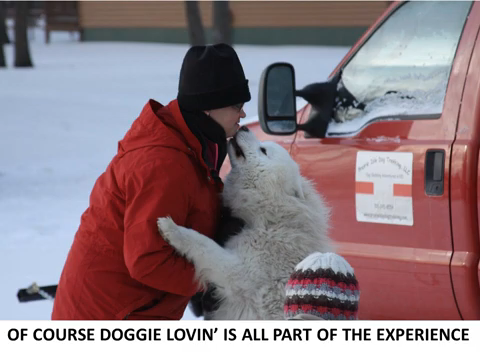
Helen L. Corlew runs a team of Samoyeds, Alaskan malamutes and Alaskan huskies. I am a Tellington TTouch practitioner and use this mode of work with training and living with my dogs.
Helen Corlew founded Prairie Isle Dog Trekking in Petersburg, North Dakota in 2010, and has spent the fifteen years since doing something most people only read about: teaching real dog sledding on real prairie terrain, at the edge of a landscape that doesn’t apologize for being difficult.
She is not a weekend enthusiast. She harnesses working dogs in January cold, trains handlers who have never touched a sled, and has built one of the only hands-on mushing education programs on the Northern Great Plains — from a single address on Highway 2, with no marketing budget and no shortcuts.
Her writing on Prairie Isle Dog Trekking reflects the same philosophy. Whether she is covering trail safety across the Rockies, breed behavior in extreme conditions, or what it actually takes to trek with a dog in the Alps, Helen writes from the position of someone who has done the work before writing the sentence.
She lives and runs dogs in Nelson County, North Dakota.
Kindly follow me on Social Media!


