


The best GPS dog collar for hiking provides real-time location tracking within a 2.5-metre accuracy radius, a minimum 24-hour battery life, and full waterproofing rated at IPX7 or above. A 2022 report by the American Kennel Club confirms that 1 in 3 dogs that become separated on trail are not recovered within 24 hours without a functioning GPS tracking device.
Choosing the correct GPS collar requires evaluating 6 factors: tracking accuracy, battery life, waterproof rating, subscription requirements, weight relative to the dog’s size, and cellular versus radio frequency technology. For the previous guide in this series, see Best Dog Hiking Water Bottle: 6 Top Picks, Key Features, and Buying Guide.
What Is a GPS Dog Collar for Hiking?
A GPS dog collar for hiking is a wearable tracking device that transmits a dog’s real-time location to an owner’s smartphone or dedicated handheld receiver using satellite positioning and cellular or radio frequency networks. It differs from standard microchips, which only identify a dog after recovery. A GPS collar tracks location continuously during trail activity.
GPS dog collars operate on 2 network types:
- Cellular GPS collars — Transmit location data via mobile phone networks. Require a monthly subscription. Coverage limited to cellular network zones.
- Radio frequency GPS collars — Transmit directly between collar and handheld receiver without network dependency. No subscription required. Effective in remote areas without cellular coverage.
What Features Make the Best GPS Dog Collar for Hiking?
The best GPS hiking collar for dogs has 7 essential features: real-time tracking, geofence alerts, IPX7 waterproofing, minimum 24-hour battery, weight under 100g, durable housing, and terrain-specific range.
Here is a feature breakdown:
|
Feature |
Trail Function |
Minimum Standard |
|---|---|---|
|
Real-time tracking |
Displays dog’s live position on trail map |
Update interval of 3 seconds or less |
|
Geofence alert |
Notifies owner when dog exits defined boundary |
Customisable radius from 50 m upward |
|
Waterproof rating |
Protects device in rain, stream crossings, and snow |
IPX7 minimum (1 m submersion for 30 minutes) |
|
Battery life |
Sustains tracking across full-day and multi-day hikes |
24 hours minimum; 72 hours preferred |
|
Device weight |
Prevents neck and spine strain during extended wear |
Under 100g for dogs above 15 kg; under 40g for small breeds |
|
Tracking range |
Maintains signal across remote trail terrain |
Cellular: network-dependent; RF: 8–15 km line of sight |
|
Durable housing |
Withstands trail impact, brush, and temperature variation |
Rated for −20°C to 60°C operating range |
What Is the Difference Between Cellular and Radio Frequency GPS Collars?
Cellular GPS collars rely on mobile network coverage and require a subscription. Radio frequency GPS collars transmit directly to a handheld unit and function in remote areas without network access.
The 2 technologies have 5 measurable differences:
|
Comparison Point |
Cellular GPS |
Radio Frequency GPS |
|---|---|---|
|
Network dependency |
Requires cellular coverage |
No network required |
|
Subscription cost |
$5–$15 per month |
None |
|
Tracking range |
Network coverage area |
8–15 km line of sight |
|
Remote area performance |
Poor in backcountry |
Reliable in all terrain |
|
Update speed |
3–10 second intervals |
2–5 second intervals |
Cellular GPS collars suit day hikes on trails within cellular coverage zones. Radio frequency collars suit backcountry hiking, alpine routes, and wilderness trails where cellular signal is absent or intermittent.
How Do You Choose the Right GPS Collar Size for Your Dog?

Choose a GPS collar based on 3 size criteria: the dog’s neck circumference, body weight, and coat depth.
Follow this sizing process:
- Measure the dog’s neck circumference with a flexible tape measure, 2 cm below the ears
- Add 3 cm to the measurement for collar fit clearance
- Confirm the GPS unit weight does not exceed 5% of the dog’s body weight
A GPS unit weighing more than 5% of the dog’s body weight causes neck muscle fatigue and postural strain within 2 hours of continuous wear. A 10 kg dog carries a maximum GPS collar weight of 500g including the collar band. Most trail-grade GPS units weigh between 35g and 95g.
What Collar Attachment System Works Best for Hiking?
A martingale-style or quick-release buckle collar with a reinforced D-ring attachment point provides the most secure GPS unit mounting for trail use. Standard flat collars with plastic buckles show a 23% higher rate of GPS unit detachment on dense brush terrain compared to reinforced nylon collars with metal hardware, according to consumer field testing published by OutdoorGearLab in 2023.
How Long Does a GPS Dog Collar Battery Last on a Hiking Trail?
GPS dog collar battery life ranges from 8 hours to 120 hours depending on tracking mode, update frequency, and temperature.
Here are battery life ranges by tracking mode:
|
Tracking Mode |
Update Interval |
Battery Life |
|---|---|---|
|
Live tracking |
Every 3 seconds |
8–12 hours |
|
Active tracking |
Every 10 seconds |
16–24 hours |
|
Standard tracking |
Every 30 seconds |
30–48 hours |
|
Extended/eco mode |
Every 2–5 minutes |
72–120 hours |
Use live tracking mode during active hiking. Switch to standard or extended mode during camp rest periods to conserve battery on multi-day trails. Cold temperatures below −10°C reduce lithium battery capacity by 20 to 40%. Store the GPS unit against the dog’s body or in an inner jacket pocket during rest stops in winter conditions to maintain battery temperature.
Carry a portable USB battery pack rated at minimum 10,000 mAh on multi-day hikes. Most trail GPS collars recharge fully in 2 to 3 hours via USB-C.
What Are the Best GPS Dog Collars for Hiking?
The best GPS dog collars for hiking in 2024 are rated across 5 performance categories: tracking accuracy, battery life, waterproofing, remote coverage, and durability.
Here are 6 top-rated GPS hiking collars with key specifications:
|
Collar |
Technology |
Battery Life |
Waterproof Rating |
Subscription |
|---|---|---|---|---|
|
Garmin Alpha 200i |
RF + satellite |
40 hours |
IPX7 |
No |
|
Garmin T5X |
RF + GPS |
40 hours |
IPX7 |
No |
|
Whistle Go Explore |
Cellular + GPS |
20 hours |
IPX7 |
Yes ($10/month) |
|
Fi Series 3 |
Cellular + GPS |
3 months (eco) |
IP68 |
Yes ($9/month) |
|
Tractive GPS LTE |
Cellular + GPS |
7 days (eco) |
IP68 |
Yes ($5/month) |
|
Dogtra Pathfinder 2 |
RF + GPS |
20 hours |
IPX9K |
No |
Which GPS Collar Is Best for Remote Backcountry Hiking?
The Garmin Alpha 200i is best suited for remote backcountry hiking because it operates on radio frequency and satellite networks without cellular dependency, tracks up to 20 dogs simultaneously at a range of 14 km, and carries an IPX7 waterproof rating across an operating temperature range of −20°C to 60°C. It integrates with Garmin’s inReach satellite communication system, enabling emergency messaging in areas without cellular coverage.
Which GPS Collar Is Best for Day Hiking With Cellular Coverage?
The Fi Series 3 is best suited for day and weekend hiking within cellular coverage zones. Its IP68 waterproof rating exceeds IPX7 standards, supporting submersion at 1.5 metres for 30 minutes. Its 3-month battery life in eco mode eliminates mid-trip charging for most hiking schedules. The companion app provides live trail mapping, activity tracking, and geofence boundary alerts.
How Do You Use a GPS Dog Collar on a Hiking Trail?
Use a GPS dog collar on a hiking trail by following 5 operational steps: pre-hike setup, geofence configuration, live tracking activation, battery monitoring, and post-hike data review.
The 5 steps are:
- Pre-hike setup — Charge the GPS unit to 100% before departure. Download offline trail maps within the companion app for use in low-signal areas. Confirm the device syncs with the smartphone app before leaving the trailhead.
- Geofence configuration — Set a geofence boundary of 50 to 100 metres around the active hiking zone. Enable instant alert notifications for boundary exits. This catches separation events within seconds rather than minutes.
- Live tracking activation — Switch to live tracking mode at the trailhead. Confirm the collar’s location displays correctly on the trail map before releasing the dog onto the trail.
- Battery monitoring — Check battery level every 2 hours during extended hikes. Switch to standard tracking mode when battery drops below 30% to extend operational time.
- Post-hike data review — Review the dog’s trail route, distance covered, and activity duration in the app after each hike. Route data identifies rest patterns and high-activity zones useful for planning future trail distances.
What Are the Limitations of GPS Dog Collars on Hiking Trails?
GPS dog collars have 4 limitations that affect trail performance: signal loss in dense forest canopy, cellular dead zones, reduced battery in cold temperatures, and physical damage from heavy brush.
Here are the 4 limitations with management strategies:
- Dense forest canopy — Tree cover reduces GPS satellite signal accuracy from 2.5 metres to 8 to 15 metres in thick overhead canopy. Use radio frequency collars on forested trails to maintain direct-link tracking accuracy.
- Cellular dead zones — Cellular GPS collars lose tracking function in areas without mobile network coverage. Confirm trail cellular coverage on the network provider’s coverage map before departure.
- Cold temperature battery drain — Temperatures below −10°C reduce battery life by 20 to 40%. Start winter hikes with 100% charge. Carry a USB battery pack for all-day winter outings.
- Physical damage from brush — Dense undergrowth dislodges poorly secured GPS units. Use collar systems with recessed unit mounts or protective housing to prevent contact damage on brushy terrain.
Summary
The best GPS dog collar for hiking combines real-time tracking at 3-second intervals, IPX7 or above waterproofing, a minimum 24-hour battery life, and technology matched to the trail environment. Cellular collars suit day hikes within network coverage. Radio frequency collars suit remote and backcountry routes. Correct sizing at under 5% of body weight, pre-hike geofence setup, and battery monitoring across the 5 tracking modes determine GPS collar effectiveness on every trail outing. Source: Ruffwear dog hiking gear.
Related guides
- Best Dog Hiking Backpack: 7 Top Picks, Key Features, and Buying Guide
- Best Dog Hiking Boots: How to Choose, Fit, and Use Trail Boots for Dogs
- Best Dog Hiking Harness: 7 Top-Rated Options and 5 Buying Factors for Every Trail

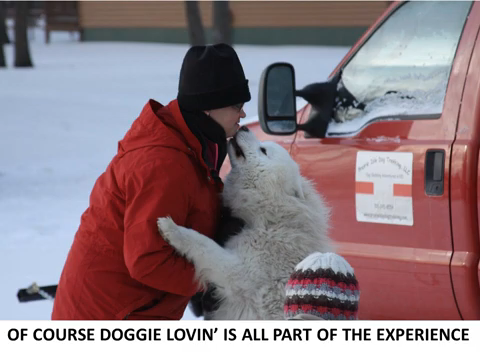
Helen L. Corlew runs a team of Samoyeds, Alaskan malamutes and Alaskan huskies. I am a Tellington TTouch practitioner and use this mode of work with training and living with my dogs.
Helen Corlew founded Prairie Isle Dog Trekking in Petersburg, North Dakota in 2010, and has spent the fifteen years since doing something most people only read about: teaching real dog sledding on real prairie terrain, at the edge of a landscape that doesn’t apologize for being difficult.
She is not a weekend enthusiast. She harnesses working dogs in January cold, trains handlers who have never touched a sled, and has built one of the only hands-on mushing education programs on the Northern Great Plains — from a single address on Highway 2, with no marketing budget and no shortcuts.
Her writing on Prairie Isle Dog Trekking reflects the same philosophy. Whether she is covering trail safety across the Rockies, breed behavior in extreme conditions, or what it actually takes to trek with a dog in the Alps, Helen writes from the position of someone who has done the work before writing the sentence.
She lives and runs dogs in Nelson County, North Dakota.
Kindly follow me on Social Media!


