


Camping with dogs is overnight outdoor stays at designated campgrounds, backcountry sites, or dispersed land with a dog present. Over 78 million households in the United States own at least one dog, and the Outdoor Foundation reports that pet-inclusive camping increased by 34% between 2019 and 2023. Dogs participate in 3 primary camping styles: tent camping, RV camping, and backpacking.
What Is Dog Friendly Camping?
Dog friendly camping is any overnight outdoor stay at a site that permits dogs under a defined leash policy, waste management rule, and quiet-hour code. Dog friendly campgrounds provide dog waste stations, water access points, and designated off-leash areas. Recreation.gov lists over 4,000 dog-permitted campgrounds across federal land in the United States. For the previous guide in this series, see Dog Hiking Trails in Colorado: 6 Regions, 18 Top Trails, and a Complete Guide.
What Types of Camping Are Suitable for Dogs?
3 camping types are suitable for dogs based on terrain access, distance from trailheads, and overnight shelter options:
- Tent camping — Most accessible option; suitable for all breeds at established campgrounds with flat ground and shade
- RV camping — Provides climate-controlled shelter for temperature-sensitive breeds; most RV parks permit dogs under 50 lbs
- Backpacking — Suitable for high-endurance breeds such as German Shepherds, Labrador Retrievers, and Siberian Huskies on routes exceeding 5 miles
How Do You Prepare a Dog for Camping?
Prepare a dog for camping by scheduling a veterinary checkup, updating vaccinations, and applying flea and tick prevention at least 48 hours before departure. The American Veterinary Medical Association (AVMA) recommends that all camping dogs carry proof of current rabies vaccination, as many campgrounds require documentation at check-in.
4 preparation steps include:
- Complete a veterinary health examination within 30 days of the camping trip
- Update core vaccinations: rabies, distemper, parvovirus, and Bordetella
- Apply veterinarian-approved flea and tick prevention treatment
- Acclimate the dog to a tent or sleeping bag indoors for 2 to 3 nights before the trip
Does a Dog Need a Vet Visit Before Camping?
A dog needs a vet visit before camping if the trip involves backcountry terrain, water crossings, or temperatures below 45°F (7°C). Veterinary clearance is required for dogs with cardiac conditions, joint disease, or respiratory issues before any camping trip exceeding 2 nights. The AVMA confirms that unvaccinated dogs face elevated exposure risk to leptospirosis through contact with natural water sources at campsites.
What Are the 8 Essential Gear Items for Camping with Dogs?
A dog needs 8 essential gear items for camping. Campsite environments expose dogs to wildlife, temperature changes, rough terrain, and natural water sources that require specific protective equipment.
- Dog sleeping pad or insulated blanket — Insulates from cold ground; ground temperatures drop 10°F to 15°F lower than air temperature at night
- Collapsible food and water bowls — Reduces pack weight; enables feeding and hydration at the campsite and on trail
- 30-foot tie-out cable with stake — Provides safe perimeter restriction at the campsite without requiring constant leash supervision
- Tick removal tool — Tick populations are highest in woodland and grassland camping areas between March and October
- Dog first aid kit — Includes bandages, antiseptic wipes, saline eye wash, and a tick remover
- Waterproof dog jacket — Maintains core body temperature during rain and overnight temperature drops
- Reflective collar or vest — Increases visibility around campfire areas and during early morning and evening movement
- Portable dog waste bags and trowel — Required for waste disposal in Leave No Trace camping zones
What Should You Pack for a Dog on a Camping Trip?
Pack food, water, medications, and a canine first aid kit for every camping trip with a dog. A 50-lb dog requires approximately 1,500 to 1,800 calories per day during active camping and hiking. Increase daily food portions by 20% for trips involving 5 or more miles of daily trail activity.
Packing checklist:
- 1 oz of water per pound of body weight per day — plus 25% reserve for warm weather
- Pre-measured food portions packed in airtight, odor-proof containers
- All prescription medications in original veterinary packaging
- Canine first aid kit — including bandages, antiseptic wipes, and saline solution
- Vaccination records — required at many campground check-ins
- Biodegradable waste bags — minimum 3 per day of camping
How Do You Find Dog Friendly Campgrounds?
Find dog friendly campgrounds by searching Recreation.gov, ReserveAmerica.com, and the Hipcamp platform, each of which includes dog-permission filters for campsite searches. Recreation.gov covers all federal land campgrounds, including those in national forests, Bureau of Land Management (BLM) areas, and Army Corps of Engineers sites.
3 reliable sources for dog friendly campground searches:
- Recreation.gov — Federal campgrounds with pet filter; over 4,000 dog-permitted sites
- Hipcamp.com — Private land camping with detailed dog policy listings per site
- KOA.com — Kampgrounds of America network; over 500 locations, most of which permit dogs
What Are the Rules for Dogs at Campgrounds?
Dogs at campgrounds must follow 4 universal rules enforced across most federal and private campground systems:
- Leash dogs on a lead no longer than 6 feet within all campground boundaries
- Never leave a dog unattended at a campsite, including when tied to a tree or staked
- Remove all dog waste immediately and deposit in designated receptacles
- Observe campground quiet hours — typically 10 PM to 6 AM — by managing excessive barking
What Are the 5 Main Safety Risks of Camping with Dogs?
The 5 main safety risks of camping with dogs are wildlife encounters, tick-borne illness, toxic plant ingestion, hypothermia, and campfire burns. The Centers for Disease Control and Prevention (CDC) confirms that tick-borne Lyme disease is most prevalent in northeastern and upper Midwestern woodland camping areas between May and August.
|
Risk |
Peak Season |
Prevention |
|---|---|---|
|
Wildlife encounters |
Year-round |
Keep dog leashed; store food in bear canisters |
|
Tick-borne illness |
May–August |
Apply tick prevention; inspect coat after every hike |
|
Toxic plant ingestion |
Spring–Summer |
Identify local toxic species; supervise foraging behavior |
|
Hypothermia |
Autumn–Winter |
Use insulated sleeping pad; monitor shivering and lethargy |
|
Campfire burns |
Year-round |
Establish a 3-foot dog exclusion zone around active fires |
How Do You Protect a Dog from Wildlife at a Campsite?
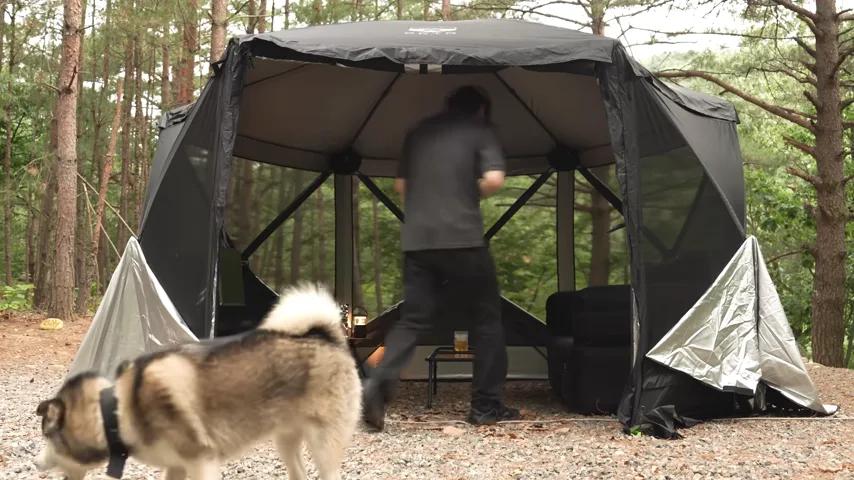

Protect a dog from wildlife at a campsite by storing all food in bear-proof containers, keeping the dog leashed after dark, and setting up camp away from water sources where wildlife congregates. The National Park Service records an average of 44 dog-involved wildlife incidents per year in bear-active parks. Common wildlife hazards at campsites include black bears, coyotes, rattlesnakes, and porcupines.
What Do Dogs Eat While Camping?
Dogs eat their regular diet while camping. Avoid switching food types during a camping trip, as sudden dietary changes cause digestive upset in 60% of dogs, according to the Merck Veterinary Manual. Pre-measure daily portions at home and seal them in individual airtight bags for each day of the trip.
How Do You Store Dog Food at a Campsite?
Store dog food in odor-proof, airtight containers suspended from a bear hang or placed inside a hard-sided bear canister at least 200 feet from the sleeping area. The Leave No Trace Center for Outdoor Ethics specifies that all scented items, including pet food, treats, and food bowls, must be stored away from tent areas to prevent wildlife attraction.
How Do Dogs Sleep While Camping?
Dogs sleep in the tent with their owner, in a vehicle, or on an insulated dog bed positioned at the campsite. Tent sleeping is the most common arrangement and provides warmth through shared body heat. Place an insulated sleeping pad beneath the dog to prevent heat loss through ground contact.
What Temperature Is Too Cold for a Dog to Camp?
Camping temperatures below 45°F (7°C) are unsafe for short-coated, small, or senior dogs without insulated shelter and a sleeping pad. Temperatures below 32°F (0°C) require all dogs to sleep inside a tent or insulated vehicle. Double-coated breeds, such as Huskies, Bernese Mountain Dogs, and Malamutes, tolerate temperatures as low as 20°F (-6°C) with proper gear.
What Are the Leave No Trace Rules for Camping with Dogs?
The Leave No Trace Center for Outdoor Ethics defines 3 dog-specific rules for camping:
- Deposit dog waste in a cat hole 6 to 8 inches deep and 200 feet from water, trails, and camp — or pack it out entirely in waste bags
- Keep dogs on a leash or under direct voice control at all times in natural areas
- Prevent dogs from disturbing wildlife, vegetation, and other campers by maintaining campsite boundaries
Adhering to Leave No Trace principles with dogs preserves campsite access for future pet-inclusive campers and protects native ecosystems across federal and private land.
Related guides
- Bikejoring with Dogs: 5 Key Skills, Best Breeds, and a Complete Setup Guide
- Canicross Beginner Guide: 8 Training Steps, Essential Gear, and Safety Rules

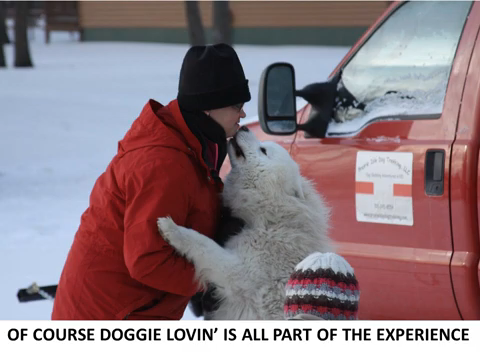
Helen L. Corlew runs a team of Samoyeds, Alaskan malamutes and Alaskan huskies. I am a Tellington TTouch practitioner and use this mode of work with training and living with my dogs.
Helen Corlew founded Prairie Isle Dog Trekking in Petersburg, North Dakota in 2010, and has spent the fifteen years since doing something most people only read about: teaching real dog sledding on real prairie terrain, at the edge of a landscape that doesn’t apologize for being difficult.
She is not a weekend enthusiast. She harnesses working dogs in January cold, trains handlers who have never touched a sled, and has built one of the only hands-on mushing education programs on the Northern Great Plains — from a single address on Highway 2, with no marketing budget and no shortcuts.
Her writing on Prairie Isle Dog Trekking reflects the same philosophy. Whether she is covering trail safety across the Rockies, breed behavior in extreme conditions, or what it actually takes to trek with a dog in the Alps, Helen writes from the position of someone who has done the work before writing the sentence.
She lives and runs dogs in Nelson County, North Dakota.
Kindly follow me on Social Media!


