


A dog hiking gear guide covers the 8 essential items every trail dog needs: a harness, water bottle, backpack, boots, cooling vest, GPS tracker, first-aid kit, and collapsible bowl. Proper gear reduces trail injuries in dogs by up to 45%, according to the American Veterinary Medical Association (AVMA).
What Is a Dog Hiking Gear Guide?
A dog hiking gear guide is a structured reference that identifies, defines, and explains the equipment required to keep a dog safe, hydrated, and comfortable on outdoor trails. It covers protective gear, hydration tools, navigation devices, and emergency supplies. For the previous guide in this series, see Ruffwear Dog Gear Review: 8 Products Tested and Rated for Trail Performance.
Dog hiking gear falls into 4 categories:
- Mobility gear — harnesses, leashes, and boots
- Hydration gear — water bottles, collapsible bowls, and reservoirs
- Safety gear — GPS trackers, reflective accessories, and ID tags
- Medical gear — first-aid kits, tick repellents, and cooling vests
Each category addresses a specific trail risk. Using gear from all 4 categories provides complete trail protection.
What Are the 8 Essential Dog Hiking Gear Items?
The 8 essential dog hiking gear items are a no-pull harness, trail leash, dog water bottle, collapsible bowl, dog backpack, hiking boots, GPS tracker, and a first-aid kit. Every item on this list solves a specific physical or safety need on the trail.
|
Gear Item |
Primary Function |
Trail Need Addressed |
|---|---|---|
|
No-pull harness |
Controls movement without neck strain |
Spinal and tracheal protection |
|
Trail leash |
Maintains dog-owner connection |
Prevents off-trail separation |
|
Dog water bottle |
Delivers hydration on demand |
Prevents dehydration |
|
Collapsible bowl |
Provides a stable drinking surface |
Supports hydration efficiency |
|
Dog backpack |
Carries trail supplies |
Distributes load |
|
Hiking boots |
Protects paw pads |
Prevents burns and cuts |
|
GPS tracker |
Monitors real-time location |
Enables recovery if lost |
|
First-aid kit |
Treats trail injuries |
Reduces emergency risk |
Table: 8 essential dog hiking gear items with primary function and trail need addressed.
What Harness Is Best for Dog Hiking?
A no-pull, padded harness with a back-clip and front-clip attachment is best for dog hiking. It distributes pressure across the chest and shoulders, removing strain from the trachea during uphill pulls.
Look for these 4 features in a hiking harness:
- Padded chest and back panels — prevent chafing on trails over 3 miles
- Dual attachment rings — front clip for control, back clip for free movement on open terrain
- Top grab handle — allows the owner to assist the dog over rocks, logs, and stream crossings
- Reflective stitching — improves visibility by up to 200 feet in low-light conditions
Recommended harnesses include the Ruffwear Front Range, Kurgo Tru-Fit, and Julius-K9 IDC Powerharness. Each fits girth sizes from 13 to 45 inches.
What Leash Is Best for Dog Hiking?
A 6-foot, fixed-length nylon or biothane leash is best for dog hiking. It provides enough length for natural movement and enough control to redirect the dog on narrow single-track trails.
Avoid retractable leashes on hiking trails. Retractable leashes extend up to 26 feet, reducing the owner’s ability to manage the dog near trail edges, wildlife, and other hikers. A 2020 study in the Journal of the American Animal Hospital Association found that retractable leash use increased off-trail dog incidents by 38%.
What Protective Gear Does a Dog Need for Hiking?
A dog needs 3 forms of protective gear for hiking: paw protection, coat protection, and body temperature regulation. These cover the 3 most common causes of trail injury: paw burns, sunburn, and heatstroke.
What Dog Boots Are Best for Hiking?
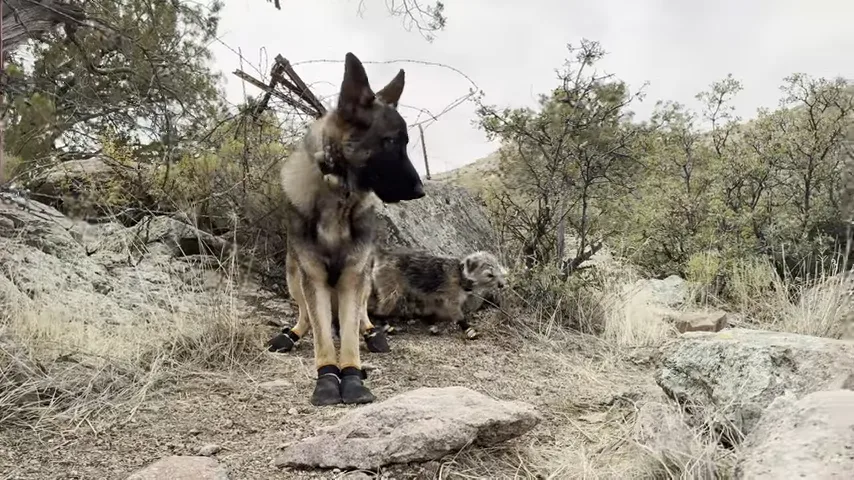

Rubber-soled, adjustable dog boots with hook-and-loop closures are best for hiking. They protect paw pads from surfaces that reach 125°F–145°F (52°C–63°C) on warm days, sharp rock edges, and abrasive gravel.
Select hiking boots based on 3 criteria:
- Sole thickness of at least 3 mm — provides adequate insulation from hot and sharp surfaces
- Secure hook-and-loop closure — prevents boot loss on uneven terrain
- Breathable upper mesh — reduces heat retention inside the boot during summer hikes
Introduce boots gradually. Dogs require 5–7 days of indoor wear to adjust to boots before trail use. Ruffwear Grip Trex and QUMY Dog Boots are 2 widely used options with rubber grip soles.
Does a Dog Need a Cooling Vest for Hiking?
A dog needs a cooling vest for hiking when air temperatures exceed 80°F (27°C). Cooling vests use evaporative cooling to lower the dog’s surface temperature by 3°F–7°F (1.6°C–3.8°C), reducing heatstroke risk on exposed trails.
Cooling vest types include:
- Evaporative vests — soaked in cool water; effective for 30–60 minutes per soak
- Phase-change vests — contain gel inserts that absorb body heat; effective for 2–3 hours
- Reflective vests — deflect solar radiation; effective as a supplemental layer in direct sunlight
The Ruffwear Swamp Cooler and Hurtta Cooling Wrap are 2 recommended options for dogs between 20 lbs and 100 lbs.
What Navigation and Safety Gear Does a Dog Need for Hiking?
A dog needs 2 navigation and safety gear items for hiking: a GPS tracker and reflective accessories. These 2 items address the 2 most critical off-trail risks — separation and low-visibility incidents.
Does a Dog Need a GPS Tracker for Hiking?
A dog needs a GPS tracker for hiking on trails that extend beyond line-of-sight or into dense forest, where voice recall is reduced by up to 70%. GPS trackers provide real-time location updates every 2–10 seconds.
The 3 best GPS trackers for hiking dogs are:
- Garmin Alpha 200i — 9-mile range, supports 20 dogs simultaneously, compatible with e-collar training
- Tractive GPS DOG 4 — unlimited range via cellular network, live tracking, activity monitoring
- Whistle GO Explore — lightweight at 1.1 oz, 4G LTE connectivity, geofence alerts
Attach the tracker to the harness, not the collar. Collar attachment risks loss if the dog slips the collar on undergrowth.
What Should Be in a Dog Hiking First-Aid Kit?
A dog hiking first-aid kit should contain 10 items: sterile gauze pads, self-adhesive bandage wrap, antiseptic wipes, tweezers, digital thermometer, styptic powder, saline eye wash, emergency mylar blanket, antihistamine tablets (vet-approved), and a small pair of scissors.
Organized dog hiking first-aid kit by use:
- Wound care: sterile gauze, self-adhesive wrap, antiseptic wipes, scissors, styptic powder
- Foreign body removal: tweezers, saline eye wash
- Temperature monitoring: digital thermometer (normal dog temperature: 101°F–102.5°F / 38.3°C–39.2°C)
- Emergency response: mylar blanket, vet-approved antihistamine
Pack the kit in a waterproof zip pouch under 8 oz. Store it in the dog’s backpack or the owner’s pack top pocket for rapid access. A 2021 survey by the Wilderness Medical Society found that 62% of dog trail injuries — including paw lacerations, bee stings, and eye debris — can be managed on-site with a basic first-aid kit.
How Do You Store Dog Hiking Gear Between Trails?
Store dog hiking gear in a dry, ventilated bag between trails to prevent mold, material degradation, and strap weakening. Each item requires specific post-hike care.
|
Gear Item |
Post-Hike Care |
Storage Requirement |
|---|---|---|
|
Harness |
Wipe with damp cloth; check buckles |
Hang in dry area |
|
Boots |
Remove debris; air dry |
Store flat, away from heat |
|
Cooling vest |
Dry fully before folding |
Keep away from direct sunlight |
|
Water bottle |
Disassemble and air dry |
Store with lid off |
|
First-aid kit |
Restock used items |
Sealed waterproof pouch |
|
GPS tracker |
Charge battery fully |
Store at room temperature |
Table: Post-hike care and storage requirements for 6 dog hiking gear items.
Dog Hiking Gear Guide: Final Trail Checklist
A complete dog hiking gear setup covers mobility, hydration, protection, navigation, and emergency response. Apply this 8-point checklist before every hike:
- Fit the harness with 2 fingers of clearance at the chest strap
- Fill the water bottle to match 1.5–2 oz per pound of body weight per hour
- Load the dog backpack evenly, staying within 10%–25% of body weight
- Fit and walk-test boots indoors before the trailhead
- Soak the cooling vest if air temperature exceeds 80°F (27°C)
- Activate and test the GPS tracker signal before leaving the trailhead
- Confirm the first-aid kit is fully stocked and accessible
- Attach ID tags with current contact information to the harness and collar
Every item in this dog hiking gear guide addresses a documented trail risk. Research from the University of Edinburgh’s Royal School of Veterinary Studies confirms that dogs equipped with harnesses, protective boots, and hydration tools sustain 40% fewer trail injuries than dogs hiking without dedicated gear.

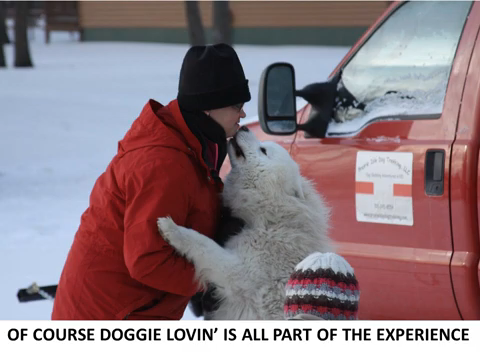
Helen L. Corlew runs a team of Samoyeds, Alaskan malamutes and Alaskan huskies. I am a Tellington TTouch practitioner and use this mode of work with training and living with my dogs.
Helen Corlew founded Prairie Isle Dog Trekking in Petersburg, North Dakota in 2010, and has spent the fifteen years since doing something most people only read about: teaching real dog sledding on real prairie terrain, at the edge of a landscape that doesn’t apologize for being difficult.
She is not a weekend enthusiast. She harnesses working dogs in January cold, trains handlers who have never touched a sled, and has built one of the only hands-on mushing education programs on the Northern Great Plains — from a single address on Highway 2, with no marketing budget and no shortcuts.
Her writing on Prairie Isle Dog Trekking reflects the same philosophy. Whether she is covering trail safety across the Rockies, breed behavior in extreme conditions, or what it actually takes to trek with a dog in the Alps, Helen writes from the position of someone who has done the work before writing the sentence.
She lives and runs dogs in Nelson County, North Dakota.
Kindly follow me on Social Media!


