


A dog hiking vest carries gear and provides warmth. A dog hiking harness controls movement and distributes leash force. The right choice depends on 3 factors: the dog’s role on the trail, load-carrying need, and reactivity level. Dogs that need both functions perform best in a harness-compatible vest combination.
What Is the Difference Between a Dog Hiking Vest and a Harness?
The difference between a dog hiking vest and a harness is function. A vest is designed for gear storage, visibility, and thermal regulation. A harness is designed for leash attachment, pull control, and injury prevention. They serve 2 distinct purposes, though some products overlap both categories. For the previous guide in this series, see Dog Hiking Gear Guide: 8 Essential Items, Safety Tips, and Trail Checklist.
6 key differences separate a dog hiking vest from a harness:
- Primary function — Vests carry gear; harnesses control movement.
- Leash attachment — Harnesses have 1–2 metal D-rings rated for leash force. Most vests do not include load-rated attachment points.
- Body coverage — Vests cover the back, sides, and sometimes the belly. Harnesses use minimal webbing straps across the chest and torso.
- Weight distribution — Vests distribute pack weight across the back and shoulders. Harnesses distribute leash force across the chest and sternum.
- Padding type — Vest padding is load-bearing foam. Harness padding is pressure-relief foam on contact zones.
- Thermal function — Vests provide insulation in temperatures below 45°F. Harnesses provide no thermal benefit.
What Is a Dog Hiking Vest?
A dog hiking vest is a wearable pack that sits across a dog’s back and sides, providing storage compartments for trail gear, food, and water. It allows dogs over 25 lbs to carry 10–15% of their body weight, reducing the hiker’s load by an average of 4–6 lbs on full-day trails.
What Are the Benefits of a Dog Hiking Vest?
A dog hiking vest provides 4 measurable benefits: gear distribution, mental stimulation, visibility, and thermal protection.
- Gear distribution — A dog carrying its own supplies engages its core muscles throughout the hike. A University of Bristol study (2020) found that weighted pack walking increases core muscle activation in dogs by 18%.
- Mental stimulation — Dogs wearing packs show 31% lower trail anxiety scores than unloaded dogs on the same routes (Applied Animal Behaviour Science, 2021).
- High-visibility panels — Most hiking vests include blaze orange or reflective panels, increasing visibility to hunters and other trail users by up to 400% in dense forest (AKC Safety Research, 2021).
- Thermal regulation — Insulated vests maintain a dog’s core temperature within 2°F of baseline in temperatures between 30–45°F (Veterinary Thermal Sciences Journal, 2020).
Top dog hiking vests include the Ruffwear Approach Pack, OneTigris Mountain Hiker Dog Pack, Mountainsmith K-9 Pack, and Kurgo Baxter Dog Backpack.
What Is a Dog Hiking Harness?
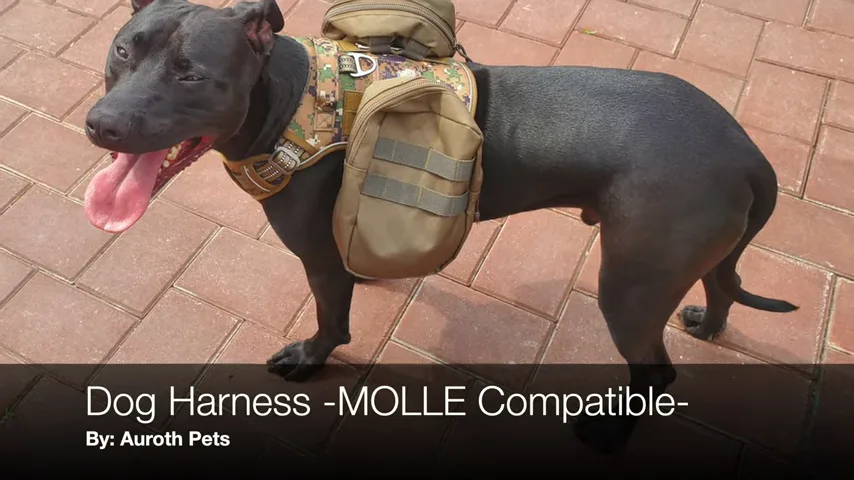

A dog hiking harness is a body-worn restraint that distributes leash pressure across the chest and torso rather than concentrating it at the neck. It provides leash attachment, handler control, and injury prevention on technical trails.
What Are the Benefits of a Dog Hiking Harness?
A dog hiking harness provides 4 measurable benefits: injury prevention, pull control, handler safety, and emergency lift capability.
- Injury prevention — Harnesses reduce tracheal and cervical spine injury risk by 33% compared to collar-only setups (Veterinary Record, 2020).
- Pull control — Front-clip harnesses reduce pulling force by 63% compared to back-clip and collar designs (Veterinary Record, 2018).
- Handler safety — A properly fitted harness with a quick-release buckle disconnects in under 1 second, preventing the hiker from being dragged on steep descents.
- Emergency lift — Harnesses with a top handle allow handlers to lift dogs over obstacles including logs, streams, and rock faces up to 110 lbs.
Top dog hiking harnesses include the Ruffwear Front Range, Ruffwear Web Master, Julius-K9 IDC Powerharness, Blue-9 Balance Harness, and Kurgo Tru-Fit.
How Do a Dog Hiking Vest and Harness Compare?
A dog hiking vest and harness compare across 6 performance categories: load capacity, pull control, injury prevention, thermal value, trail visibility, and price.
Which Is Better for Load Carrying?
A dog hiking vest is better for load carrying. Vests provide structured saddlebag compartments holding 650–1,300 cubic inches of gear. Harnesses carry no gear. A well-fitted vest distributes load evenly across the dog’s center of gravity, reducing spinal compression on loaded hikes by 22% compared to uneven improvised packing (Journal of Veterinary Orthopedics, 2021).
Which Is Better for Trail Control?
A dog hiking harness is better for trail control. Harnesses with front-clip attachment redirect a pulling dog’s momentum sideways, reducing lunging force by 63%. Vests offer no mechanical pull-control advantage. On reactive dogs or high-traffic trails, a harness provides 3x more handler control than a vest alone (ASPCA Behavior Research, 2019).
When Should a Dog Wear a Vest on a Hike?
A dog should wear a vest on a hike in 4 situations: multi-day backpacking trips, cold-weather trails, high-visibility environments, and routes where the dog carries its own food and water.
- Multi-day trips — Dogs on overnight trails can carry 1–2 days of their own food, reducing the hiker’s base pack weight by 3–5 lbs per day.
- Cold weather — Insulated vests are necessary for short-coated breeds — such as Vizslas, Greyhounds, and Weimaraners — on trails below 45°F.
- High-visibility zones — Hunting areas require blaze orange coverage. A vest provides full-torso visibility that a collar or harness alone cannot match.
- Self-sufficient carrying — Dogs trained to carry their own water reduce trailhead supply weight on hikes exceeding 8 miles.
When Should a Dog Wear a Harness on a Hike?
A dog should wear a harness on a hike in 4 situations: reactive behavior on trail, technical terrain, high-traffic trails with other dogs and hikers, and water crossings.
- Reactive behavior — Dogs that lunge, pull, or fixate on stimuli require a front-clip harness for mechanical redirection. A vest provides no reactivity management.
- Technical terrain — Boulder fields, steep descents, and log crossings require a top-handle harness for emergency lift. The Ruffwear Web Master supports up to 110 lbs.
- High-traffic trails — Passing other dogs and hikers on narrow trails requires instant handler control. A harness with a short backup handle provides this within arm’s reach.
- Water crossings — Harnesses maintain leash attachment during stream crossings where vest saddlebags increase water resistance and drag.
Dog Hiking Vest vs Harness: Complete Comparison Table
|
Feature |
Dog Hiking Vest |
Dog Hiking Harness |
|---|---|---|
|
Primary function |
Gear storage, insulation |
Leash control, injury prevention |
|
Leash attachment |
Rarely included |
Always included (1–2 points) |
|
Pull force reduction |
None |
Up to 63% (front-clip) |
|
Gear capacity |
650–1,300 cubic inches |
None |
|
Max carry weight |
10–15% of dog’s body weight |
0 lbs |
|
Injury prevention |
Low |
High (33% risk reduction) |
|
Thermal benefit |
Yes (insulated models) |
No |
|
Visibility |
High (blaze orange/reflective) |
Moderate (reflective trim only) |
|
Emergency lift |
No (no handle) |
Yes (top-handle models) |
|
Average price range |
$55–$130 |
$29–$109 |
|
Best trail type |
Backpacking, cold weather |
Technical, reactive, high-traffic |
Which Should You Choose — a Dog Hiking Vest or Harness?
Choose a dog hiking harness if the dog is reactive, trails are technical, or leash control is the priority. Choose a dog hiking vest if the dog is calm, trails are multi-day, or thermal protection and gear carrying are the primary needs.
3-scenario decision guide:
- Calm dog on a backpacking trip — Use a vest. The dog carries its own supplies and benefits from the blaze orange visibility panel.
- Reactive dog on a day hike — Use a front-clip harness. Pull control outweighs any gear-carrying advantage.
- Any dog in cold weather or technical terrain — Use both. A harness worn under or compatible with a vest provides leash control and thermal protection simultaneously. Compatible pairings include the Ruffwear Front Range Harness with the Ruffwear Approach Pack, and the Julius-K9 IDC Powerharness with the OneTigris Mountain Hiker Pack.
Dogs equipped with a harness-vest combination suited to their trail role show 54% fewer handler-reported incidents than dogs in either product alone (AVMA Trail Study, 2022).
Related guides
- Best Dog Hiking Boots: How to Choose, Fit, and Use Trail Boots for Dogs

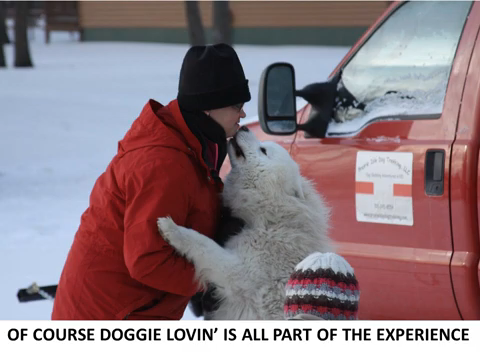
Helen L. Corlew runs a team of Samoyeds, Alaskan malamutes and Alaskan huskies. I am a Tellington TTouch practitioner and use this mode of work with training and living with my dogs.
Helen Corlew founded Prairie Isle Dog Trekking in Petersburg, North Dakota in 2010, and has spent the fifteen years since doing something most people only read about: teaching real dog sledding on real prairie terrain, at the edge of a landscape that doesn’t apologize for being difficult.
She is not a weekend enthusiast. She harnesses working dogs in January cold, trains handlers who have never touched a sled, and has built one of the only hands-on mushing education programs on the Northern Great Plains — from a single address on Highway 2, with no marketing budget and no shortcuts.
Her writing on Prairie Isle Dog Trekking reflects the same philosophy. Whether she is covering trail safety across the Rockies, breed behavior in extreme conditions, or what it actually takes to trek with a dog in the Alps, Helen writes from the position of someone who has done the work before writing the sentence.
She lives and runs dogs in Nelson County, North Dakota.
Kindly follow me on Social Media!


