

California has over 1,300 dog-friendly hiking trails across 6 geographic regions — the Sierra Nevada, Coast Ranges, Mojave Desert, Central Valley, North Coast, and Southern California mountains — with access governed by agency-specific leash rules, seasonal fire closures, and wildlife protection restrictions that vary by land management authority. The California State Parks system manages 280 parks, of which 189 permit leashed dogs on designated trails, making California the largest dog-friendly state trail network in the United States.
Hiking with a dog in California requires managing 5 state-specific variables: extreme heat in desert and inland regions, rattlesnake and mountain lion presence, seasonal fire closure zones, water scarcity on exposed trails, and the legal distinction between California State Park, National Forest, and National Park dog access rules.
What Are the Dog Hiking Trail Regulations in California?
Dog hiking regulations in California vary by land management agency across 3 categories: California State Parks, National Forests, and National Parks.
Here are the regulations by agency:
| Agency | Leash Requirement | Trail Access | Off-Leash Zones | Waste Rule |
|---|---|---|---|---|
| California State Parks | 1.8 m (6 ft) leash | Designated trails only | None on trail | Collect and remove all waste |
| National Forests (USFS) | 1.8 m leash required | Most trails permitted | Designated areas only | Pack out all waste |
| National Parks (NPS) | 1.8 m leash required | Paved and developed areas only | Not permitted | Pack out all waste |
| County and Regional Parks | Varies by county | Majority permit dogs | Designated zones | Collect and remove all waste |
Are Dogs Allowed in California National Parks?
Dogs are restricted to paved roads, parking areas, and developed campgrounds in all California National Parks. Examples of California National Parks with these restrictions include Yosemite, Joshua Tree, Sequoia, Kings Canyon, and Channel Islands. Dogs are prohibited on backcountry trails, unpaved paths, and wilderness areas within National Park boundaries. The National Park Service enforces these restrictions to protect native wildlife from dog scent disturbance across sensitive ecosystems.
National Forests adjacent to National Parks permit dogs on the majority of trails with a leash. Examples include Inyo National Forest adjacent to Yosemite and San Bernardino National Forest adjacent to Joshua Tree.
What Are the 12 Best Dog Hiking Trails in California?
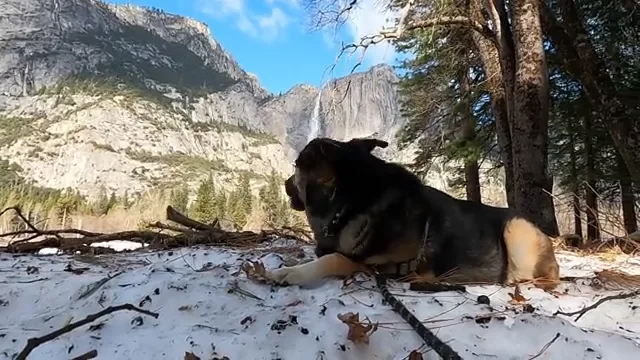
The 12 best dog hiking trails in California are selected across 6 regions based on 4 criteria: confirmed dog access, water availability, shade coverage, and trail condition ratings.
Here are the 12 trails with key specifications:
| Trail | Region | Distance | Elevation Gain | Difficulty | Dog Access |
|---|---|---|---|---|---|
| Lands End Trail | San Francisco | 5.5 km | 90 m | Easy | Full leash access |
| Tennessee Valley Trail | Marin County | 6.4 km | 130 m | Easy | Full leash access |
| Bear Creek Trail | Santa Cruz Mountains | 12 km | 350 m | Moderate | Full leash access |
| Moro Rock Trail | Sequoia NF | 8 km | 280 m | Moderate | National Forest access |
| Bishop Pass Trail | Inyo NF | 24 km | 1,070 m | Strenuous | National Forest access |
| Cougar Crest Trail | Big Bear, SB NF | 11 km | 490 m | Moderate | Full leash access |
| Solstice Canyon Trail | Malibu | 5 km | 180 m | Easy | Full leash access |
| Nicholas Flat Trail | Leo Carrillo SP | 10 km | 460 m | Moderate | Leash required |
| Tahoe Rim Trail | Lake Tahoe | 17 km | 620 m | Strenuous | Full leash access |
| Fern Canyon Trail | Prairie Creek SP | 6.4 km | 90 m | Easy | Leash required |
| Black Star Canyon | Orange County | 13 km | 390 m | Moderate | Full leash access |
| Gaviota Peak Trail | Santa Barbara | 9.6 km | 610 m | Moderate | Full leash access |
What Are the Best Dog Hiking Trails in Northern California?
The best dog hiking trails in Northern California are the Tennessee Valley Trail in Marin County, the Tahoe Rim Trail at Lake Tahoe, and the Fern Canyon Trail in Prairie Creek Redwoods State Park.
Tennessee Valley Trail, Marin County
Tennessee Valley Trail is a 6.4 km round-trip coastal trail in the Marin Headlands that permits leashed dogs throughout and ends at a black sand beach with year-round ocean access. Elevation gain is 130 metres. The trail surface is packed dirt and gravel. Water is available at the trailhead only; carry full water supply for the dog. Trail temperature ranges from 10°C to 22°C year-round due to coastal fog influence, making it one of California’s most thermally consistent dog hiking routes.
Tahoe Rim Trail, Lake Tahoe
The Tahoe Rim Trail is a 270 km loop trail around Lake Tahoe that permits leashed dogs on all sections and offers 17 km day-hike segments with 620 metres of elevation gain on moderate-to-strenuous terrain. The trail reaches elevations of 2,700 to 3,000 metres. Dogs require cold-weather gear between October and May when snowfall and sub-zero overnight temperatures are recorded on exposed ridgeline sections. Lake Tahoe provides reliable water access at multiple trailhead entry points.
What Are the Best Dog Hiking Trails in Southern California?
The best dog hiking trails in Southern California are the Cougar Crest Trail in Big Bear, Solstice Canyon Trail in Malibu, and the Black Star Canyon Trail in Orange County.
Cougar Crest Trail, Big Bear
Cougar Crest Trail is an 11 km round-trip trail in San Bernardino National Forest that permits leashed dogs and provides ridgeline views of Big Bear Lake at 2,350 metres elevation. Elevation gain is 490 metres on a well-maintained dirt surface. The trail operates year-round with an Adventure Pass required for trailhead parking. Snow covers the upper section between December and March; dog boots are recommended for icy sections.
Solstice Canyon Trail, Malibu
Solstice Canyon Trail is a 5 km loop trail in the Santa Monica Mountains National Recreation Area that permits leashed dogs on all sections and provides stream access for dog hydration on 3 crossing points along the route. Elevation gain is 180 metres. Summer temperatures reach 35°C on exposed sections; hike before 9 AM between June and September. The trail surface alternates between paved path and rocky stream-adjacent terrain.
What Are the 5 Main Safety Risks for Dog Hiking in California?
Dog hiking in California presents 5 state-specific safety risks: rattlesnake encounters, mountain lion presence, extreme heat, foxtail grass seed penetration, and wildfire smoke exposure.
Here is a breakdown of each risk with management protocols:
| Risk | Peak Season | Warning Sign | Management |
|---|---|---|---|
| Rattlesnake encounter | April–October | Rattling sound; coiled posture on trail | Keep dog on leash; stay on trail centre; seek vet immediately after bite |
| Mountain lion presence | Year-round | Scratch marks on trees; cached prey nearby | Keep dog leashed; hike in groups; carry deterrent noise device |
| Extreme heat | June–September | Dog slows pace; excessive panting; seeks shade | Hike before 9 AM; carry 60 ml water per kg per hour; exit at 32°C |
| Foxtail grass seeds | May–August | Dog shaking head; pawing at face or paws | Inspect all body openings after every hike; remove with tweezers |
| Wildfire smoke | June–October | AQI above 150 on trail day | Cancel hike when AQI exceeds 150; check AirNow.gov before departure |
What Are Foxtail Grass Seeds and Why Are They Dangerous for Dogs?
Foxtail grass seeds are barbed seed heads from wild barley and foxtail brome grasses that penetrate dog skin, ears, eyes, and nasal passages on California’s summer trails, causing infection, abscess, and organ damage if untreated. Foxtail grasses are present on over 60% of California’s dry summer trails between May and August. The barbed structure allows seeds to travel inward through tissue but not outward, requiring surgical removal in severe cases.
Inspect 5 body areas after every California summer hike:
- Between all toe pads — Most common entry point on trail surfaces
- Inside both ear canals — Head shaking and ear scratching indicate seed entry
- Both nostrils — Sneezing fits signal nasal penetration
- Eyelids and conjunctiva — Squinting and discharge indicate eye involvement
- Groin and armpit folds — Dense fur traps seeds before skin penetration
What Is the Best Season for Dog Hiking in California?
The best season for dog hiking in California is autumn between September and November, when temperatures drop below 25°C across all 6 regions, trail fire closures reduce, and water sources recover from summer drawdown.
Here are seasonal hiking conditions by region:
| Season | Sierra Nevada | Southern California | North Coast | Mojave Desert |
|---|---|---|---|---|
| Spring (Mar–May) | Snow on high trails | Optimal conditions | Mild; wet trails | Optimal; wildflowers |
| Summer (Jun–Aug) | Optimal above 2,000 m | Extreme heat; limited hours | Fog; mild temperatures | Dangerous; above 40°C |
| Autumn (Sep–Nov) | Best season overall | Optimal conditions | Optimal conditions | Optimal conditions |
| Winter (Dec–Feb) | Snow closures above 1,500 m | Mild; occasional rain | Wet; reduced access | Optimal; cool temperatures |
When Should You Avoid Dog Hiking in the Mojave Desert?
Avoid dog hiking in the Mojave Desert between June and August when ground surface temperatures exceed 70°C and ambient air temperatures reach 45°C. The Joshua Tree National Park visitor centre records a peak of 47°C in July. Paw burns develop on desert sand and rock surfaces within 30 seconds at 60°C ground temperature. The optimal Mojave hiking window is November through March when daily highs remain below 20°C.
How Do You Prepare a Dog for Hiking in California?
Prepare a dog for California trail hiking across 4 state-specific areas: rattlesnake avoidance training, heat conditioning, foxtail inspection protocol, and water carry calculation.
The 4 preparation steps are:
- Rattlesnake avoidance training — Enroll in a certified rattlesnake aversion training program before the first California trail season. Programs use scent and sound conditioning to teach dogs to avoid snake stimuli. Over 150 certified trainers operate across California.
- Heat conditioning — Build heat tolerance over 4 weeks by walking the dog during progressively warmer morning temperatures before attempting exposed trail sections above 25°C.
- Foxtail inspection training — Habituate the dog to full-body post-hike inspections by pairing each inspection with a high-value reward. Consistent compliance reduces the window between seed entry and detection.
- Water carry calculation — Calculate full water requirements before every trail using the 60 ml per kg per hour formula. California’s dry summer trails have water sources on fewer than 30% of routes between June and September.
Summary
California’s 1,300-plus dog-friendly trails span 6 geographic regions with access governed by 3 land management agencies, each with distinct leash and trail access rules. The 12 best dog hiking trails provide confirmed access, reliable water sources, and manageable terrain across Northern and Southern California. The 5 state-specific safety risks — rattlesnakes, mountain lions, extreme heat, foxtail seeds, and wildfire smoke — require preparation protocols applied before and after every California trail outing. Autumn between September and November is the optimal season for dog hiking across all 6 California regions.
Related guides
- Camino de Santiago With a Dog: 8 Rules, Route Options, and Complete Preparation Guide
- Dog Hiking Trails in Colorado: 6 Regions, 18 Top Trails, and a Complete Guide
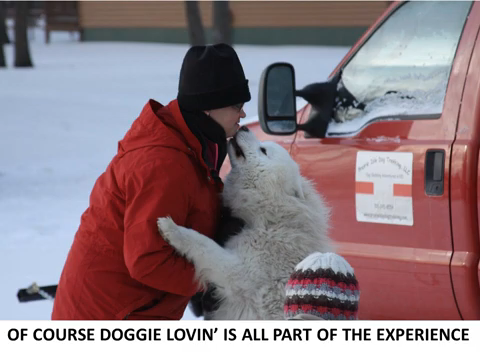
Helen L. Corlew runs a team of Samoyeds, Alaskan malamutes and Alaskan huskies. I am a Tellington TTouch practitioner and use this mode of work with training and living with my dogs.
Helen Corlew founded Prairie Isle Dog Trekking in Petersburg, North Dakota in 2010, and has spent the fifteen years since doing something most people only read about: teaching real dog sledding on real prairie terrain, at the edge of a landscape that doesn’t apologize for being difficult.
She is not a weekend enthusiast. She harnesses working dogs in January cold, trains handlers who have never touched a sled, and has built one of the only hands-on mushing education programs on the Northern Great Plains — from a single address on Highway 2, with no marketing budget and no shortcuts.
Her writing on Prairie Isle Dog Trekking reflects the same philosophy. Whether she is covering trail safety across the Rockies, breed behavior in extreme conditions, or what it actually takes to trek with a dog in the Alps, Helen writes from the position of someone who has done the work before writing the sentence.
She lives and runs dogs in Nelson County, North Dakota.
Kindly follow me on Social Media!
