


Hiking with small dogs is safe and physically beneficial when trail distance, terrain difficulty, and gear selection match the dog’s size and fitness level. A 2020 study by the University of Bristol’s School of Veterinary Sciences found that small dogs engaging in regular trail activity show 28% lower rates of obesity-related joint conditions than small dogs with sedentary routines.
What Is Hiking With Small Dogs?
Hiking with small dogs is the activity of taking a dog weighing under 25 lbs (11 kg) on outdoor trails, with adjusted distance, terrain, and gear to match its smaller frame and shorter stride. Small dogs cover ground at a faster stride rate than large breeds, expending more energy per mile. For the previous guide in this series, see Hiking With a Border Collie: Distance, Training, Gear, and Trail Safety.
Small dogs suited for hiking fall into 3 physical categories:
- Terrier-type builds — compact, muscular, and low to the ground; examples include Jack Russell Terriers and Border Terriers
- Spaniel-type builds — moderate bone density with good endurance; examples include Cocker Spaniels and Cavalier King Charles Spaniels
- Herding-type builds — lean, agile frame with high stamina; examples include Miniature Australian Shepherds and Shetland Sheepdogs
Each build type has different terrain preferences, heat tolerance, and energy output on the trail.
What Are the Benefits of Hiking With Small Dogs?
There are 6 proven benefits of hiking with small dogs: improved cardiovascular fitness, reduced anxiety, joint mobility maintenance, mental stimulation from environmental exposure, stronger owner-dog bonding, and healthy weight management.
Research published in Applied Animal Behaviour Science (2018) confirms that small dogs exposed to varied outdoor environments show 31% lower cortisol levels — a direct marker of reduced stress — compared to small dogs exercised exclusively indoors or in urban settings.
Additional benefits include:
- Improves muscle tone in breeds prone to patellar luxation, such as Chihuahuas and Toy Poodles
- Reduces destructive indoor behavior linked to under-stimulation in high-energy small breeds
- Supports digestive regularity through sustained physical movement
What Small Dog Breeds Are Best for Hiking?
The 6 best small dog breeds for hiking are Jack Russell Terriers, Miniature Australian Shepherds, Beagles, Border Terriers, Dachshunds on flat terrain, and Cairn Terriers. Each breed combines compact size with the stamina and structural fitness required for trail activity.
|
Breed |
Weight |
Max Hike Distance |
Best Terrain |
|---|---|---|---|
|
Jack Russell Terrier |
13–17 lbs |
6 miles |
Rocky, woodland |
|
Miniature Australian Shepherd |
20–40 lbs |
8 miles |
Mountain, forest |
|
Beagle |
20–30 lbs |
7 miles |
Forest, flat trails |
|
Border Terrier |
11–16 lbs |
5 miles |
Moorland, woodland |
|
Cairn Terrier |
13–14 lbs |
5 miles |
Rocky, coastal |
|
Dachshund (standard) |
16–32 lbs |
4 miles (flat only) |
Flat, groomed trails |
Table: 6 best small hiking dog breeds with weight, maximum recommended hike distance, and best terrain type.
Dachshunds require flat terrain exclusively. Their elongated spine increases intervertebral disc disease (IVDD) risk on steep descents and root-covered forest floors.
What Distance Can Small Dogs Hike?
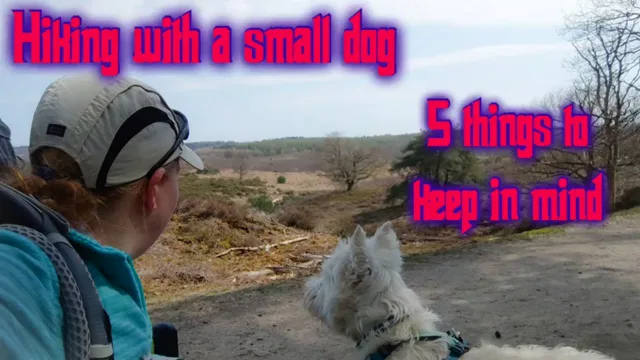

Most healthy small dogs can hike 3–8 miles per session, depending on breed, age, fitness level, and trail conditions. Beginner small dogs should start at 1–2 miles and increase by 0.5 miles per week.
Apply the 3-factor distance rule for small dogs:
- Age — dogs under 12 months should not exceed 2 miles; growth plates close between 9–14 months depending on breed
- Fitness level — a dog with no trail experience begins at 1 mile regardless of breed stamina ceiling
- Temperature — reduce planned distance by 25% for every 10°F above 75°F (24°C)
Small dogs take 1.5–2 steps for every 1 step a large dog takes on the same terrain. A 5-mile trail for a Labrador equates to the physical effort of a 7–8 mile trail for a Jack Russell Terrier.
What Gear Do Small Dogs Need for Hiking?
Small dogs need 6 specific gear items for hiking: a no-pull harness, 6-foot trail leash, lightweight water bottle, dog booties, a dog carrier pack for rest periods, and a compact first-aid kit. Each item is sized and weighted for dogs under 25 lbs.
Small dog hiking gear checklist:
- No-pull harness — fits girth 13–22 inches; padded chest panel prevents chafing on dogs with narrow frames
- 6-foot nylon or biothane leash — provides trail control without restricting natural movement
- Lightweight water bottle — 12–16 oz capacity; trough width under 3 inches for small muzzles
- Dog booties — sole thickness of 2–3 mm; secure hook-and-loop closure to prevent loss on uneven terrain
- Dog carrier pack — allows the owner to carry the dog during rest intervals or on terrain exceeding the dog’s capability
- Compact first-aid kit — includes gauze, antiseptic wipes, tweezers, and styptic powder; total weight under 4 oz
What Harness Is Best for Small Dogs on Hikes?
A step-in, padded, no-pull harness with a back-clip attachment is best for small dogs on hikes. It distributes pressure across the chest without compressing the trachea, which is structurally narrower in dogs under 15 lbs.
Look for these 3 features in a small dog hiking harness:
- Padded chest and belly panels — prevents friction sores during hikes over 3 miles
- Lightweight frame under 4 oz — reduces total carry weight on a small dog’s frame
- Reflective trim — increases visibility by up to 200 feet on shaded forest trails and at dawn or dusk
Recommended options include the Ruffwear Front Range (XS–S sizes), Kurgo Tru-Fit Smart Harness, and the EzyDog Chest Plate Harness.
Do Small Dogs Need Boots for Hiking?
Small dogs need boots for hiking on surfaces that exceed 100°F (38°C), on sharp gravel, and on trails with thorns, burrs, or glass debris. Paw pads on dogs under 20 lbs are thinner and less keratinized than those of large breeds, making them 40% more susceptible to surface abrasion and heat injury.
Introduce boots 5–7 days before the hike. Use this 3-step indoor introduction process:
- Place one boot on a front paw for 5 minutes; reward with treats
- Apply all 4 boots for 10 minutes of indoor walking over 3 consecutive days
- Walk 0.25 miles on outdoor pavement before the first trail use
How Do You Keep a Small Dog Safe on a Hike?
Keep a small dog safe on a hike by controlling pace, offering water every 15 minutes, choosing appropriate terrain, monitoring for fatigue, and knowing when to carry the dog. Small dogs cannot verbally signal exhaustion and rely entirely on owner observation.
Follow these 7 safety rules for hiking with small dogs:
- Start every hike at a slow pace for the first 10 minutes to warm up muscles and joints
- Offer 4–6 oz of water every 15–20 minutes on active trail sections
- Avoid trails with elevation gain exceeding 500 feet per mile for dogs under 15 lbs
- Check paws every 45–60 minutes for cuts, embedded debris, or heat damage
- Avoid hiking between 11 AM and 4 PM in summer; surface temperatures peak during this window
- Keep the dog on a 6-foot leash near cliff edges, water crossings, and wildlife zones
- Carry the dog in a front or back carrier if it shows 2 or more fatigue signs
What Are the Signs of Fatigue in Small Dogs on Trails?
There are 6 signs of fatigue in small dogs on trails: lagging behind the owner’s pace, excessive panting, lying down and refusing to move, limping, seeking shade repeatedly, and loss of interest in the environment.
Stop the hike immediately when 2 or more signs appear. Offer water, move to shade, and rest for a minimum of 15 minutes before reassessing whether to continue or return to the trailhead.
Should You Carry a Small Dog on a Hike?
Carry a small dog on a hike when it shows fatigue, encounters terrain beyond its physical capability, or when ambient temperature exceeds 85°F (29°C). A dog carrier distributes the dog’s weight across the owner’s back and hips, enabling safe trail completion without overexerting the dog.
Dog carrier packs suited for small dogs include:
- Kurgo Nomad Carrier — fits dogs up to 25 lbs; ventilated mesh panels; padded owner shoulder straps
- Ruffwear Approach Pack — converts from dog backpack to owner-carry system for dogs up to 20 lbs
- Onetigris Dog Sling Carrier — hands-free front carry; supports dogs up to 15 lbs on technical trail sections
Hiking With Small Dogs: 7-Point Final Safety Checklist
Hiking with small dogs is achievable, safe, and enriching with correct preparation. Apply this 7-point checklist before every trail:
- Confirm trail distance matches the dog’s fitness level (start at 1–2 miles for beginners)
- Check trail surface temperature with the 7-second hand rule before the first mile
- Pack 12–16 oz of water per hour of planned hiking for dogs under 25 lbs
- Fit the harness with 2 fingers of clearance at the chest and belly straps
- Apply boots if surface temperature exceeds 100°F (38°C) or terrain includes sharp debris
- Carry the dog carrier pack for rest intervals or terrain beyond the dog’s capability
- Monitor for all 6 fatigue signs throughout the hike; stop at 2 or more
Small dogs are capable, willing hiking partners when trail conditions are matched to their size. The American Kennel Club confirms that small breeds with active outdoor routines maintain healthy body weight 35% more consistently than small dogs in sedentary environments, reducing the risk of diabetes, joint disease, and cardiovascular conditions across their lifespan.

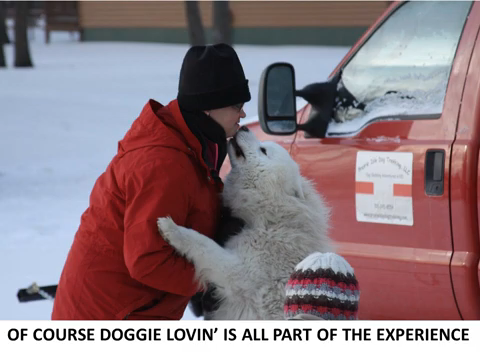
Helen L. Corlew runs a team of Samoyeds, Alaskan malamutes and Alaskan huskies. I am a Tellington TTouch practitioner and use this mode of work with training and living with my dogs.
Helen Corlew founded Prairie Isle Dog Trekking in Petersburg, North Dakota in 2010, and has spent the fifteen years since doing something most people only read about: teaching real dog sledding on real prairie terrain, at the edge of a landscape that doesn’t apologize for being difficult.
She is not a weekend enthusiast. She harnesses working dogs in January cold, trains handlers who have never touched a sled, and has built one of the only hands-on mushing education programs on the Northern Great Plains — from a single address on Highway 2, with no marketing budget and no shortcuts.
Her writing on Prairie Isle Dog Trekking reflects the same philosophy. Whether she is covering trail safety across the Rockies, breed behavior in extreme conditions, or what it actually takes to trek with a dog in the Alps, Helen writes from the position of someone who has done the work before writing the sentence.
She lives and runs dogs in Nelson County, North Dakota.
Kindly follow me on Social Media!


