

How Long to Wait to Feed Dog After Walk: Vet-Recommended Waiting Times
Wait 30 minutes before feeding a dog after a normal walk. After vigorous exercise, the recommended waiting time extends to 30 to 60 minutes. Feeding too soon after activity can cause digestive upset and increases the risk of bloat, a life-threatening condition.
How Long Should You Wait to Feed a Dog After a Walk?
The minimum waiting time before feeding a dog after a walk is 30 minutes. The exact time depends on 3 variables: the intensity of the walk, the size and breed of the dog, and the weather conditions during the walk.
| Walk Type | Minimum Wait Before Feeding |
|---|---|
| Short, slow walk (10 to 15 minutes) | 30 minutes |
| Normal walk (20 to 30 minutes) | 30 minutes |
| Long or brisk walk (45 to 60 minutes) | 30 to 60 minutes |
| Vigorous exercise (running, hiking, fetch) | 60 minutes |
| Hot weather walk (any duration) | 60 to 90 minutes |
| Hilly or strenuous route | 60 minutes |
After any walk, the dog should be calm, breathing normally, and fully cooled down before being fed. A dog that is still panting heavily is not ready to eat.
Why Can’t You Feed a Dog Immediately After a Walk?
Feeding a dog immediately after a walk interferes with digestion and raises the risk of bloat. During exercise, blood flow redirects to the muscles to support movement. This shift reduces the blood available for the digestive system. Introducing food into a digestive system with reduced blood flow produces discomfort, nausea, and vomiting.
The 2 main risks of feeding too soon after a walk are:
- Digestive upset: Nausea, vomiting, diarrhoea, and reflux caused by food entering an unprepared digestive system.
- Bloat (Gastric Dilatation-Volvulus): A potentially fatal condition in which the stomach fills with gas and twists on itself.
What Is Bloat in Dogs?
Bloat, or Gastric Dilatation-Volvulus (GDV), is a life-threatening emergency in which a dog’s stomach fills with gas and rotates on its axis. The rotation traps gas inside, cuts off blood supply to the stomach and spleen, and causes rapid deterioration. Bloat requires emergency surgery. Without treatment within hours of onset, it is fatal.
Bloat is more common in large, deep-chested breeds. High-risk breeds include:
- Great Danes
- Saint Bernards
- Irish Wolfhounds
- Weimaraners
- Standard Poodles
- German Shepherds
- Labrador Retrievers
Any dog can develop bloat regardless of size. Large and deep-chested breeds are at significantly higher risk.
Signs of bloat require an immediate vet visit:
- Distended or swollen abdomen
- Unproductive retching (trying to vomit with nothing coming up)
- Restlessness and pacing
- Inability to get comfortable after lying down
- Drooling
- Pale gums
How Does Exercise Affect Digestion?

Exercise diverts blood flow away from the digestive system toward the muscles. This reduces digestive efficiency and slows gastric emptying. A dog fed during this period is more likely to experience discomfort, and the food is more likely to sit undigested in the stomach.
Dogs also tend to gulp air during and after vigorous activity. Excess air in the stomach is a primary contributor to bloat. Allowing the heart rate to return to normal before feeding reduces the amount of air the dog ingests during eating.
Does Walk Intensity Affect How Long to Wait Before Feeding?
Yes. Vigorous walks require a longer waiting period than gentle walks before feeding. The more intense the activity, the longer the body needs to return to a resting state suitable for digestion.
| Walk Intensity | Heart Rate Recovery Time | Recommended Wait |
|---|---|---|
| Slow toilet walk (5 to 10 minutes) | 10 to 15 minutes | 30 minutes |
| Moderate walk on flat ground | 15 to 20 minutes | 30 minutes |
| Brisk walk or uphill route | 20 to 30 minutes | 45 to 60 minutes |
| Running, fetch, or agility | 30 to 45 minutes | 60 minutes |
Hilly routes require more core and muscle engagement than flat routes. Treat a hilly 20-minute walk with the same waiting period as a flat 45-minute brisk walk.
How Long to Wait Based on Dog Size and Breed?
Large and deep-chested breeds require a longer waiting period before feeding after a walk than small breeds. Their stomach anatomy creates a higher mechanical risk of twisting after physical activity.
| Dog Size | Breed Examples | Recommended Post-Walk Wait |
|---|---|---|
| Small (under 10kg) | Chihuahua, Pug, Shih Tzu | 30 minutes |
| Medium (10 to 25kg) | Border Collie, Cocker Spaniel | 30 to 45 minutes |
| Large (25 to 40kg) | Labrador, German Shepherd | 45 to 60 minutes |
| Giant and deep-chested (over 40kg) | Great Dane, Irish Wolfhound | 60 minutes minimum |
Puppies are an exception. Puppies eat 3 to 5 times per day and require food more frequently to support development. A puppy can be fed before a walk, with a wait of at least 1 hour between the meal and the walk. After a puppy walk, the standard 30-minute waiting period applies.
Is It Better to Feed a Dog Before or After a Walk?
Most veterinarians recommend walking a dog before feeding, then offering the meal when the dog returns home. This approach eliminates the risk of GDV from pre-walk feeding and produces a natural 30-minute post-walk cooling period while the owner prepares the food.
Walking on an empty stomach is safe for healthy adult dogs. The risks of walking before feeding are minimal compared to the risks of walking too soon after a full meal.
3 benefits of feeding after rather than before a walk:
- No waiting period required before leaving the house. The walk itself serves as the gap between meals.
- The dog returns home in a calm state, which reduces fast eating and lowers the risk of gulping air.
- A consistent walk-then-feed routine makes meal anticipation a positive motivator for walking behaviour.
The exception is puppies and dogs with medical conditions such as hypoglycaemia or diabetes, which require feeding before activity. Confirm the appropriate routine with a vet for any dog with a diagnosed health condition.
How Long to Wait to Walk a Dog After Feeding?
Wait at least 30 minutes after a snack, 1 hour after a small or medium meal, and 2 hours after a large meal before walking a dog. The larger the meal, the longer the stomach requires to begin emptying before physical activity is safe.
| Meal Size | Wait Before Walking |
|---|---|
| Treat or small snack | 30 minutes |
| Small meal (less than half normal portion) | 30 to 60 minutes |
| Normal full meal | 1 to 2 hours |
| Large meal or second portion | 2 hours minimum |
A short, slow toilet walk immediately after eating is generally acceptable. Sustained walking, running, or any vigorous activity within 2 hours of a full meal is not.
What Practical Steps Create a Safe Feeding and Walking Routine?
4 practical adjustments reduce the risk of digestive problems and bloat in the daily feeding and walking routine.
- Walk before feeding: Schedule the main daily walk before the main meal rather than after. This eliminates the pre-walk waiting period and ensures the dog is calm before eating.
- Split daily food into 2 smaller meals: Dividing a dog’s daily portion into a morning and evening meal reduces the amount of gas produced at one sitting and lowers bloat risk compared to a single large meal.
- Use a slow feeder bowl: Slow feeder bowls and puzzle feeders reduce the speed of eating, which reduces the amount of air swallowed during a meal. Air ingestion is a direct bloat risk factor.
- Keep post-meal time calm: After feeding, restrict play, running, and jumping for at least 1 hour. Post-meal calm is as important as pre-walk waiting time in preventing GDV.
Consistency in the feeding and walking schedule also reduces digestive stress. Dogs that eat and walk at predictable times develop more stable digestive rhythms than dogs on irregular schedules.

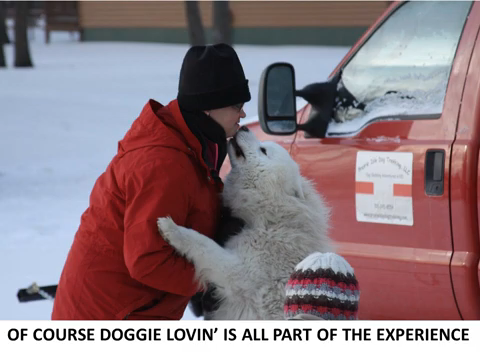
Helen L. Corlew runs a team of Samoyeds, Alaskan malamutes and Alaskan huskies. I am a Tellington TTouch practitioner and use this mode of work with training and living with my dogs.
Helen Corlew founded Prairie Isle Dog Trekking in Petersburg, North Dakota in 2010, and has spent the fifteen years since doing something most people only read about: teaching real dog sledding on real prairie terrain, at the edge of a landscape that doesn’t apologize for being difficult.
She is not a weekend enthusiast. She harnesses working dogs in January cold, trains handlers who have never touched a sled, and has built one of the only hands-on mushing education programs on the Northern Great Plains — from a single address on Highway 2, with no marketing budget and no shortcuts.
Her writing on Prairie Isle Dog Trekking reflects the same philosophy. Whether she is covering trail safety across the Rockies, breed behavior in extreme conditions, or what it actually takes to trek with a dog in the Alps, Helen writes from the position of someone who has done the work before writing the sentence.
She lives and runs dogs in Nelson County, North Dakota.
Kindly follow me on Social Media!


