


How to Train Your Dog to Walk on a Leash: 6 Steps and 5 Common Mistakes
Training a dog to walk on a leash takes 4 to 6 weeks of consistent, positive practice for most dogs, using a flat collar or front-clip harness, a 6-foot leash, and small treats. The core method rewards the dog for keeping the leash loose and removes any reward for pulling, since a dog that occasionally gets away with pulling learns to keep trying.
What Equipment Do You Need for Leash Training?
| Equipment | Best For | Notes |
|---|---|---|
| Flat buckle collar | Dogs that don’t pull hard | Simple and lightweight |
| Front-clip harness | Dogs that pull | Redirects pulling sideways instead of forward |
| Head halter (Gentle Leader or similar) | Strong pullers | Needs a short adjustment period |
| 6-foot leash | Most walking and training | Avoid retractable leashes during training |
| Small, high-value treats | Reward-based training | Soft treats work faster than crunchy ones |
A back-clip harness, which most dogs wear for everyday walks, can work against leash training, since pulling against it triggers a dog’s natural opposition reflex and can make pulling feel rewarding rather than uncomfortable. See our Best Dog Harnesses for Leash Training Guide for specific product picks.
When Should You Start Leash Training a Puppy?
Start leash training as soon as a puppy comes home, typically around 8 weeks old. Early sessions focus on getting the puppy comfortable wearing a collar or harness indoors, not on structured walking. See our Puppy Training Schedule Guide for what to teach alongside leash skills.
Older dogs and rescue dogs can learn the same skills at any age, though a dog that has practiced pulling for months or years usually needs a longer training window than a puppy starting fresh.
How Do You Train a Dog to Walk on a Leash Step by Step?

- Introduce the equipment indoors. Let your dog wear the collar or harness around the house while eating meals or playing, before attaching a leash.
- Attach the leash and stand still. Once your dog is comfortable with the gear, clip on the leash in a low-distraction area like your living room or yard.
- Reward a loose leash. Hold a treat at your side, and reward your dog the moment they stand near you without pulling.
- Take a few steps and reward again. Walk 2 or 3 steps, then reward your dog for staying close with slack in the leash.
- Gradually increase the distance. Add more steps between rewards as your dog gets consistent, then move training to the yard and finally the sidewalk.
- Name the behavior. Once your dog walks reliably on a loose leash, add a cue like “let’s walk” or “with me” to signal the behavior going forward.
What Do You Do When Your Dog Pulls on the Leash?
Two methods address pulling once it happens: stopping in place, often called the “be a tree” method, and changing direction.
With the be a tree method, stop walking the instant the leash goes tight, and stay still until your dog releases the tension and looks back at you. Reward the loose leash, then continue walking. This method works especially well with puppies and dogs early in training.
With the direction-change method, turn and walk the opposite way the moment your dog pulls ahead, without warning or a verbal cue. Your dog learns that pulling doesn’t get them closer to where they want to go, since you’re now walking away from it. This method tends to work better with older dogs that have practiced pulling for longer.
Whichever method you choose, consistency decides how fast it works. If pulling succeeds even occasionally, your dog learns to keep trying it.
How Long Does It Take to Leash Train a Dog?
Most dogs learn to walk on a loose leash in 4 to 6 weeks of consistent, daily practice, with training sessions of 10 to 15 minutes. Puppies often learn faster, since they haven’t practiced pulling yet, while older dogs with years of pulling habits can take a few months to fully retrain.
Practicing daily matters more than practicing long. Several short 10-minute sessions build the habit faster than one long weekly session, since dogs learn through repetition.
What Are Common Mistakes in Leash Training?
Five mistakes account for most of the setbacks in leash training.
- Allowing pulling to work sometimes. Letting your dog pull ahead on rushed mornings, even occasionally, undoes weeks of consistent training.
- Using a retractable leash during training. A retractable leash keeps constant tension and teaches a dog that pulling extends their range.
- Skipping the indoor introduction. Attaching a leash for the first time outside, where distractions are highest, sets training back before it starts.
- Training for too long at once. Sessions longer than 15 minutes tire out a dog’s attention span and reduce how much they retain.
- Choosing the wrong equipment. A back-clip harness on a strong puller works against the training method instead of supporting it.
How Do You Leash Train an Older or Rescue Dog?
An older or rescue dog uses the same core method as a puppy, but usually needs a slower pace and a longer timeline, sometimes a few months instead of a few weeks. Start indoors exactly as you would with a puppy, even if the dog already knows how to walk on a leash, since a rescue dog may need to unlearn pulling habits from a previous home.
If your dog shows extreme reactions to the leash, like running, hiding, shaking, or growling, work with a certified professional dog trainer rather than continuing alone.
Frequently Asked Questions About Leash Training
Can you leash train a dog without treats?
Treats speed up training by clearly marking the exact moment your dog does the right thing, but praise and access to sniffing can work as rewards too, especially once your dog understands the basic behavior.
Why does my dog pull harder on a harness?
A back-clip harness sits against a dog’s chest, and pulling against it can trigger an instinctive reflex to pull harder rather than ease up; a front-clip harness redirects that pull sideways instead.
Should I use a choke or prong collar to stop pulling?
Reward-based methods using a flat collar or front-clip harness are widely recommended by trainers over choke or prong collars, since they build the same skill without relying on discomfort.
Can two dogs be leash trained together?
It’s easier to leash train dogs one at a time, since a dog that’s still learning can pick up a pulling habit from a dog walking next to them; combine walks only after each dog is reliable alone.
Is Your Dog Ready to Walk Without Pulling?
A dog is ready for regular walks once they keep the leash loose across multiple 10-minute sessions, in a few different locations, without needing a treat after every step. Consistency during training, not the specific method or equipment, decides how quickly a dog gets there.
Every dog progresses at its own pace, so a puppy that picks it up in 3 weeks and a rescue dog that takes 3 months are both on track, as long as the leash stays loose more often each week than the week before.

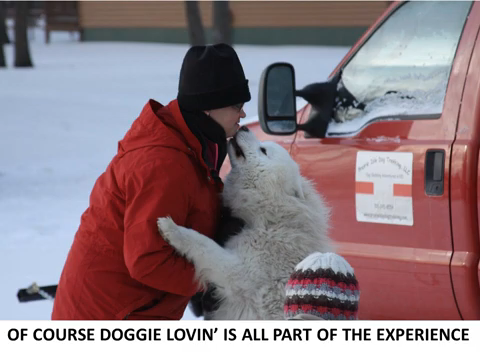
Helen L. Corlew runs a team of Samoyeds, Alaskan malamutes and Alaskan huskies. I am a Tellington TTouch practitioner and use this mode of work with training and living with my dogs.
Helen Corlew founded Prairie Isle Dog Trekking in Petersburg, North Dakota in 2010, and has spent the fifteen years since doing something most people only read about: teaching real dog sledding on real prairie terrain, at the edge of a landscape that doesn’t apologize for being difficult.
She is not a weekend enthusiast. She harnesses working dogs in January cold, trains handlers who have never touched a sled, and has built one of the only hands-on mushing education programs on the Northern Great Plains — from a single address on Highway 2, with no marketing budget and no shortcuts.
Her writing on Prairie Isle Dog Trekking reflects the same philosophy. Whether she is covering trail safety across the Rockies, breed behavior in extreme conditions, or what it actually takes to trek with a dog in the Alps, Helen writes from the position of someone who has done the work before writing the sentence.
She lives and runs dogs in Nelson County, North Dakota.
Kindly follow me on Social Media!


