


The dog came off the truck before the engine stopped. That’s the first thing I noticed. The owner was still reaching for his water bottle, not watching, and the dog went straight for Fen, my lead dog, and I had about two seconds and six harnessed animals and no good options.
Nothing happened. That time.
I’ve been standing in that two-second window for fifteen years and what I know from standing there is that the argument people are having right now, the one lighting up hiking forums and comment sections and park service Facebook pages, is not actually about dogs. It’s about the distance between what a person believes about their animal and what that animal does when nobody’s looking.
The banned-from-trails side is not wrong about the problem. I want to say that plainly. I’ve seen a dog blow through a ground-nesting bird habitat like a four-legged catastrophe while the owner called “he’s friendly” from sixty yards back, and I’ve watched trail runners get cut off at the knees by a retractable leash strung shin-high across a narrow path, and I’ve cleaned up after people who apparently believe Leave No Trace doesn’t apply to the bag they just tied to a branch and left hanging there like some kind of offering. The problem is real. The problem is the owners.
But here’s where I part ways with the ban crowd. Removing dogs from trails does not fix the people. It relocates them. The owner who couldn’t manage his animal on a maintained trail with signage and other humans around is going to take that same animal somewhere else, somewhere with less structure, and the outcome is going to be worse. You don’t solve a management failure with a geography solution.
I had a woman come out here two winters ago with her daughter and a rescue mutt she’d had for three weeks. She filled out the waiver, she listened to the orientation, and somewhere in the middle of me explaining how to read a dog’s body language on a cold start, she said her dog was different. Trained. Calm. I’ve heard that sentence so many times it has its own weight now.
The dog was fine. Actually fine, turned out. But I didn’t know that yet, and I spent the first twenty minutes of that session watching for the thing that would go wrong, because the thing almost always goes wrong when someone tells you it won’t. What I was really watching was her. Whether she was paying attention. Whether she corrected before the correction was needed. Whether she knew where her animal was when she wasn’t looking directly at it.

That’s the whole thing, right there. That’s what nobody in this debate wants to say out loud because it doesn’t make a satisfying argument either direction. Good dogs on trails aren’t good because they were born that way or trained by someone with a YouTube channel. They’re good because somebody is paying attention. Constantly. The way you pay attention when the temperature drops and you’ve got six dogs in harness and the sled is moving and anything could happen in the next ten seconds.
The frozen nylon smell of a harness that’s been left out overnight, the way it hits you when you lift it off the hook in the morning, stiff and foreign-smelling, not yet warmed back into itself. That’s what I think about when people talk about dogs and wilderness and rules. Things change when the temperature changes. Things change when the context changes. A dog that does fine in a backyard does not automatically do fine on a trail with wildlife pressure and unfamiliar smells and a narrow corridor and other people’s fear coming off them in waves.
The trail isn’t the variable. The attention is the variable.
Ban dogs from trails and you’ve done something clean and simple that solves exactly nothing. Keep them on trails without enforcement and you’ve got what we already have, which is a mixed result that trends toward bad when people are tired or distracted or convinced their situation is the exception.
The hiking community isn’t being torn apart by this question. It’s being clarified by it. What people are actually arguing about is accountability, and accountability is the one thing nobody on any side of this wants to be subject to.
A working dog will tell you everything you need to know about its handler inside the first five minutes. The trail does the same thing. People just aren’t reading it.

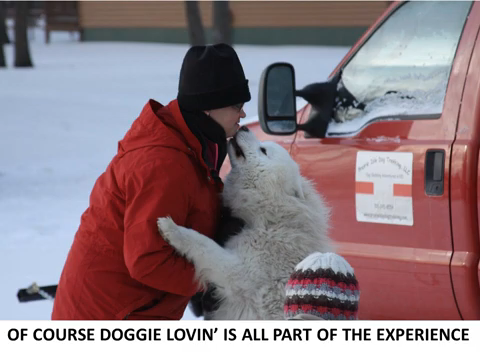
Helen L. Corlew runs a team of Samoyeds, Alaskan malamutes and Alaskan huskies. I am a Tellington TTouch practitioner and use this mode of work with training and living with my dogs.
Helen Corlew founded Prairie Isle Dog Trekking in Petersburg, North Dakota in 2010, and has spent the fifteen years since doing something most people only read about: teaching real dog sledding on real prairie terrain, at the edge of a landscape that doesn’t apologize for being difficult.
She is not a weekend enthusiast. She harnesses working dogs in January cold, trains handlers who have never touched a sled, and has built one of the only hands-on mushing education programs on the Northern Great Plains — from a single address on Highway 2, with no marketing budget and no shortcuts.
Her writing on Prairie Isle Dog Trekking reflects the same philosophy. Whether she is covering trail safety across the Rockies, breed behavior in extreme conditions, or what it actually takes to trek with a dog in the Alps, Helen writes from the position of someone who has done the work before writing the sentence.
She lives and runs dogs in Nelson County, North Dakota.
Kindly follow me on Social Media!


