


Wren went flat-eared and still before I heard anything.
We were two miles out, the team moving well, the kind of cold that burns the back of your throat differently than it burns your cheeks, and then Wren just quit leaning into her harness and stood there with her ears pinned and her nose working. I stopped the sled. The prairie was doing what prairie does: nothing, in every direction, forever. But Wren knew something I didn’t, and I’d learned that was a fact worth respecting.
Coyotes. A pack of them, maybe a quarter mile north, moving parallel to us. I never saw them. I smelled them eventually: rank, wet fur carried on a shift in the wind, and by then the whole team was locked onto it, every dog standing rigid in their traces, waiting for a decision.
I made the decision. We turned back.
That’s the thing about a dog that’s worked terrain long enough: it reads the land the way you read a room. The signals are there. The dog has already catalogued them. What matters is whether the human is paying attention.
Most aren’t. That’s not contempt. It’s just a fact about people who haven’t had to pay attention yet.
I read about the Wyoming ranch now, and I understand what’s happening there in a way I wouldn’t have before Wren pinned her ears that morning. It’s a working stretch of land in wolf and grizzly country, the kind of place where the animals move through on established corridors and have been doing so long before anyone thought to cut a trail through it and call it scenic. People bring their dogs. Leashed dogs, off-leash dogs, dogs in vests with little backpacks, dogs who have never once in their lives encountered something that wanted to eat them.
The wolves don’t distinguish between a pet and prey. Neither does a grizzly with cubs on a ridgeline.
What doesn’t get said in the write-ups about this place is what the dog triggers. A domestic dog in wolf territory isn’t neutral. It’s a provocation. Depending on the pack’s history with dogs, it reads as a competitor, a curiosity, sometimes a target, and occasionally something that pulls the wolves in close in a way that ends badly for everyone in the party. The dog’s scent, its noise, its behavior when it catches wind of something and lunges at the end of its leash: all of that is communication. The wolves read it. The bear reads it. The dog’s owner, usually, does not.

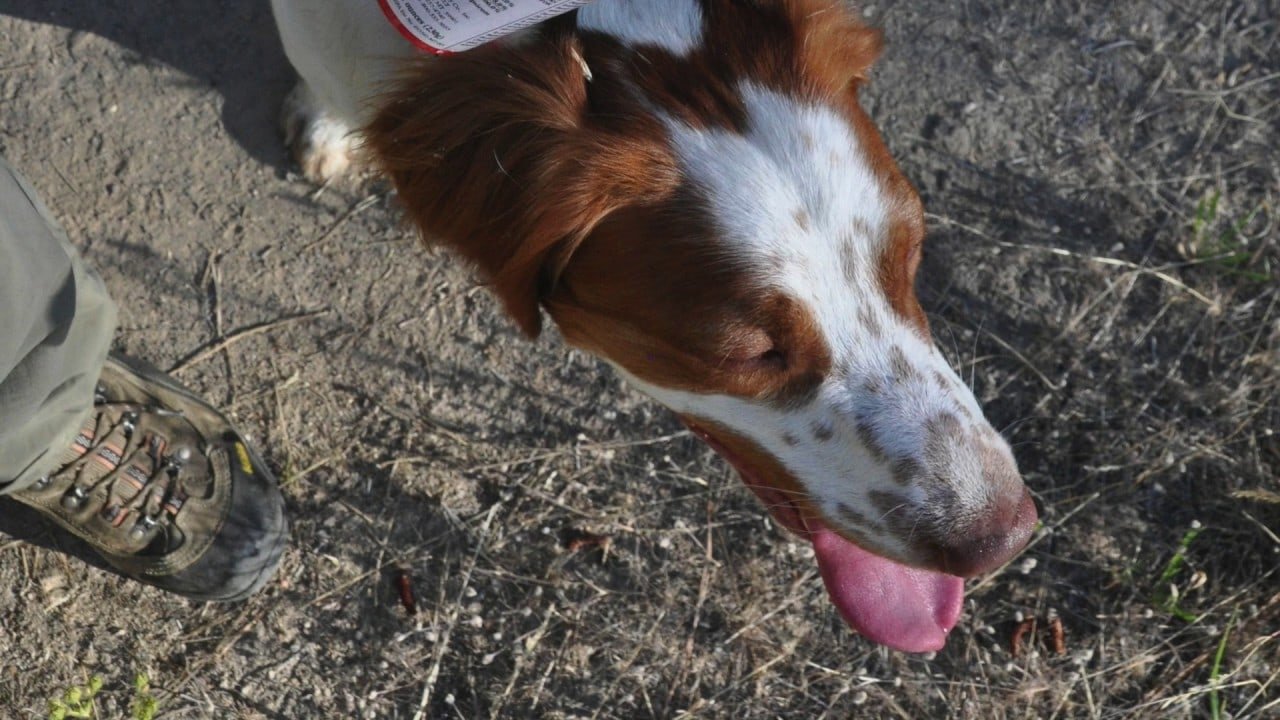
I watched guest dogs on my tours catch coyote scent and go completely sideways. Pulling, spinning, vocalizing, useless on a line. Good dogs at home. Loved dogs. Dogs that had never been asked to stay calm in the presence of something that wanted to eat them, and so they weren’t. I stopped running guest dogs years ago, not because something terrible happened but because I could see clearly enough what was going to happen eventually if I kept it up.
That moment of clarity is not dramatic. It arrives quietly, usually while you’re watching something unfold that you can almost but not quite stop, and you think: there it is. The shape of the problem.
The shape of the problem in Wyoming is not the wolves. It’s not even the grizzlies. It’s the assumption that a trail is just a trail, that the land out there is scenery you move through, that your dog at your side is a variable you’ve already accounted for because you know your dog.
You don’t know your dog in that context. You know your dog in the contexts you’ve been in together. That list has a bottom. Most people hit it somewhere around the moment a wolf steps out of the timber forty yards ahead and their dog decides to give chase.
After Wren stopped me that morning, I stood on the runners for a while and just listened. The prairie was quiet in that particular way it gets before something shifts. Cold in my nose, the sharpness that tells you the temperature has dropped another few degrees while you weren’t watching. The dogs had relaxed by then. The coyotes had moved on.
We were fine. We were fine because I listened to the dog who already knew, and I didn’t ask her to be brave about something she’d correctly identified as a threat.
That’s the whole thing, really. Knowing when to turn back isn’t timidity. It’s the only skill that actually keeps everyone alive.

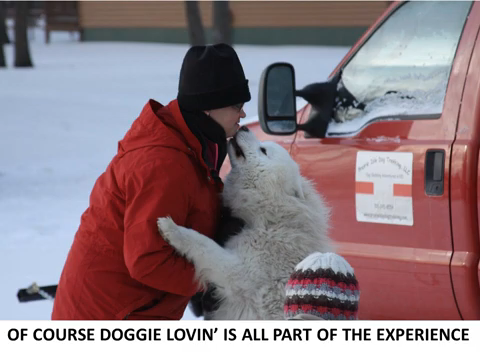
Helen L. Corlew runs a team of Samoyeds, Alaskan malamutes and Alaskan huskies. I am a Tellington TTouch practitioner and use this mode of work with training and living with my dogs.
Helen Corlew founded Prairie Isle Dog Trekking in Petersburg, North Dakota in 2010, and has spent the fifteen years since doing something most people only read about: teaching real dog sledding on real prairie terrain, at the edge of a landscape that doesn’t apologize for being difficult.
She is not a weekend enthusiast. She harnesses working dogs in January cold, trains handlers who have never touched a sled, and has built one of the only hands-on mushing education programs on the Northern Great Plains — from a single address on Highway 2, with no marketing budget and no shortcuts.
Her writing on Prairie Isle Dog Trekking reflects the same philosophy. Whether she is covering trail safety across the Rockies, breed behavior in extreme conditions, or what it actually takes to trek with a dog in the Alps, Helen writes from the position of someone who has done the work before writing the sentence.
She lives and runs dogs in Nelson County, North Dakota.
Kindly follow me on Social Media!


