
What the Dog Knows
The harness came in from overnight at negative eighteen and I had to run it under warm water before I could work the buckles. Frozen nylon has a smell, acrid, almost chemical, that I still notice every single time, even now. Fenwick was already in his traces, already screaming, because Fenwick was always the first one ready and always the loudest about it, and I was standing there thinking about nothing except getting my hands to cooperate when the woman from the church group said, he loves this, doesn’t he.
Not a question. A statement. She’d decided something.
I said yes, because Fenwick did love it, and because I didn’t have time to explain the difference between what a dog loves and what a dog is.
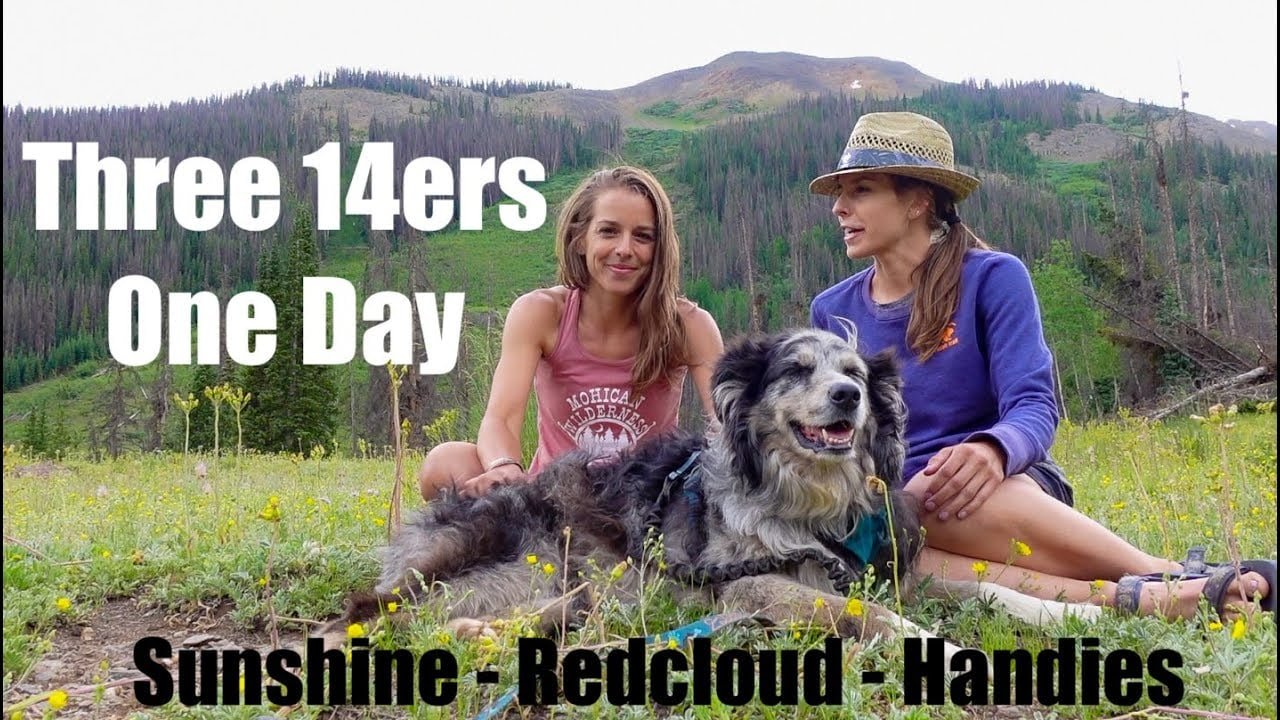
I’ve been reading about the Colorado woman. The one with the rescue husky. Fifty-eight fourteeners, and they’re not done. The photographs are beautiful. The dog looks healthy. The woman looks happy. I don’t have a single thing against her.
But I keep thinking about what the dog knows.
A Siberian husky, a real one, bred for work, which rescue dogs often are, which is part of why they end up in rescue, is not a dog that was built for peaks. It was built for distance. It was built to move across flat, featureless terrain for hours, using its body at a specific sustained output, reading the dog in front of it and the one behind it and the surface under its feet all at the same time. That is a different intelligence than scrambling up talus. That is a different body than the one you need on a summit ridge. The musculature is different. The joint load is different. The thermal regulation is different. A husky in full coat on a sun-blasted fourteener in July is not in its element. It is tolerating.
Tolerating is not the same as loving.
I don’t say this to be cruel to the woman. I say it because I have watched dogs who were tolerating get confused with dogs who were thriving, and I have watched that confusion cost something.

Minus fifteen and no wind yet. That’s the morning I remember most clearly, the morning a first-timer let a tug line go slack because she didn’t understand what slack meant, and Ozark turned around and looked at her with an expression I still can’t fully describe. Not anger. Not confusion. Something more like recalibration. He was figuring out, in real time, whether she was part of the team or a thing attached to the team, and the distinction mattered to him in ways that were entirely practical. He needed to know. The team needed to know. And she was standing there thinking he was being affectionate.
The gap between what humans read onto working dogs and what working dogs are actually communicating is the thing that has shaped everything about how I run this operation. I stopped letting people narrate the dogs early on. You want to tell me what my dog is feeling, you’d better have fifteen years and a reason.
Dogs do form attachments. Real ones. Ozark slept outside my door for six weeks after his littermate died. I know what a dog’s grief looks like. I know what a dog’s joy looks like, the full-body seizing joy of a team dog when the gangline snaps taut and the brake releases and everything they are finally has somewhere to go. I know what contentment looks like in a dog that has been well worked and well fed and is now lying in straw.
What I don’t know is whether that rescue husky on the fourteener is experiencing its version of the gangline going taut, or whether it is doing what dogs do, which is stay with the person they belong to, into whatever terrain that person chooses, without complaint.
Dogs don’t complain. That’s not nobility. That’s just dogs.
The woman loves her dog. That part I believe completely. The dog goes everywhere she goes, and that means something to both of them, and the photographs are beautiful, and none of that is nothing.
I just think we owe them honesty about what we’re asking. Not the story we want the photograph to tell. The actual ask, the actual cost, looked at straight.
They can’t tell us when it’s too much. That’s the whole thing. That’s all of it, right there.

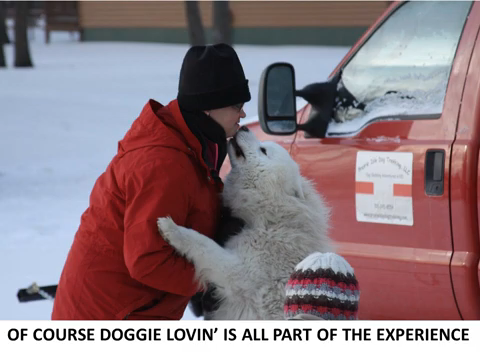
Helen L. Corlew runs a team of Samoyeds, Alaskan malamutes and Alaskan huskies. I am a Tellington TTouch practitioner and use this mode of work with training and living with my dogs.
Helen Corlew founded Prairie Isle Dog Trekking in Petersburg, North Dakota in 2010, and has spent the fifteen years since doing something most people only read about: teaching real dog sledding on real prairie terrain, at the edge of a landscape that doesn’t apologize for being difficult.
She is not a weekend enthusiast. She harnesses working dogs in January cold, trains handlers who have never touched a sled, and has built one of the only hands-on mushing education programs on the Northern Great Plains — from a single address on Highway 2, with no marketing budget and no shortcuts.
Her writing on Prairie Isle Dog Trekking reflects the same philosophy. Whether she is covering trail safety across the Rockies, breed behavior in extreme conditions, or what it actually takes to trek with a dog in the Alps, Helen writes from the position of someone who has done the work before writing the sentence.
She lives and runs dogs in Nelson County, North Dakota.
Kindly follow me on Social Media!