

Training a dog for hiking requires building 4 core capabilities: physical fitness, obedience commands, gear tolerance, and trail socialization. A 2021 study in the Journal of Veterinary Behavior confirms that dogs with structured pre-trail training show 43% fewer trail behavioral incidents than untrained dogs on their first hike.
What Does Training a Dog for Hiking Involve?
Training a dog for hiking is a structured conditioning process that develops stamina, trail obedience, equipment comfort, and environmental adaptability over 6 to 8 weeks. It prepares the dog physically and behaviorally for sustained activity on varied outdoor terrain. Examples of terrain a trained hiking dog navigates include rocky trails, river crossings, forested paths, and steep elevation changes. For the previous guide in this series, see How to Hike With a Dog: Training, Gear, Safety, and Trail Rules.
Hiking training covers 4 distinct components:
- Physical conditioning — Builds cardiovascular endurance and muscular strength
- Obedience training — Establishes reliable command response in distraction-heavy environments
- Gear desensitization — Acclimates the dog to harnesses, boots, and backpacks
- Environmental exposure — Introduces the dog to trail-specific stimuli before the first hike
Is Your Dog Ready to Train for Hiking?
A dog is ready to begin hiking training at 18 months of age, after veterinary clearance, and with a baseline of basic obedience.
3 conditions must be met before training begins:
- Age requirement — Growth plates in large breeds close between 12 and 18 months. Trail conditioning before plate closure causes long-term joint damage. Small breeds mature faster; consult a veterinarian for breed-specific timelines.
- Veterinary clearance — A pre-training health assessment must confirm joint health, cardiovascular function, and parasite prevention. The American Veterinary Medical Association (AVMA) recommends this check before any new sustained activity program.
- Basic obedience baseline — The dog must respond to 4 foundational commands before trail training begins: sit, stay, come, and leave it.
What Health Conditions Prevent a Dog From Hiking Training?
4 health conditions disqualify a dog from hiking training until treated or managed:
- Hip or elbow dysplasia — Unmanaged joint disease worsens under sustained elevation and impact
- Brachycephalic airway syndrome — Affects breeds including Bulldogs, Pugs, and French Bulldogs; causes respiratory distress under aerobic load
- Heart murmur Grade 3 or above — Restricts cardiovascular output required for sustained hiking
- Active parasite infestation — Ticks and fleas transmit trail-specific pathogens including Borrelia burgdorferi (Lyme disease)
What Commands Does a Dog Need for Hiking?
A hiking dog requires 6 reliable trail commands: come, leave it, wait, heel, down, and place.
These 6 commands address the 6 most common trail situations requiring dog control:
| Command | Trail Application | Response Standard |
|---|---|---|
| Come | Recalls dog from distractions or hazards | Responds within 3 seconds in all environments |
| Leave it | Prevents ingestion of toxic plants or wildlife contact | Immediate disengagement on first cue |
| Wait | Holds dog at trail obstacles, road crossings, and junctions | Remains stationary until released |
| Heel | Maintains dog at handler’s side on narrow or shared paths | Consistent position without pulling |
| Down | Lowers dog to ground when other hikers or dogs pass | Holds position until released |
| Place | Directs dog to a specific spot at camp or rest stops | Remains in position for extended periods |
How Do You Train a Dog to Respond to Trail Commands?
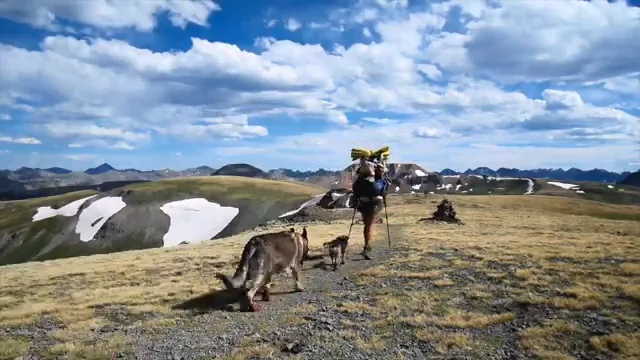
Train trail commands using a 3-phase method: introduction, proofing, and distraction training.
Phase 1 — Introduction (Week 1 to 2): Teach each command in a low-distraction indoor environment. Use positive reinforcement. Reward with high-value treats within 2 seconds of correct response. Practice each command for 5 minutes per session, twice daily. Studies by the Association of Professional Dog Trainers confirm that sessions under 10 minutes produce faster retention than extended training blocks.
Phase 2 — Proofing (Week 3 to 4): Move training to a garden or quiet outdoor space. Increase distance between handler and dog on the recall command. Introduce mild distractions including food on the ground, passing pedestrians, and unfamiliar objects. Require the same response standard as indoors before progressing.
Phase 3 — Distraction Training (Week 5 to 6): Train commands at a busy park, near traffic, and on natural surfaces including grass, gravel, and dirt paths. A dog that responds reliably in 3 different high-distraction environments is considered trail-ready on obedience.
How Do You Build a Dog’s Physical Fitness for Hiking?
Build a dog’s hiking fitness over 8 weeks using a progressive overload method that increases distance, elevation, and surface difficulty each week.
Here is the complete 8-week hiking fitness program:
| Week | Daily Walk Duration | Surface Type | Elevation | Notes |
|---|---|---|---|---|
| 1 | 20 minutes | Flat pavement | None | Establish baseline pace |
| 2 | 25 minutes | Flat grass or dirt | None | Introduce natural surfaces |
| 3 | 35 minutes | Gentle hills | Up to 30 m | Monitor breathing recovery |
| 4 | 45 minutes | Mixed terrain | Up to 60 m | Add short off-road sections |
| 5 | 55 minutes | Uneven trail surface | Up to 100 m | Introduce trail-specific footing |
| 6 | 70 minutes | Moderate trail | Up to 150 m | First full trail simulation |
| 7 | 85 minutes | Moderate–hard trail | Up to 250 m | Add loaded backpack at 10% body weight |
| 8 | 90–120 minutes | Full trail conditions | Up to 350 m | Final pre-hike assessment |
How Do You Know If a Dog Is Progressing Correctly?
A dog progressing correctly through the fitness program shows 4 measurable indicators:
- Breathing returns to resting rate within 5 minutes of stopping
- Maintains consistent pace throughout the session without lagging
- Appetite remains normal or increases after activity
- No limping or joint stiffness observed during or after walks
Signs of overtraining include limping that persists after rest, refusal to begin walks, prolonged panting beyond 15 minutes post-activity, and loss of appetite. Reduce training load by 30% for 5 days before resuming progression.
How Do You Train a Dog to Tolerate Hiking Gear?
Gear desensitization trains a dog to wear a harness, backpack, and boots comfortably before the first trail by using a 3-stage introduction method.
Introducing gear without desensitization causes anxiety, resistance, and abnormal gait. Each item requires separate introduction before combination use.
How Do You Introduce a Harness to a Dog?
Follow this 4-step harness introduction process:
- Place the harness near the dog’s sleeping area for 3 days. Allow the dog to sniff and investigate it without pressure.
- Hold the harness open and reward the dog with treats for approaching and placing its head through the neck opening.
- Fasten the harness for 5 minutes indoors. Reward calm behavior. Remove immediately if the dog shows distress.
- Increase harness wear time by 10 minutes daily until the dog is comfortable wearing it for 60 minutes during regular activity.
How Do You Train a Dog to Wear Hiking Boots?
Hiking boot desensitization requires 14 days of gradual exposure. Dogs unaccustomed to boots show high-step gait and resistance for the first 5 to 10 minutes of wear. This is a normal adjustment response, not pain.
Follow this 5-step boot introduction:
- Show the dog one boot. Reward sniffing and contact with the boot.
- Place one boot on one paw for 2 minutes. Reward stillness.
- Fit boots on all 4 paws for 5 minutes indoors. Allow the dog to walk freely.
- Increase indoor boot sessions by 5 minutes daily over 7 days.
- Move boot sessions to outdoor surfaces — pavement, grass, then gravel — before first trail use.
How Do You Introduce a Dog Backpack?
Load a dog backpack gradually over 3 weeks, starting at 5% of the dog’s body weight and increasing to a maximum of 25%.
Do not load a backpack on the first introduction. Follow this sequence:
- Day 1–3: Place the empty backpack on the dog’s back for 10 minutes indoors
- Day 4–7: Add 5% body weight load for 20-minute outdoor walks
- Week 2: Increase to 10% body weight on 40-minute walks
- Week 3: Increase to 15–20% body weight on trail simulation sessions
A 2019 study in Applied Animal Behaviour Science confirms that dogs carrying loads above 30% of body weight show significant gait alteration and increased lumbar stress within 20 minutes of sustained walking.
How Do You Socialize a Dog for Trail Environments?
Trail socialization exposes a dog to 6 categories of trail-specific stimuli before the first hike: unfamiliar people, other dogs, wildlife sounds, water crossings, trail surfaces, and elevation changes.
Controlled exposure to these stimuli prevents reactive behavior on trail. Use a structured desensitization and counter-conditioning approach: expose the dog to each stimulus at low intensity, reward calm behavior, and increase stimulus intensity gradually over 2 to 3 weeks.
Here are the 6 socialization targets and their training methods:
- Unfamiliar people — Walk the dog through areas with varied pedestrian density. Reward non-reactive passing behavior.
- Other dogs — Practice controlled dog-to-dog approaches at 10 metres, then 5 metres, then passing. Reward calm attention on the handler rather than the other dog.
- Wildlife sounds — Play recordings of birds, running water, and rustling undergrowth at low volume during meals and training sessions. Increase volume gradually over 10 days.
- Water crossings — Introduce still water first. Allow the dog to enter shallow water voluntarily. Progress to moving water on a leash with a non-slip harness.
- Trail surfaces — Walk daily on gravel, loose rock, wet grass, mud, and wooden bridges. Each surface requires 3 to 5 sessions for confident footing.
- Elevation changes — Introduce uphill and downhill walking on moderate inclines. Train a controlled descent pace to reduce front joint impact.
What Is the Recall Command and Why Is It the Most Important Trail Command?
The recall command — “come” — is the most critical trail command because it returns the dog to the handler in 4 dangerous situations: wildlife encounters, trail hazards, off-leash zones, and emergencies.
Train recall using the long-line method:
- Attach a 10-metre training line to the harness
- Allow the dog to move away freely
- Call “come” once in a clear, neutral tone
- If the dog responds, reward immediately with the highest-value treat available
- If the dog does not respond, apply gentle line pressure and reward on arrival
- Never call “come” and then deliver punishment — this breaks recall reliability in under 3 repetitions
Practice recall in 5 progressively distracting environments before trusting it on trail. A recall that works in a park but not near wildlife or moving water is not trail-ready.
How Do You Test If a Dog Is Ready to Hike?
A dog is ready for its first hike when it passes a 5-point trail readiness assessment.
The 5 readiness criteria are:
- Completes a 90-minute walk on varied terrain without limping or lagging
- Responds to all 6 trail commands in a high-distraction outdoor environment
- Wears harness, backpack at 15% body weight, and boots without resistance for 60 minutes
- Walks calmly past unfamiliar dogs and people without reactive behavior
- Received full veterinary clearance within the past 3 months
A dog that meets all 5 criteria is physically and behaviorally prepared for a moderate day hike of 10 to 15 km with up to 300 metres of elevation gain.
Summary
Training a dog for hiking requires 8 weeks of progressive physical conditioning, 6-command obedience development, systematic gear desensitization, and structured environmental socialization. Dogs that complete this training program show greater trail safety, reduced reactive behavior, and better physical resilience than unprepared dogs. Veterinary clearance, age-appropriate start timing, and consistent positive reinforcement are the 3 non-negotiable foundations of every successful hiking dog training program.
Related guides
- Dog Hiking Checklist: 12 Essential Items and 5 Safety Tips for Trail-Ready Dogs
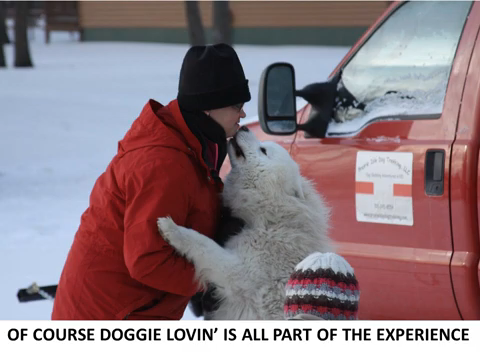
Helen L. Corlew runs a team of Samoyeds, Alaskan malamutes and Alaskan huskies. I am a Tellington TTouch practitioner and use this mode of work with training and living with my dogs.
Helen Corlew founded Prairie Isle Dog Trekking in Petersburg, North Dakota in 2010, and has spent the fifteen years since doing something most people only read about: teaching real dog sledding on real prairie terrain, at the edge of a landscape that doesn’t apologize for being difficult.
She is not a weekend enthusiast. She harnesses working dogs in January cold, trains handlers who have never touched a sled, and has built one of the only hands-on mushing education programs on the Northern Great Plains — from a single address on Highway 2, with no marketing budget and no shortcuts.
Her writing on Prairie Isle Dog Trekking reflects the same philosophy. Whether she is covering trail safety across the Rockies, breed behavior in extreme conditions, or what it actually takes to trek with a dog in the Alps, Helen writes from the position of someone who has done the work before writing the sentence.
She lives and runs dogs in Nelson County, North Dakota.
Kindly follow me on Social Media!
