

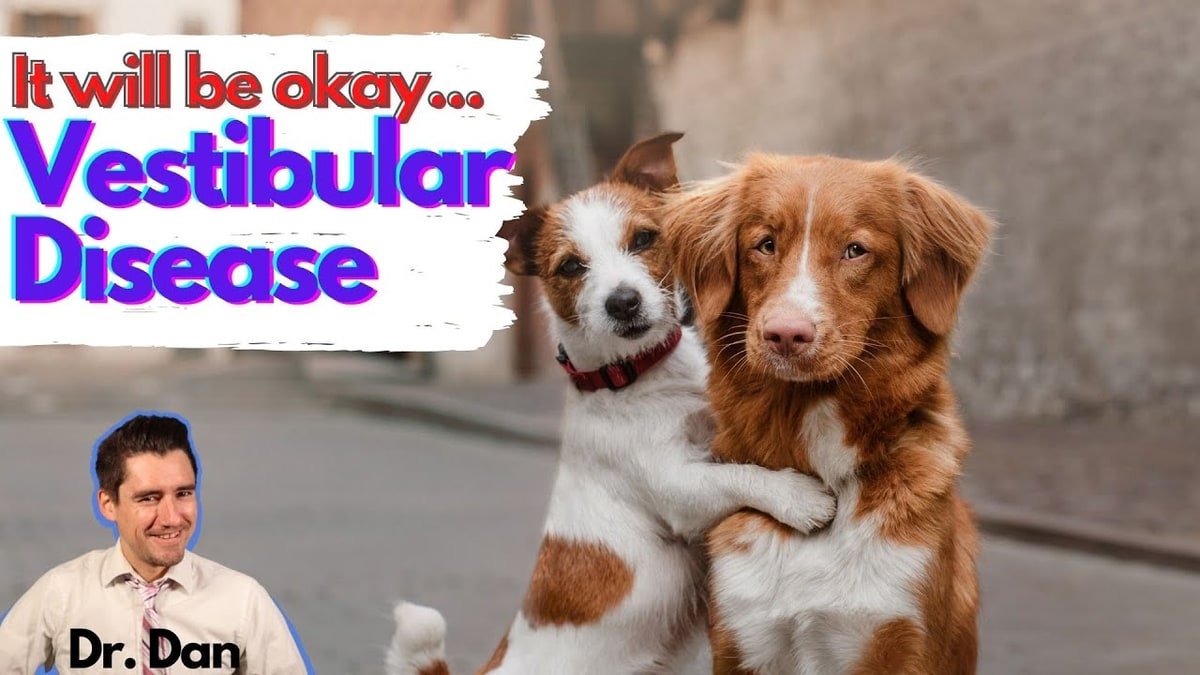
Old dog vestibular disease is one of the most common neurological conditions in senior dogs and is not a stroke. It causes a sudden onset of head tilt, loss of balance, and rapid eye movements. Most dogs begin improving within 72 hours and fully recover within 2 to 3 weeks. The condition is rarely life-threatening.
For related reading, see Dog Vomiting White Foam: 10 Causes, Severity Levels, and When to See a Vet.
What Is Old Dog Vestibular Disease?
Old dog vestibular disease is the common name for Canine Idiopathic Vestibular Syndrome (CIVS). It is called idiopathic because no specific cause can be identified. It is called old dog vestibular disease because it occurs most frequently in senior dogs, although dogs of any age can develop vestibular disease.
According to Dr. Jerry Klein, Chief Veterinarian for the American Kennel Club (AKC), CIVS is one of the most common neurological disorders in veterinary medicine.
What Does the Vestibular System Do?
The vestibular system is responsible for maintaining balance and spatial orientation. It coordinates the position of the head, eyes, and legs. The system has 2 components: a peripheral component located in the inner and middle ear, and a central component located in the brainstem and cerebellum.
When the vestibular system malfunctions, a dog loses the ability to determine where its body is in space. This produces the falling, tilting, and eye-movement signs that owners find alarming.
Which Dogs Are Most at Risk of Vestibular Disease?
Older dogs are most at risk of idiopathic vestibular disease. A study published in the Journal of Veterinary Internal Medicine analyzed over 905,000 dogs in the UK and found that the breeds with the highest odds of a vestibular disease diagnosis were French Bulldogs, Bulldogs, and Cavalier King Charles Spaniels. German Shepherds and Doberman Pinschers also face an increased risk.
Dogs with hypothyroidism or chronic ear infections have a higher risk regardless of breed.
What Are the Symptoms of Old Dog Vestibular Disease?
Old dog vestibular disease has 7 characteristic symptoms. These develop suddenly, typically over a period of minutes to hours, and are non-progressive. They do not worsen after the first 24 to 48 hours in idiopathic cases.
Symptoms include:
- Head tilt to one side
- Nystagmus: rapid, involuntary jerking eye movements, typically side to side
- Ataxia: stumbling, falling, or inability to walk normally
- Falling or rolling in the direction of the head tilt
- Disorientation and confusion
- Nausea and vomiting from dizziness
- Refusal to eat or drink
2 additional signs may appear in some dogs but are not always present:
- Facial paralysis: drooping of one side of the face
- Horner's syndrome: a constricted pupil, elevated third eyelid, and slightly sunken eye on the affected side
Most dogs will be reluctant to walk or stand and will lean or fall in the direction their head tilts.
Is a Dog's Third Eyelid Showing a Sign of Vestibular Disease?
An elevated third eyelid is one of 3 signs that together form Horner's syndrome. The 3 signs are a constricted pupil, an elevated third eyelid, and a slightly sunken eyeball. Horner's syndrome can appear alongside vestibular disease but is not always present.
An elevated third eyelid on its own can also be caused by other conditions. These include IVDD (intervertebral disc disease), eye injury or inflammation, nerve damage from trauma or cancer, and fibrocartilaginous emboli. A dog showing a persistent elevated third eyelid should be examined by a veterinarian to identify the cause.
Why Is an Old Dog Restless at Night?
An old dog with vestibular disease may be restless at night because disorientation typically worsens in low-light conditions when visual cues to balance are reduced. The dog may pace, circle, be unable to settle, or whine from dizziness and nausea.
Night restlessness in older dogs also has other causes. These include pain from IVDD or arthritis, cognitive dysfunction syndrome (similar to dementia in humans), urinary urgency from kidney disease, and anxiety. A dog that is newly restless at night should be examined by a veterinarian to distinguish between these causes.
What Causes Vestibular Disease in Old Dogs?
Vestibular disease in old dogs has 6 known causes, and one large idiopathic category.
| Cause | Notes |
|---|---|
| Idiopathic (unknown) | Most common in older dogs. Diagnosed after all other causes are ruled out |
| Inner or middle ear infection | Relatively common. Outer ear infection can signal inner ear involvement |
| Hypothyroidism | Low thyroid hormone can affect the vestibular nerve |
| Tumors or polyps in the middle ear | Less common. Requires imaging to detect |
| Ear trauma (ruptured eardrum) | Physical injury to the inner ear disrupts the vestibular apparatus |
| Medication toxicity | Some antibiotics (aminoglycosides) and antiseptics (chlorhexidine) can damage the inner ear |
When a veterinarian cannot find any of these causes after a thorough examination, the diagnosis is canine idiopathic vestibular syndrome.
Is Old Dog Vestibular Disease the Same as a Stroke?
Old dog vestibular disease is not the same as a stroke. Vestibular signs are commonly but incorrectly attributed to a stroke. According to Veterinary Partner (VIN), vascular disease is unusual in pets and is a rare cause of vestibular signs, unlike in humans where it is common.
Both conditions can cause sudden loss of balance, head tilt, and disorientation. The 4 most useful distinguishing factors are:
- Recovery speed: vestibular disease typically begins improving within 72 hours. Strokes may take longer to resolve.
- Limb function: dogs with peripheral vestibular disease have normal awareness and normal movement of their limbs. A dog that cannot move or feel one or more limbs is more likely to have a central or vascular event.
- Progression: CIVS is non-progressive after onset. Symptoms that worsen after the first 48 hours require further investigation for stroke, tumor, or brain lesion.
- Nystagmus direction: side-to-side nystagmus is associated with peripheral vestibular disease. Vertical or rotary nystagmus is more often associated with central disease.
Only an MRI can confirm a stroke. Veterinarians commonly recommend monitoring for 72 hours before pursuing expensive imaging in older dogs presenting with classic peripheral vestibular signs.
Is Vestibular Disease Peripheral or Central and Why Does It Matter?
Vestibular disease is classified as peripheral or central depending on where the problem originates.
Peripheral vestibular disease involves the inner or middle ear, outside the brain. It accounts for the majority of vestibular cases in older dogs. Dogs with peripheral vestibular disease have normal limb function and normal consciousness. The prognosis is generally good.
Central vestibular disease involves the brainstem or cerebellum, inside the brain. It is less common but more serious. Signs of central vestibular disease include weakness or abnormal movement in the limbs, changes in consciousness or mental alertness, vertical nystagmus, and worsening symptoms over time. Central vestibular disease requires advanced diagnostics including MRI and referral to a veterinary neurologist.
A veterinarian performs a neurological examination to classify the vestibular problem as peripheral or central before deciding on next steps.
How Is Old Dog Vestibular Disease Diagnosed?
Idiopathic vestibular disease is a diagnosis of exclusion. A veterinarian rules out other causes before reaching this conclusion. Diagnostic steps include:
- Physical examination: assessing symptoms, gait, and medical history
- Ear examination: checking both ear canals with an otoscope for infection or foreign material
- Neurological examination: evaluating limb function, consciousness, and eye movement pattern
- Blood work: checking for hypothyroidism, infections, and organ function
- Urinalysis: assessing kidney and systemic health
- Ear cytology: examining ear canal discharge under a microscope
If no cause is found and symptoms are non-progressive and consistent with peripheral vestibular disease, a veterinarian may recommend monitoring for 72 hours before advancing to imaging. If a central problem is suspected or if symptoms worsen, MRI or CT scan is recommended to check for brain tumors, lesions, or vascular events.
How Long Does Old Dog Vestibular Disease Last?
Old dog vestibular disease follows a predictable recovery timeline in idiopathic cases.
| Timeframe | What Typically Happens |
|---|---|
| First 24 to 48 hours | Symptoms are most severe |
| 72 hours | Most dogs begin to noticeably improve |
| 7 to 10 days | Head tilt and stumbling improve significantly |
| 2 to 3 weeks | Most dogs are fully recovered |
| Long-term | Some dogs retain a mild head tilt or slight wobble permanently |
Dogs that fail to improve within the expected timeline, or that worsen after the first 48 hours, require additional investigation. A referral to a veterinary neurologist may be advised.
Dogs that have had one episode of idiopathic vestibular disease are prone to recurrence.

How Is Old Dog Vestibular Disease Treated?
Treatment for vestibular disease depends on the underlying cause.
If a cause is identified, treating it resolves the vestibular symptoms. An ear infection is treated with antibiotics. Hypothyroidism is treated with thyroid medication. Medication-induced vestibular disease requires stopping the offending drug.
For idiopathic cases, treatment is supportive. The condition resolves on its own in most dogs. Supportive care includes:
- Anti-nausea or motion sickness medication to relieve dizziness
- Sedatives for dogs that are severely disoriented or distressed
- A comfortable, low surface to rest on
- Food and water placed within easy reach
- Floors cleared of obstacles to prevent injury
- Stairs and elevated surfaces blocked off during recovery
Most dogs with CIVS do not require hospitalization. Home nursing care is sufficient once a veterinarian has confirmed the diagnosis.
What Are the Neurological Symptoms in Dogs That Require Emergency Care?
Neurological symptoms in dogs that require same-day or emergency veterinary attention include:
- Sudden inability to walk or stand
- Loss of function or feeling in one or more limbs
- Dragging the rear legs
- Loss of bladder or bowel control
- Seizures or convulsions
- Sudden blindness or disorientation with no prior signs
- Facial paralysis combined with limb weakness
- Symptoms that worsen progressively after the first 48 hours
- Vertical or rotary nystagmus rather than horizontal
- Collapse or loss of consciousness
Vestibular disease that affects the limbs, causes altered consciousness, or worsens over time is not idiopathic. It indicates a central neurological problem that requires imaging and specialist assessment.
What Are the Early Signs of IVDD in Dogs?
Intervertebral Disc Disease (IVDD) is a spinal condition distinct from vestibular disease. It affects the cushioning discs between the vertebrae of the spine. When these discs bulge or rupture, they compress the spinal cord and cause pain, nerve dysfunction, or paralysis. IVDD and vestibular disease can both cause neurological symptoms, but they originate from different locations and have different early signs.
IVDD has 2 types. Type I involves sudden disc protrusion and acute symptoms. It is more common in long-backed, short-legged breeds such as Dachshunds, Beagles, and Corgis. Type II involves gradual disc degeneration and develops more slowly. It is more common in large breeds.
Early signs of IVDD include:
- Reluctance to jump, climb stairs, or get onto furniture
- Yelping or crying when picked up or touched along the spine
- Hunched posture when standing or walking
- Reduced activity or stiffness after rest
- Wobbly or unsteady walking
- Knuckling: the dog walks on the tops of its paws rather than the pads
- Dragging or scuffing the rear paws
According to Cornell University College of Veterinary Medicine, 65% of IVDD problems affect the thoracolumbar region (the back), and 18% affect the neck.
IVDD emergency signs requiring immediate veterinary care include inability to walk, dragging hind legs, severe pain when touched along the spine, and loss of bladder or bowel control. According to veterinary specialists at GSVS, treatment outcomes are better when care begins within the first 24 hours of symptoms appearing.
| Feature | Vestibular Disease | IVDD |
|---|---|---|
| Primary location | Inner ear or brainstem | Spinal cord and vertebrae |
| Main symptom | Head tilt, nystagmus, balance loss | Back/neck pain, limb weakness |
| Limb function | Normal (peripheral) | Affected in moderate to severe cases |
| Onset | Sudden, minutes to hours | Can be sudden (Type I) or gradual (Type II) |
| Recovery | 2 to 3 weeks typical | Weeks to months, may require surgery |
| Emergency threshold | Worsening after 48 hrs, limb weakness | Inability to walk, loss of bladder control |
Both conditions require prompt veterinary evaluation. Neither should be managed without a confirmed diagnosis.
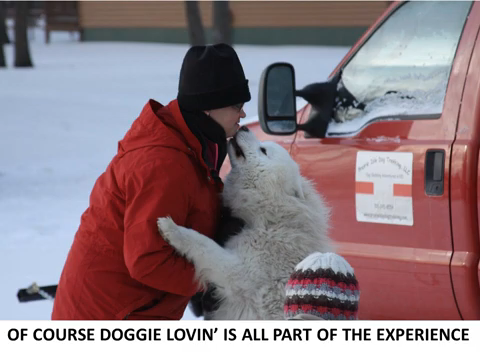
Helen L. Corlew runs a team of Samoyeds, Alaskan malamutes and Alaskan huskies. I am a Tellington TTouch practitioner and use this mode of work with training and living with my dogs.
Helen Corlew founded Prairie Isle Dog Trekking in Petersburg, North Dakota in 2010, and has spent the fifteen years since doing something most people only read about: teaching real dog sledding on real prairie terrain, at the edge of a landscape that doesn’t apologize for being difficult.
She is not a weekend enthusiast. She harnesses working dogs in January cold, trains handlers who have never touched a sled, and has built one of the only hands-on mushing education programs on the Northern Great Plains — from a single address on Highway 2, with no marketing budget and no shortcuts.
Her writing on Prairie Isle Dog Trekking reflects the same philosophy. Whether she is covering trail safety across the Rockies, breed behavior in extreme conditions, or what it actually takes to trek with a dog in the Alps, Helen writes from the position of someone who has done the work before writing the sentence.
She lives and runs dogs in Nelson County, North Dakota.
Kindly follow me on Social Media!
