

Dog cremation costs between $30 and $500 or more depending on the type of cremation, the size of the dog, and the location. There are 3 main types: communal, individual (partitioned), and private. This guide covers costs, burial options, signs to watch in a sick dog, and ways to honor a dog's memory after they are gone.
For related reading, see Old Dog Vestibular Disease: Symptoms, Causes, Recovery Timeline, and How It Differs From a Stroke.
How Much Does It Cost to Cremate a Dog?
Dog cremation costs vary primarily by cremation type and the dog's weight. Communal cremation is the least expensive option, starting from $30 to $200. Private cremation ranges from $150 to $500 or more. Aquamation, a water-based alternative, costs 10 to 30% more than private flame cremation.
| Cremation Type | Ashes Returned | Average Cost Range |
|---|---|---|
| Communal | No | $30 to $200 |
| Individual (partitioned) | Usually yes | $50 to $150 |
| Private | Yes (guaranteed) | $150 to $500+ |
| Aquamation (water cremation) | Yes | $300 to $450+ |
What Is Communal Cremation for a Dog?
Communal cremation is the process of cremating multiple pets together. Individual ashes cannot be returned because the remains are combined. Commingled ashes are typically scattered in a memorial garden by the cremation provider, or at sea through partnered services. Communal cremation costs between $30 and $200 and is the most affordable option for families who do not require the return of ashes.
What Is Private Cremation for a Dog?
Private cremation is the process of cremating one pet alone in a dedicated chamber. The ashes are collected, placed in a basic urn or container, and returned to the family within 5 to 10 days. A Certificate of Cremation is typically included. Private cremation costs between $150 and $500 for most dogs, with giant breeds exceeding $500.
The partitioned (individual) option sits between communal and private. Multiple pets are cremated in the same chamber but separated by dividers. The individual dog's ashes are returned, though some slight mixing is possible. This option costs between $50 and $150 on average.
What Is Aquamation for a Dog?
Aquamation, formally known as alkaline hydrolysis, uses warm water and alkaline salts instead of flame. The process produces no direct greenhouse gas emissions and results in approximately 20% more remains than flame-based cremation. Aquamation is available at approximately 1 in 5 providers in the United States. Individual aquamation costs typically start at $300 for pets under 50 lbs and can reach $450 or more for large breeds.
What Factors Affect the Total Cost of Dog Cremation?
The 4 main factors that affect the total cost of dog cremation are:
- Cremation type: private cremation costs more than communal
- Dog's size and weight: larger dogs require more time and chamber space
- Location: urban providers charge more than rural or competitive markets
- Add-ons: urn upgrades, home or clinic pickup, memorial jewelry, and paw print casting add to the base cost
Urn upgrades range from $25 for a basic container to $300 or more for custom engraved or ceramic urns. Home or clinic pickup fees typically range from $25 to $75. Memorial jewelry incorporating ashes is available from $50 to $300 or more.
How Do You Bury a Dog at Home?
Home burial is legal in most parts of the United States on private property that the owner occupies. There is no single national law. Rules are set at the state, county, and city level. Before burying a dog at home, confirm what is permitted by contacting your local animal control office or county health department.
Is It Legal to Bury a Dog in Your Backyard?
Backyard dog burial is legal in most U.S. states on privately owned property, provided specific conditions are met. Some urban areas and densely populated cities prohibit home burial entirely due to groundwater concerns and density. Louisiana requires burial at least 6 feet below the surface. Missouri requires burial 50 feet from property lines and 300 feet from water sources. Washington state requires 3 feet of soil covering the remains and a minimum of 100 feet from water.
If your dog was euthanized, certain euthanasia drugs remain in the tissue and can be harmful to wildlife or other animals if the grave is disturbed. A deeper burial or sealed container reduces this risk.
If you rent your home or live under a homeowners association (HOA), additional restrictions may apply. Check your lease or HOA bylaws before proceeding.
How Deep Should You Bury a Dog?
A minimum of 3 to 4 feet of compacted soil should cover the body to deter wildlife and prevent odors. For large dogs weighing 60 lbs or more, a depth of 4 to 5 feet is recommended.
Burial site guidelines:
- Choose high, well-drained ground away from low-lying or flood-prone areas
- Keep the site at least 100 feet from wells, streams, or other water sources
- Avoid areas over underground utilities or near foundations
- A biodegradable shroud, casket, or natural fiber wrap is appropriate and protects the remains
- Mark the site with a stone, plant, or memorial marker that will remain visible
What Are the Signs of Cancer in Dogs?

Cancer is the leading cause of death in dogs. According to SASH Vets, 1 in 4 dogs develop cancer during their lifetime, and 1 in 2 dogs over the age of 10 succumb to the disease. Up to 80% of skin lumps in dogs are not cancerous, but any new or changing growth should be evaluated by a veterinarian.
The 10 warning signs of cancer in dogs are:
- Lumps or bumps that are growing, firm, or changing in shape
- Sores or wounds that do not heal within a few weeks
- Unexplained weight loss without changes in diet
- Loss of appetite or difficulty eating, which can indicate an oral tumor
- Abnormal odors from the mouth, ears, skin, or other areas
- Persistent coughing or difficulty breathing
- Lethargy or a significant drop in energy or interest in activity
- Changes in bathroom habits: straining, blood in urine or stool, or new incontinence
- Persistent lameness or swelling in one limb, which can indicate bone cancer (osteosarcoma)
- Swollen lymph nodes, particularly under the jaw, behind the knees, or in the armpits
None of these signs confirms cancer on its own. A veterinarian examination, blood work, biopsy, or imaging is required for diagnosis. Early detection improves treatment outcomes.
How Do You Comfort a Dog With Congestive Heart Failure?
Congestive heart failure (CHF) occurs when a dog's heart can no longer pump blood effectively. This causes fluid to build up in the lungs or abdomen. As CHF advances, the focus of care shifts from treatment to comfort. The goal is to reduce the number and severity of distressing episodes and to give a dog as many good days as possible.
Practical comfort measures for a dog with congestive heart failure:
- Place food and water bowls nearby to minimize movement
- Add an extra cushion or layer to the dog's bed for softness
- Prop the chin on a pillow to extend the neck and ease breathing
- Keep a fan nearby to move air past the dog's nose
- Keep the environment calm and quiet, with minimal stress
- Let the dog set the pace on any outdoor activity
- Track the dog's resting respiratory rate daily. A resting rate above 30 breaths per minute indicates worsening and should be reported to a vet immediately
Work closely with a veterinarian to adjust medications as symptoms change. Drugs such as furosemide (a diuretic) are commonly used to reduce fluid buildup, and dosage may need to increase as the disease progresses.
When Is It Time to Say Goodbye to a Dog With Heart Failure?
Many veterinarians use the HHHHHMM Scale to assess quality of life. The scale evaluates Hurt, Hunger, Hydration, Hygiene, Happiness, Mobility, and More Good Days Than Bad.
Signs that a dog with CHF may no longer be comfortable include:
- Struggling to breathe even while lying still or sleeping
- Resting breathing rate consistently above 30 breaths per minute
- Persistent coughing or wheezing that medication cannot control
- Blue or pale gums, which indicate inadequate oxygen
- Fainting or collapse
- Complete loss of interest in food, interaction, or movement
Veterinarians recommend keeping a daily diary and assigning each day a positive, neutral, or negative rating. When negative days consistently outnumber positive days for 5 to 7 consecutive days, an honest conversation with a veterinarian about end-of-life options is appropriate.

Euthanasia is not a failure. It is one of the most compassionate decisions a person can make for a dog who is suffering.
Do Dogs Go to Heaven?
Whether dogs go to heaven is a question of faith, not science. There is no scientific framework for an afterlife. What is established is that grief after losing a dog is recognized by psychologists as a legitimate and significant form of loss.
Different traditions hold different views. Many Christian denominations believe animals have souls. Pope John Paul II stated that "animals possess a soul and men must love and feel solidarity with our smaller brethren." Theological discussions across multiple traditions have considered whether the animals a person loved will be present in whatever comes after this life.
Many people who hold no specific religious belief still find that the bond between a person and a dog feels too complete to simply end. That experience is real regardless of what follows.
The Rainbow Bridge poem, widely shared in the pet loss community, describes a place where pets wait for the people they love. It was written as a comfort for grief. For many, it serves that purpose well.
What is certain: the relationship was real. The love was real. The absence is real. Those things do not require a theological answer to be true.
How Do You Honor a Dog's Memory at Their First Christmas?
The first Christmas after losing a dog is one of the hardest. The routines that included a dog, such as morning walks, stockings, or the particular way a dog reacted to wrapping paper, are now absent. That absence is felt in a specific way that is hard to explain to people who have not experienced it.
The "rescue dog first Christmas" search captures two groups: people shopping for a new rescue dog's first holiday, and people marking the first Christmas after a rescue dog has died. Both searches represent love.
For families honoring a dog's memory at Christmas, 8 ways include:
- Hang a personalized ornament with the dog's name, photo, or paw print on the tree
- Commission a custom portrait from an artist who works from pet photos
- Make a donation to the rescue organization or shelter where the dog came from, in their name
- Write down 10 favorite memories in a journal kept specifically for them
- Light a candle on Christmas Eve as a simple, private acknowledgment
- Plant a memorial tree, rose, or perennial in the spring as a living tribute
- Have a piece of memorial jewelry made from the dog's ashes or a paw print impression
- Keep the dog's stocking hung, with a handwritten note inside
For families welcoming a rescue dog this Christmas, the gifts that matter most are patience, routine, a warm bed, and time.
What Pet Loss Support Resources Are Available?
Pet loss grief is recognized as legitimate bereavement. Several organizations provide free support.
- Pet Loss Support Hotline, Tufts Cummings School of Veterinary Medicine: free telephone support from veterinary students trained in grief counseling
- Lap of Love: a national network of end-of-life veterinarians providing in-home hospice, euthanasia, and post-loss grief resources
- Association for Pet Loss and Bereavement (APLB): online support groups and counseling referrals
- Many veterinary schools operate free or low-cost pet loss support lines open to the public
Grief after losing a dog does not follow a schedule. There is no expected timeline for feeling better.
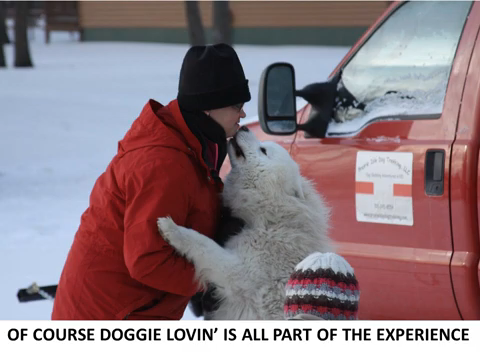
Helen L. Corlew runs a team of Samoyeds, Alaskan malamutes and Alaskan huskies. I am a Tellington TTouch practitioner and use this mode of work with training and living with my dogs.
Helen Corlew founded Prairie Isle Dog Trekking in Petersburg, North Dakota in 2010, and has spent the fifteen years since doing something most people only read about: teaching real dog sledding on real prairie terrain, at the edge of a landscape that doesn’t apologize for being difficult.
She is not a weekend enthusiast. She harnesses working dogs in January cold, trains handlers who have never touched a sled, and has built one of the only hands-on mushing education programs on the Northern Great Plains — from a single address on Highway 2, with no marketing budget and no shortcuts.
Her writing on Prairie Isle Dog Trekking reflects the same philosophy. Whether she is covering trail safety across the Rockies, breed behavior in extreme conditions, or what it actually takes to trek with a dog in the Alps, Helen writes from the position of someone who has done the work before writing the sentence.
She lives and runs dogs in Nelson County, North Dakota.
Kindly follow me on Social Media!
