

TPLO surgery for dogs is a procedure that stabilizes the knee joint after a cranial cruciate ligament (CCL) tear. It has a success rate of 90% to 95% and costs between $3,500 and $7,000 per leg in the United States. Recovery takes 8 to 16 weeks, depending on the dog's size, age, and compliance with post-operative care.
For related reading, see How Much Does It Cost to Cremate a Dog: 3 Cremation Types, Burial Options, and End-of-Life Guide.
What Is TPLO Surgery in Dogs?
TPLO stands for Tibial Plateau Leveling Osteotomy. It is a surgical procedure that treats a ruptured cranial cruciate ligament (CCL) in dogs, which is the equivalent of a human ACL tear.
The CCL connects the femur (thigh bone) to the tibia (shin bone) and keeps the knee joint stable during movement. When the CCL tears, the femur slides backward across the tibia with every step, causing pain, inflammation, and joint instability.
TPLO surgery does not replace the torn ligament. Instead, the surgeon makes a curved cut in the tibia and rotates the tibial plateau to a more horizontal position. This change in bone angle eliminates the backward sliding motion of the femur, making the CCL unnecessary for joint stability. A titanium or stainless steel plate and screws hold the repositioned bone in place while new bone grows to fuse the cut. Implants alone cost $700 to $800 and require 1.5 to 3 hours of anesthesia to place.
TPLO is performed by board-certified veterinary surgeons and is the most commonly recommended surgical option for medium to large, active dogs.
What Are the Symptoms of a Dog Torn ACL or CCL?
A dog with a torn ACL (CCL) shows 7 main symptoms. These range from limping and swelling to posture changes and audible joint sounds.
- Hind leg limping: Limping on a back leg is the most common first sign. It may be sudden after exercise or gradually worsen over days. Partial CCL tears cause intermittent limping. Complete ruptures cause constant lameness and an inability to bear weight.
- Toe-touching stance: The dog stands with the affected leg slightly extended, resting only the tips of its toes on the floor instead of the full paw. This posture is a classic indicator of knee instability.
- Difficulty sitting or rising: Dogs with a CCL tear often sit with the injured leg extended to the side rather than tucked under. They may also struggle to stand up from a lying position.
- Swelling around the knee: The stifle joint swells and may feel warm to the touch, indicating inflammation caused by the CCL injury.
- Audible clicking or popping: A clicking or popping sound from the knee when the dog walks, sits, or stands is a red flag for CCL damage.
- Muscle atrophy: The thigh muscle on the injured leg becomes visibly smaller than the opposite leg due to reduced weight bearing. The healthy leg may appear slightly larger from compensating.
- Behavioral changes: Dogs in pain from a CCL tear may become quieter, reluctant to play, or resistant to having the leg touched.
Is a Dog Limping Always a Sign of Pain?
Limping in dogs is always a sign of pain or discomfort. A dog that appears otherwise happy and active but limps may still have significant joint injury. Dogs have a strong instinct to mask pain, which means a wagging tail and an appetite do not rule out a CCL tear.
Partial CCL tears can cause intermittent limping, where the dog seems normal between episodes. A dog that limps after a run and then appears fine is not pain-free. It is showing a classic pattern of partial ligament degeneration that typically progresses to a full tear without treatment.
What Is the Difference Between a CCL Tear and Luxating Patella?
A CCL tear and a luxating patella both cause hind leg limping, but they are different conditions. A CCL tear involves the ligament connecting the femur to the tibia. A luxating patella involves the kneecap slipping out of its groove on the femur.
Dogs with a luxating patella often skip a step or hop briefly, then return to normal movement as the kneecap slips back into place. This skipping pattern is more typical of luxating patella than CCL injury. A veterinarian distinguishes between the two with physical examination and X-rays.
How Is a Dog Ligament Tear Diagnosed?
A dog CCL tear is diagnosed through 3 methods.
- Physical examination: The veterinarian performs the drawer test, which checks for abnormal forward movement of the tibia relative to the femur. This test is the primary clinical indicator of CCL rupture.
- X-rays: Radiographs reveal joint swelling, bone-on-bone contact, and the presence of arthritis from chronic CCL degeneration.
- History and clinical signs: Veterinarians assess limping patterns, onset of symptoms, and weight-bearing status alongside physical findings to confirm diagnosis.
Dogs with partial CCL tears may have inconclusive drawer signs. In these cases, sedation or general anesthesia during examination allows more accurate joint assessment.
Which Dogs Are at Highest Risk of CCL Tears?
Large-breed dogs aged 4 years and older are at highest risk of CCL tears. 5 breeds show significantly higher incidence rates. These include Labrador Retrievers, Golden Retrievers, German Shepherds, Rottweilers, and Bulldogs.
Unlike human ACL tears, which typically occur from a single traumatic event, dog CCL tears usually develop from gradual ligament degeneration caused by genetics, age, and body weight. Obesity accelerates ligament wear by increasing load on the knee with every step.
Studies show 30% to 60% of dogs that rupture one CCL will eventually rupture the other. This bilateral risk should factor into financial planning for owners of at-risk breeds.
How Much Does TPLO Surgery Cost for Dogs?
TPLO surgery in the United States costs between $3,500 and $7,000 per leg, based on 2026 data. The median all-in cost from verified vet invoices is $4,132. High-volume specialty hospitals in major cities, such as Southern California, charge $8,000 to $10,000 per leg.
The table below shows the cost breakdown for a single-leg TPLO procedure.
| Cost Component | Estimated Cost |
|---|---|
| Surgery and surgeon fee | $2,500 to $5,000 |
| Titanium or stainless steel implants | $700 to $800 |
| General anesthesia (1.5 to 3 hours) | Included in total |
| Pre-operative X-rays and bloodwork | $150 to $400 |
| Post-operative medications (2 weeks) | Included in total |
| Post-surgery X-rays and rechecks | $150 to $400 per visit |
| Physical therapy (optional) | Variable |
| Total (single leg, all-inclusive) | $3,500 to $8,100 |
| Total (both legs, bilateral) | $5,000 to $10,000+ |
The second knee, if needed, is typically performed 8 to 16 weeks after the first. Some surgeons offer a modest discount for bilateral procedures, but expect to pay 80% to 100% of the first surgery's cost.
What Does TPLO Surgery Recovery Look Like Week by Week?
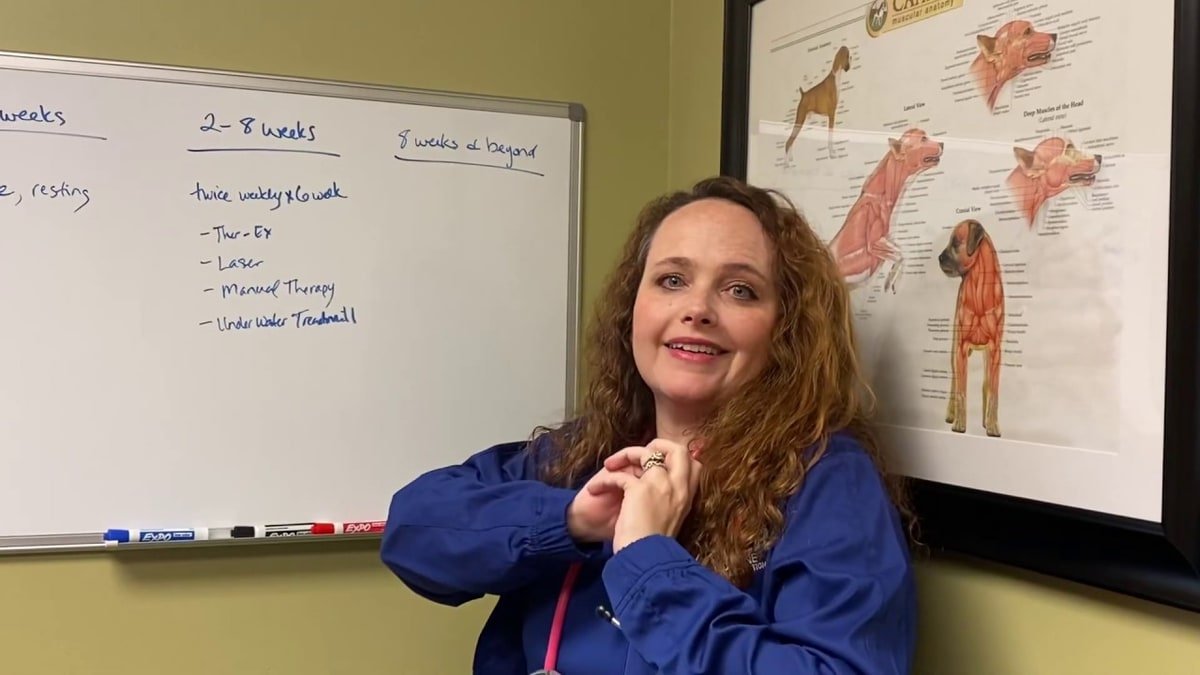
TPLO surgery recovery follows a structured timeline across 16 weeks. Full bone healing takes 8 to 12 weeks. Full unrestricted activity resumes at 16 weeks.
The standard recovery stages are:
- Days 1 to 7: Strict rest. Most dogs bear partial weight on the leg within 3 to 7 days. Pain management includes NSAIDs such as carprofen (Rimadyl) and gabapentin. A support sling assists with walking during the first week.
- Weeks 2 to 6: Gradual increase in short leash walks only. No running, jumping, or climbing stairs. The metal plate and screws carry all joint load during this phase, so activity restriction is non-negotiable.
- Week 8: Follow-up X-rays confirm bone healing progress. If healing is on track, activity is incrementally increased.
- Weeks 8 to 16: Controlled exercise increases. Physical therapy, including hydrotherapy, may begin if prescribed by a canine rehabilitation therapist.
- Week 16: Full bone fusion complete. Unrestricted activity resumes.
Post-surgery X-rays cost $150 to $400 each. Most surgeons schedule rechecks at 8 and 16 weeks as standard.
What Are the Alternatives to TPLO Surgery for Dogs?
There are 3 categories of alternatives to TPLO surgery. These include other surgical procedures, conservative non-surgical management, and physical therapy.
What Are the Surgical Alternatives to TPLO?
There are 3 surgical alternatives to TPLO for dogs.
- TTA (Tibial Tuberosity Advancement): A portion of the tibia is cut and advanced forward, then anchored with metal implants. TTA is more common in larger dogs and alters knee mechanics similarly to TPLO. Recovery is comparable.
- Extracapsular repair (Lateral Suture Technique): A less invasive procedure using sutures placed outside the joint capsule to mimic ligament function. No bone cutting is involved. It is most effective in small dogs weighing under 25 lbs and less active animals. Recovery involves the same 8 to 12 week restriction period.
- CBLO (CORA Based Leveling Osteotomy): A newer bone-cutting technique that corrects both the tibial plateau angle and the tibial torsion simultaneously. It is used in specialist centers for dogs with complex knee geometry.
A research review published in Veterinary Practice News found that no single surgical procedure has enough consistent data to guarantee return to normal function in all dogs after CCL injury.
What Is Conservative Management for a Dog with a Torn CCL?
Conservative management is a non-surgical treatment approach that uses rest, medication, weight control, and physical therapy to manage CCL injuries without operating.
A study comparing surgical and non-surgical treatment found surgery is the superior option. The same study indicated conservative management yields successful outcomes in approximately 25% of dogs, primarily small breeds and those with partial tears.
Conservative management is most appropriate for 3 groups of dogs: small dogs under 25 lbs, older dogs with other health conditions that increase surgical risk, and dogs with confirmed partial CCL tears that still have functional knee stability.
It is not recommended for large or active dogs with complete CCL ruptures. In these dogs, untreated joint instability leads to progressive arthritis and chronic pain.

Conservative management includes 4 components:
- Strict rest and activity restriction for a minimum of 6 to 8 weeks
- NSAIDs prescribed by a veterinarian, such as meloxicam or carprofen, to reduce inflammation
- Weight management to reduce load on the injured knee
- Joint supplements, including glucosamine and chondroitin, to support cartilage health
What Therapy Is Available for Dogs with a Torn ACL?
Physical therapy for dogs with a torn ACL involves 4 evidence-based techniques.
- Hydrotherapy and underwater treadmill: Water supports the dog's body weight while muscles work against resistance. This rebuilds thigh muscle atrophy without loading the healing joint.
- Controlled leash walking: Short, flat-surface walks on a leash build strength progressively without risking sudden movements that could disrupt healing bone.
- Range-of-motion exercises: A canine rehabilitation therapist performs gentle passive movements of the knee to maintain joint flexibility during recovery.
- Cold and heat therapy: Ice packs reduce acute inflammation in the first 48 to 72 hours post-injury. Warm packs support circulation during the later healing phase.
Physical therapy is optional after TPLO surgery but is particularly valuable for large dogs and those showing slow muscle recovery. Canine rehabilitation therapists are certified through programs such as the Canine Rehabilitation Institute (CRI) or the University of Tennessee's CCRP program.
Should You Walk a Dog with Luxating Patella?
Walking a dog with luxating patella is safe for Grade 1 and Grade 2 cases, but is not recommended during periods of constant limping or acute pain.
Luxating patella is a condition in which the kneecap slips out of its groove in the femur. It is graded on a scale of 1 to 4 based on severity.
| Grade | Description | Walking Guidance |
|---|---|---|
| Grade 1 | Kneecap slips out only when manually displaced by a vet | Walking is safe; monitor for discomfort |
| Grade 2 | Kneecap slips occasionally during normal movement but returns on its own | Short, gentle leash walks on flat surfaces are safe |
| Grade 3 | Kneecap dislocates frequently and requires manual replacement | Restrict activity; consult vet before walking |
| Grade 4 | Kneecap is permanently dislocated | Rest only; surgery typically required |
For Grade 1 and Grade 2 luxating patella, short walks on flat surfaces build the muscle around the knee and help stabilize the joint over time. Dogs at these grades will often skip a step briefly as the kneecap pops out, then resume normal movement when it slips back. This intermittent skipping without sustained limping is typical of mild luxating patella.
For Grade 3 and Grade 4 cases, walking increases the risk of cartilage wear and acute pain. Surgery is recommended at Grade 3 and Grade 4, after which strict rest for 6 to 8 weeks is required before gradual return to exercise.
Regardless of grade, use a harness rather than a collar, choose flat terrain, keep walks short, and stop immediately if the dog limps for more than a few steps or shows signs of discomfort.
Left untreated, luxating patella leads to cartilage damage and osteoarthritis in all grades over time. Joint supplements such as glucosamine and chondroitin and veterinary prescriptions such as Adequan help slow joint degeneration.
Does Pet Insurance Cover TPLO Surgery for Dogs?
Many pet insurance policies cover TPLO surgery because CCL injuries are among the most common orthopedic conditions in dogs. Coverage depends on 3 factors.
- Timing of enrollment: Insurance must be active before the injury occurs. A CCL tear diagnosed before or during a waiting period is classified as a pre-existing condition and excluded from coverage.
- Bilateral exclusion clauses: Some insurers exclude future coverage for the second knee if one CCL tear has already been treated, under a bilateral condition clause.
- Breed predisposition policies: Large breeds prone to CCL tears may face stricter underwriting review before approval.
Enrolling a dog in pet insurance while young and injury-free provides the best protection for future CCL and TPLO coverage. Given the $3,500 to $10,000 cost range for one or both legs, insurance can reduce the financial burden significantly.
Helen L. Corlew runs a team of Samoyeds, Alaskan malamutes and Alaskan huskies. I am a Tellington TTouch practitioner and use this mode of work with training and living with my dogs.
Helen Corlew founded Prairie Isle Dog Trekking in Petersburg, North Dakota in 2010, and has spent the fifteen years since doing something most people only read about: teaching real dog sledding on real prairie terrain, at the edge of a landscape that doesn’t apologize for being difficult.
She is not a weekend enthusiast. She harnesses working dogs in January cold, trains handlers who have never touched a sled, and has built one of the only hands-on mushing education programs on the Northern Great Plains — from a single address on Highway 2, with no marketing budget and no shortcuts.
Her writing on Prairie Isle Dog Trekking reflects the same philosophy. Whether she is covering trail safety across the Rockies, breed behavior in extreme conditions, or what it actually takes to trek with a dog in the Alps, Helen writes from the position of someone who has done the work before writing the sentence.
She lives and runs dogs in Nelson County, North Dakota.
Kindly follow me on Social Media!
