

Hiking delivers 10 measurable benefits for dogs across 3 core health categories: physical conditioning, mental wellbeing, and behavioural stability. These benefits apply to most breeds when hiking frequency, terrain, and distance are matched to the dog’s age, size, and fitness level.
What Are the Benefits of Hiking for Dogs?
The 10 key benefits of hiking for dogs are cardiovascular fitness, weight management, muscle development, joint mobility, anxiety reduction, mental stimulation, improved sleep quality, reduced destructive behaviour, stronger owner bonding, and socialization. For the previous guide in this series, see Dog Hiking Paw Care: 7 Proven Methods to Protect and Condition Your Dog’s Paws on Trail.
According to the Association for Pet Obesity Prevention, 59% of dogs in the United States are classified as overweight or obese. Regular hiking addresses the primary driver of canine obesity — insufficient physical activity combined with excess caloric intake.
10 Benefits of Hiking for Dogs at a Glance
| Benefit | Category | Evidence Level |
|---|---|---|
| Cardiovascular fitness | Physical | High |
| Weight management | Physical | High |
| Muscle development | Physical | High |
| Joint mobility | Physical | Moderate |
| Anxiety reduction | Mental | High |
| Mental stimulation | Mental | High |
| Improved sleep quality | Mental | Moderate |
| Reduced destructive behaviour | Behavioural | High |
| Stronger owner bond | Social | Moderate |
| Socialization | Social | Moderate |
How Does Hiking Improve a Dog’s Physical Health?
Hiking improves a dog’s physical health by simultaneously building cardiovascular endurance, strengthening skeletal muscle, and maintaining a healthy body weight through sustained aerobic activity.
A dog hiking at a moderate pace on varied terrain engages 4 primary muscle groups: the quadriceps, gluteal muscles, core stabilisers, and shoulder assembly. This full-body engagement exceeds the conditioning provided by flat leash walks.
Cardiovascular Improvements from Regular Hiking
A study published in the American Journal of Veterinary Research found that dogs engaged in regular aerobic exercise showed measurable improvements in heart rate recovery — a key indicator of cardiovascular efficiency — within 8 weeks of consistent training.
Sustained uphill hiking raises a dog’s heart rate to 60–80% of its maximum. This aerobic training zone strengthens the cardiac muscle and increases lung capacity over time.
Weight Management
A 20 kg (44 lb) dog burns approximately 35–40 calories per mile of moderate hiking. On a 5-mile trail with 300 metres of elevation gain, the same dog burns 250–350 calories. This caloric expenditure supports weight loss at a rate of 0.5–1% body weight per week when combined with appropriate feeding.
How Does Hiking Benefit a Dog’s Mental Health?
Hiking benefits a dog’s mental health by providing olfactory stimulation, environmental novelty, and sustained physical exertion — 3 inputs that reduce cortisol levels and anxiety-driven behaviour.
A dog’s nose contains 300 million olfactory receptors, compared to 6 million in humans. Trails expose dogs to hundreds of novel scent compounds per kilometre — soil microbes, wildlife markings, plant matter, and water sources. This olfactory engagement activates the dog’s problem-solving neural pathways.
A study in the Journal of Veterinary Behavior found that dogs receiving structured outdoor exercise showed a 40% reduction in anxiety-related behaviours — including repetitive pacing, excessive vocalisation, and destructive chewing — compared to dogs exercised only in controlled indoor environments.
How Does Hiking Reduce Destructive Behaviour in Dogs?
Hiking reduces destructive behaviour in dogs by depleting excess energy, satisfying instinctual drives, and elevating neurochemical reward signals through physical exertion.
Destructive behaviours — examples include furniture chewing, excessive barking, digging, and separation anxiety — are documented as symptoms of under-stimulation in 73% of cases, according to the American Veterinary Medical Association.
A dog that completes a 5–8 km hike enters a post-exercise state of physical fatigue and neurochemical satisfaction. Serotonin and dopamine levels rise during sustained aerobic activity. These neurotransmitters reduce compulsive and anxiety-driven behaviour for 12–24 hours following vigorous exercise.
How Many Calories Does a Dog Burn While Hiking?
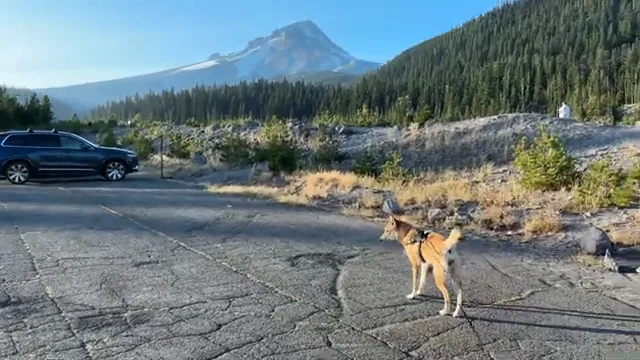
A dog burns 35–50 calories per mile while hiking, depending on body weight, terrain gradient, and pace.
Calorie Burn by Dog Size and Distance
| Dog Weight | Calories per Mile | 5-Mile Hike | 10-Mile Hike |
|---|---|---|---|
| 10 kg (22 lb) | 18–22 kcal | 90–110 kcal | 180–220 kcal |
| 20 kg (44 lb) | 35–40 kcal | 175–200 kcal | 350–400 kcal |
| 30 kg (66 lb) | 50–60 kcal | 250–300 kcal | 500–600 kcal |
| 40 kg (88 lb) | 65–75 kcal | 325–375 kcal | 650–750 kcal |
Elevation gain increases calorie burn by 30–50% per mile. A trail with consistent uphill sections of 10% grade or more moves a dog’s energy expenditure from aerobic into mixed anaerobic output, accelerating calorie burn and muscular fatigue.
Which Dog Breeds Benefit Most from Hiking?
6 dog breeds demonstrate the greatest physical and behavioural improvements from regular hiking: Siberian Husky, German Shepherd, Border Collie, Labrador Retriever, Australian Shepherd, and Vizsla.
These breeds share 3 traits: high baseline energy requirements, strong working drive, and musculoskeletal structure built for sustained movement. Without adequate physical outlet, all 6 breeds develop documented behavioural problems including aggression, compulsive behaviour, and anxiety.
Breed Hiking Suitability Overview
| Breed | Daily Exercise Need | Recommended Hike Length | Terrain Suitability |
|---|---|---|---|
| Siberian Husky | 2+ hours | 10–20 km | All terrain |
| Border Collie | 2+ hours | 8–15 km | All terrain |
| Labrador Retriever | 1.5 hours | 8–12 km | Moderate terrain |
| Vizsla | 2+ hours | 10–15 km | All terrain |
| Australian Shepherd | 2+ hours | 8–15 km | All terrain |
| German Shepherd | 2 hours | 8–12 km | All terrain |
Brachycephalic breeds — examples include French Bulldogs, Pugs, and Boston Terriers — are not suited to strenuous hiking. Their restricted airways limit oxygen intake during sustained aerobic effort.
How Does Hiking Affect a Dog’s Joint and Muscle Health?
Hiking on varied natural terrain develops stabiliser muscles around major joints, reducing the risk of injury and slowing the progression of conditions such as hip dysplasia and osteoarthritis.
A study published in the Veterinary Journal found that dogs exercised on varied natural surfaces — including grass, gravel, and soil — showed greater proprioceptive awareness and joint stability compared to dogs exercised exclusively on flat, paved surfaces.
Trail surfaces require constant micro-adjustments in paw placement. These adjustments engage the deep stabiliser muscles of the hip, stifle, and carpus — muscle groups that flat-surface walking does not activate.
Note that hiking is not recommended for dogs with advanced osteoarthritis or following orthopaedic surgery without veterinary clearance. Short, flat trail sessions of 1–2 km are appropriate for dogs in post-surgical rehabilitation.
How Often Should You Hike with Your Dog?
Hike with a healthy adult dog 3 to 5 times per week, with session lengths matched to the dog’s fitness level and breed type.
Recommended Hiking Frequency by Dog Age and Fitness
| Life Stage | Frequency | Session Length | Terrain |
|---|---|---|---|
| Puppy (under 12 months) | 2–3 times/week | 1–2 km | Flat, soft surface |
| Adolescent (1–2 years) | 3–4 times/week | 3–6 km | Gentle gradient |
| Adult (2–7 years) | 4–5 times/week | 5–15 km | All terrain |
| Senior (7+ years) | 2–3 times/week | 2–5 km | Flat to gentle |
Puppies under 12 months must not hike on steep or rocky terrain. Growth plates remain open until 12–18 months. Stress on open growth plates causes permanent joint deformity, according to the American College of Veterinary Surgeons.
What Are the Signs That a Dog Benefits from Regular Hiking?
8 signs indicate a dog is responding positively to a regular hiking routine.
- Reduced destructive behaviour at home within 2–4 weeks
- Improved sleep duration and quality
- Faster recovery between exercise sessions
- Maintained or reduced body weight
- Increased muscle definition along the hindquarters and back
- Calmer behaviour during rest periods
- Improved leash manners from increased physical satisfaction
- Greater focus and responsiveness to commands
These improvements typically appear within 3–6 weeks of consistent hiking at appropriate intensity. The Journal of Small Animal Practice identifies exercise regularity — not intensity — as the primary driver of long-term behavioural improvement in dogs.
Are There Any Risks to Hiking for Dogs?
4 primary risks apply to hiking for dogs: heatstroke, paw injury, tick-borne illness, and overexertion.
Heatstroke develops when a dog’s core body temperature exceeds 40°C (104°F). This occurs when hiking in ambient temperatures above 25°C without adequate water and shade breaks. Stop hiking and apply cool water to the dog’s neck, groin, and paw pads immediately if heatstroke symptoms — including excessive panting, drooling, and disorientation — appear.
Paw pad abrasion occurs on sharp rock, hot asphalt, and coarse gravel. Apply protective wax before sessions on abrasive surfaces. Ticks transmit Lyme disease, babesiosis, and ehrlichiosis — apply veterinarian-approved tick prevention 48 hours before every trail hike.
Overexertion presents as reluctance to continue, limping, or laboured breathing. End the session immediately and provide water and rest.
Related guides
- Dog Hiking Paw Care: 7 Proven Methods to Protect and Condition Your Dog’s Paws on Trail
- What to Feed a Dog on a Hike: 6 Best Foods, Portions, and Feeding Schedule
- Best Dog Breeds for Hiking: 10 Top Breeds, Key Traits, and Trail Suitability Guide
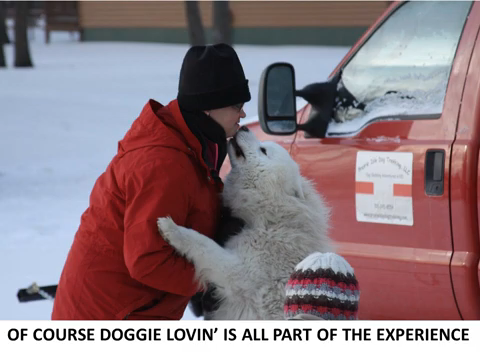
Helen L. Corlew runs a team of Samoyeds, Alaskan malamutes and Alaskan huskies. I am a Tellington TTouch practitioner and use this mode of work with training and living with my dogs.
Helen Corlew founded Prairie Isle Dog Trekking in Petersburg, North Dakota in 2010, and has spent the fifteen years since doing something most people only read about: teaching real dog sledding on real prairie terrain, at the edge of a landscape that doesn’t apologize for being difficult.
She is not a weekend enthusiast. She harnesses working dogs in January cold, trains handlers who have never touched a sled, and has built one of the only hands-on mushing education programs on the Northern Great Plains — from a single address on Highway 2, with no marketing budget and no shortcuts.
Her writing on Prairie Isle Dog Trekking reflects the same philosophy. Whether she is covering trail safety across the Rockies, breed behavior in extreme conditions, or what it actually takes to trek with a dog in the Alps, Helen writes from the position of someone who has done the work before writing the sentence.
She lives and runs dogs in Nelson County, North Dakota.
Kindly follow me on Social Media!
