


Dog hiking in winter snow requires preparation across 5 areas: breed assessment, veterinary clearance, protective gear, hydration management, and emergency protocols. A 2021 study in Veterinary Medicine International confirms that dogs exposed to temperatures below −10°C without coat protection show measurable core temperature drops within 45 minutes of continuous outdoor activity.
Winter hiking adds 6 cold-weather variables not present in warm-season hiking: wind chill, snow depth, ice surface risk, salt and chemical exposure, reduced daylight hours, and breed-specific hypothermia thresholds. For the previous guide in this series, see Dog Hiking in Summer Heat: 10 Safety Tips, Risks, and Essential Gear.
What Is Dog Hiking in Winter Snow?
Dog hiking in winter snow is trail activity on snow-covered or frozen terrain in ambient temperatures between −15°C and 5°C. It differs from standard hiking in 4 ways: terrain instability, accelerated heat loss, reduced trail visibility, and increased physiological demand.
Winter snow hiking falls into 3 trail categories:
- Packed snow trails — Compacted and stable; suitable for most breeds
- Deep powder trails — Unpacked snow above 15 cm; increases exertion by 40 to 60%
- Ice-covered trails — Frozen crossings and glazed rock surfaces; highest injury risk
Which Breeds Are Best for Winter Snow Hiking?
Double-coated, high-stamina breeds with compact paws are best suited for winter snow hiking. Breed suitability is determined by coat insulation, paw pad cold tolerance, and cardiovascular output in low temperatures.
|
Breed |
Cold Tolerance |
Recommended Min. Temp |
|---|---|---|
|
Siberian Husky |
Very High |
−40°C |
|
Alaskan Malamute |
Very High |
−35°C |
|
Bernese Mountain Dog |
High |
−20°C |
|
German Shepherd |
Moderate–High |
−10°C |
|
Labrador Retriever |
Moderate |
−5°C |
|
Golden Retriever |
Moderate |
−5°C |
Which Dogs Should Not Hike in Winter Snow?
4 dog categories are not suited for winter snow trails:
- Short-coated breeds — Examples include Greyhounds, Whippets, and Vizslas. They lose core heat 3 times faster than double-coated breeds.
- Toy and small breeds — Examples include Chihuahuas and Italian Greyhounds. Their high surface-area-to-body-mass ratio accelerates heat loss.
- Brachycephalic breeds — Examples include Bulldogs and Pugs. Cold air worsens existing airway compromise.
- Senior dogs and puppies — Dogs over 8 years and under 18 months have reduced thermoregulatory capacity. Not recommended below −3°C.
What Are the 5 Risks of Dog Hiking in Winter Snow?
Winter snow hiking exposes dogs to 5 primary risks: hypothermia, frostbite, ice laceration, salt toxicity, and trail disorientation.
|
Risk |
Onset Condition |
Warning Signs |
Action |
|---|---|---|---|
|
Hypothermia |
Core temp below 37°C |
Shivering, lethargy, stiffness |
Warm immediately; seek vet |
|
Frostbite |
Tissue temp below 0°C |
Pale skin, hardened tissue |
Warm with 40°C water; seek vet |
|
Ice laceration |
Sharp ice on paws |
Bleeding pads, limping |
Clean, bandage, exit trail |
|
Salt toxicity |
Ingestion of road grit |
Vomiting, drooling, lethargy |
Rinse paws and mouth; seek vet |
|
Disorientation |
Snowfall or white-out |
Dog loses scent trail |
Leash immediately; use GPS |
What Are the 3 Stages of Hypothermia in Dogs?

A 2018 study in Topics in Companion Animal Medicine identifies 3 hypothermia stages:
- Mild — Core temp 32°C to 37°C. Signs: shivering, cold ears and paws, slow movement.
- Moderate — Core temp 28°C to 32°C. Signs: muscle rigidity, slowed heart rate, pale gums.
- Severe — Core temp below 28°C. Signs: unconsciousness, absent reflexes. Requires emergency veterinary care.
What Gear Does a Dog Need for Winter Snow Hiking?
A dog hiking in winter snow needs 6 gear items: an insulated coat, rubber-soled boots, a reflective harness, a GPS tracker, an insulated hydration system, and a winter first aid kit.
|
Gear Item |
Function |
Key Specification |
|---|---|---|
|
Insulated dog coat |
Retains core body heat |
Waterproof shell; fleece lining |
|
Dog boots |
Protects paws from ice and salt |
Rubber grip sole; ankle strap; 3 mm insulation |
|
Reflective harness |
Visibility in low winter light |
360-degree reflective strips |
|
GPS tracker |
Locates dog if separated in snow |
Waterproof; 48-hour battery |
|
Insulated water bottle and bowl |
Prevents freezing |
Stainless steel; silicone bowl |
|
Winter first aid kit |
Treats cold-weather injuries |
Includes heat packs, gauze, antiseptic |
How Do You Protect a Dog’s Paws in Winter Snow?
Protect dog paws using 3 methods: fitted rubber-soled boots, paw wax, and post-hike rinsing.
Paw wax creates a barrier against ice, salt, and cold surfaces. Research in Veterinary Dermatology confirms paw wax reduces pad cracking by 60% in cold conditions. Apply 15 minutes before departure. Reapply every 90 minutes on long hikes.
Post-hike rinsing removes road salt and chemical de-icers. Calcium chloride de-icers cause chemical burns on unprotected pads within 10 minutes of contact. Rinse with lukewarm water after every winter hike. Inspect between toes for ice balls, salt residue, and lacerations.
How Do You Keep a Dog Hydrated in Winter Snow?
A dog requires 60 ml of water per kilogram of body weight per hour during winter hiking — identical to warm-season requirements. Cold weather suppresses thirst perception by up to 40%, creating an underestimated dehydration risk.
3 winter hydration challenges require active management:
- Freezing water — Use insulated stainless steel bottles. Standard plastic containers freeze within 15 minutes at −10°C.
- Suppressed thirst — Offer water every 20 minutes regardless of whether the dog signals thirst.
- Snow ingestion — Snow lowers core body temperature from the inside. It does not substitute for water and accelerates hypothermia onset.
Signs of dehydration include dry gums, skin that does not return flat within 2 seconds when pinched, and dark urine visible on snow.
How Far Can a Dog Hike in Winter Snow?
Dogs cover 30 to 50% less distance in winter snow than their warm-season maximum due to increased exertion on unstable terrain and higher energy expenditure maintaining body temperature.
|
Snow Condition |
Distance Reduction |
|---|---|
|
Packed snow |
15–20% |
|
Shallow powder (5–15 cm) |
25–35% |
|
Deep powder (15–30 cm) |
40–50% |
|
Ice surface |
30–40% |
|
Mixed ice and powder |
45–55% |
Limit the first winter hike to 50% of the dog’s warm-season distance. Build winter trail fitness over 4 weeks before attempting full outings in snow.
What Are the 8 Safety Rules for Dog Hiking in Winter Snow?
8 rules govern safe dog hiking in winter snow conditions.
- Check wind chill before departure — Cancel if wind chill drops below −20°C. Wind chill accelerates heat loss 3 to 4 times faster than still-air temperature.
- Start hikes after 10 AM — Minimum daily temperatures occur between 5 AM and 9 AM. Beginning at 10 AM ensures the day’s peak warmth.
- File a trail plan — Tell someone your route and expected return time. Winter trail rescues take 40% longer than summer rescues.
- Carry a charged phone in an inner pocket — Cold reduces lithium battery capacity by 20 to 40%. Inner pockets maintain warmth.
- Carry a headlamp — Winter daylight windows run 6 to 9 hours. Carry one on every day hike.
- Avoid frozen water crossings — Ice must be at least 10 cm thick to support a medium-sized dog. Never assess thickness visually.
- Exit immediately if the dog signals distress — A dog that slows, lies in snow, or attempts to turn back is showing cold stress.
- Increase caloric intake — Dogs burn 25 to 50% more calories in cold conditions. Increase daily food by 25% on winter hiking days.
How Do You Treat a Dog Showing Hypothermia on Trail?
Treat trail hypothermia in 5 steps before reaching veterinary care.
- Move the dog out of wind and snow immediately into a sheltered area or vehicle.
- Replace wet coat or gear with dry layers. Wet insulation accelerates heat loss.
- Wrap the dog in an emergency thermal blanket, covering the core, neck, and head loosely.
- Place chemical heat packs wrapped in cloth against the armpits, groin, and abdomen. Never apply directly to skin.
- Offer small amounts of lukewarm water every 5 minutes if the dog is conscious and able to swallow.
Transport to a veterinary clinic immediately after field stabilization. Do not resume hiking after a hypothermia episode on the same day.
Summary
Dog hiking in winter snow is safe for prepared dogs and owners. Breed suitability, 6 protective gear items, paw protection, hydration at 60 ml per kg per hour, a 30 to 50% distance reduction from warm-season norms, and 8 cold-weather safety rules determine a safe winter trail outcome. Recognizing the 3 hypothermia stages and applying the 5-step field treatment protocol are the most critical winter hiking safety skills.

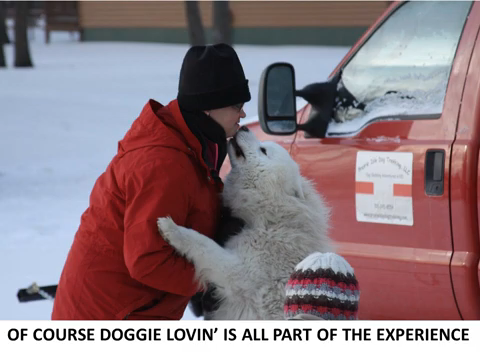
Helen L. Corlew runs a team of Samoyeds, Alaskan malamutes and Alaskan huskies. I am a Tellington TTouch practitioner and use this mode of work with training and living with my dogs.
Helen Corlew founded Prairie Isle Dog Trekking in Petersburg, North Dakota in 2010, and has spent the fifteen years since doing something most people only read about: teaching real dog sledding on real prairie terrain, at the edge of a landscape that doesn’t apologize for being difficult.
She is not a weekend enthusiast. She harnesses working dogs in January cold, trains handlers who have never touched a sled, and has built one of the only hands-on mushing education programs on the Northern Great Plains — from a single address on Highway 2, with no marketing budget and no shortcuts.
Her writing on Prairie Isle Dog Trekking reflects the same philosophy. Whether she is covering trail safety across the Rockies, breed behavior in extreme conditions, or what it actually takes to trek with a dog in the Alps, Helen writes from the position of someone who has done the work before writing the sentence.
She lives and runs dogs in Nelson County, North Dakota.
Kindly follow me on Social Media!


