

The best dog hiking water bottle combines a leak-proof reservoir, an integrated drinking trough, and a lightweight build. Choosing the right bottle prevents dehydration, which affects 1 in 3 dogs on summer trails lasting over 2 hours.
What Is a Dog Hiking Water Bottle?
A dog hiking water bottle is a portable, dual-function container that stores water and dispenses it directly into an attached trough or bowl for a dog to drink from on the trail. It eliminates the need for a separate collapsible bowl. For the previous guide in this series, see Best Hands-Free Dog Leash for Hiking: 6 Top Options and 4 Buying Factors.
Common dog hiking water bottle styles include:
- Squeeze-trough bottles — squeeze the body to fill a built-in trough; excess water returns to the reservoir when released
- Flip-trough bottles — a trough flips out from the bottle cap for dispensing
- Filter bottles — include a built-in filtration system for filling from streams or natural water sources
- Insulated bottles — double-wall vacuum construction keeps water cool for up to 24 hours
What Are the Benefits of a Dog Hiking Water Bottle?
There are 5 key benefits of a dog hiking water bottle: it reduces spillage, eliminates pack weight from a separate bowl, encourages regular hydration, supports one-handed use on the trail, and allows water return from unused portions.
A study by the American Kennel Club (AKC) confirms that dogs offered water every 15–20 minutes during physical activity maintain core body temperature 18% more effectively than dogs offered water at the end of a hike. A dedicated trail bottle makes this frequency practical.
How Much Water Does a Dog Need on a Hike?
A dog needs 1.5–2 ounces of water per pound of body weight during active hiking. This is 50%–100% more than the standard daily requirement of 1 ounce per pound at rest.
| Dog Weight | Water Needed Per Hour of Hiking |
|---|---|
| 20 lbs (9 kg) | 10–13 oz (295–385 ml) |
| 40 lbs (18 kg) | 20–27 oz (590–800 ml) |
| 60 lbs (27 kg) | 30–40 oz (890–1,180 ml) |
| 80 lbs (36 kg) | 40–53 oz (1,180–1,570 ml) |
Table: Dog water consumption requirements per hour of hiking by body weight.
Increase these amounts by 25% on trails where air temperature exceeds 85°F (29°C). High humidity reduces a dog’s ability to cool through panting, increasing fluid loss further.
What Are the 6 Best Dog Hiking Water Bottles?
The 6 best dog hiking water bottles are ranked by capacity, ease of use, leak-proof performance, and trail durability.
- Ruffwear Quencher Cinch Top — best overall; 1-liter capacity, collapsible silicone bowl, cinch-top closure
- Tuff Pupper PupFlask — best squeeze-trough design; BPA-free Tritan plastic, 25 oz capacity, one-handed dispensing
- Lesotc Dog Water Bottle — best budget pick; 12 oz and 20 oz options, food-grade silicone trough, leak-proof lid
- COMSUN Collapsible Dog Water Bottle — best for small dogs; 12 oz capacity, foldable trough, weighs 2.8 oz empty
- MalsiPree Dog Water Bottle — best for large dogs; 32 oz capacity, wide-mouth trough, one-button lock mechanism
- Highwave AutoDogMug — best for car-to-trail transitions; hands-free design, 20 oz capacity, press-button trough release
What Features Should a Dog Hiking Water Bottle Have?
A dog hiking water bottle should have 7 essential features: a leak-proof seal, a return-flow trough, BPA-free materials, a carabiner clip, a wide trough opening, a capacity of at least 20 oz, and one-handed operation.
Feature checklist for dog hiking water bottles:
- Leak-proof lid — prevents water loss in a pack or clipped to a belt
- Return-flow trough — allows unused water to flow back into the bottle, reducing waste by up to 90%
- BPA-free construction — food-grade polypropylene or Tritan plastic ensures safe water contact
- Carabiner or clip attachment — allows hands-free carry on a pack loop or belt
- Wide trough opening — minimum 3 inches wide to accommodate breeds with broad muzzles, such as Labradors and Boxers
- Capacity of 20–32 oz — sufficient for 1–2 hours of active hiking without refilling
- One-handed dispensing — squeeze, flip, or press mechanisms that operate without removing a pack or stopping the hike
Avoid bottles with narrow spout-only dispensing. Dogs cannot drink efficiently from a narrow stream and will consume 40%–60% less water per drinking session.
What Is the Best Dog Hiking Water Bottle for Large Dogs?
The MalsiPree Dog Water Bottle is the best dog hiking water bottle for large dogs. Its 32 oz (946 ml) reservoir, wide 4-inch trough, and one-button lock mechanism support breeds over 60 lbs on trails lasting 2–4 hours.
Large dog water bottles must meet 3 specific criteria:
- Minimum 32 oz capacity — supports hourly hydration for dogs over 60 lbs without refilling
- Wide trough depth of at least 1.5 inches — allows full tongue immersion for efficient drinking
- Durable outer shell — high-impact Tritan or polycarbonate construction resists cracking when dropped on rock surfaces
What Is the Best Dog Hiking Water Bottle for Small Dogs?
The COMSUN Collapsible Dog Water Bottle is the best dog hiking water bottle for small dogs. It weighs 2.8 oz empty, holds 12 oz (355 ml), and folds flat when empty to reduce pack bulk.
Small dog water bottles require 3 design-specific considerations:
- Capacity under 16 oz — larger bottles add unnecessary pack weight for dogs under 25 lbs
- Narrow trough width of 2–3 inches — oversized troughs waste water on small-muzzled breeds
- Lightweight material — empty bottle weight must not exceed 3.5 oz for practical single-hand carry
Breeds that benefit from small-format bottles include Beagles, Dachshunds, and Miniature Poodles.
How Do You Use a Dog Hiking Water Bottle on the Trail?
Use a dog hiking water bottle by dispensing water into the trough every 15–20 minutes, allowing the dog to drink fully, then releasing pressure to return unused water to the reservoir.
Follow these 4 steps for correct trail use:
- Stop the dog on flat, shaded ground before dispensing water
- Squeeze or press the dispensing mechanism until the trough is two-thirds full
- Hold the trough steady at the dog’s muzzle height; do not tilt below shoulder level
- Release pressure after the dog finishes; confirm the trough drains back into the bottle before clipping it to the pack
Offer water before the dog shows signs of thirst. Thirst signals in dogs indicate the body has already lost 1%–2% of total water volume, reducing physical performance by up to 10%.
How Do You Clean a Dog Hiking Water Bottle?
Clean a dog hiking water bottle after every hike by disassembling the trough, washing all parts with warm soapy water, and air-drying fully before storage. Bacteria such as Pseudomonas aeruginosa colonize moist bottle surfaces within 24 hours if not cleaned.
Cleaning and maintenance schedule:
| Task | Frequency |
|---|---|
| Rinse trough and reservoir with clean water | After every hike |
| Wash all parts with mild dish soap | After every 2–3 hikes |
| Soak in diluted white vinegar (1:3 ratio) | Weekly |
| Inspect seal and lid for cracks or warping | Monthly |
| Replace bottle if trough return-flow fails | As needed |
Table: Dog hiking water bottle cleaning schedule with recommended frequency.
Do not use bleach-based cleaners on plastic or silicone troughs. Bleach degrades food-grade polymers over repeated use and leaves chemical residue harmful to dogs.
Best Dog Hiking Water Bottle: 6-Point Final Buying Checklist
The best dog hiking water bottle matches the dog’s size, trail duration, and dispensing preference. Apply this 6-point checklist before purchasing:
- Select a capacity that covers 1.5–2 oz per pound of body weight per hour of hiking
- Confirm the trough width suits the dog’s muzzle size (minimum 3 inches for large breeds)
- Verify BPA-free, food-grade material on all water-contact surfaces
- Choose a return-flow trough to minimize water waste on long trails
- Confirm one-handed dispensing for use during active movement
- Check for a carabiner or clip for hands-free pack attachment
A properly selected dog hiking water bottle supports consistent trail hydration and reduces heatstroke risk on every hike. The University of California Davis School of Veterinary Medicine identifies dehydration as the second leading cause of heat-related illness in active dogs, after direct heat exposure. Regular hydration, enabled by a reliable trail bottle, addresses this risk directly. Source: Ruffwear dog hiking gear.
Related guides
- Best Dog Hiking Backpack: 7 Top Picks, Key Features, and Buying Guide
- Best Dog Hiking Boots: How to Choose, Fit, and Use Trail Boots for Dogs
- Best Dog Hiking Harness: 7 Top-Rated Options and 5 Buying Factors for Every Trail
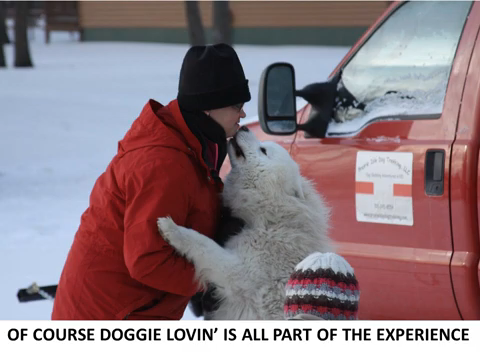
Helen L. Corlew runs a team of Samoyeds, Alaskan malamutes and Alaskan huskies. I am a Tellington TTouch practitioner and use this mode of work with training and living with my dogs.
Helen Corlew founded Prairie Isle Dog Trekking in Petersburg, North Dakota in 2010, and has spent the fifteen years since doing something most people only read about: teaching real dog sledding on real prairie terrain, at the edge of a landscape that doesn’t apologize for being difficult.
She is not a weekend enthusiast. She harnesses working dogs in January cold, trains handlers who have never touched a sled, and has built one of the only hands-on mushing education programs on the Northern Great Plains — from a single address on Highway 2, with no marketing budget and no shortcuts.
Her writing on Prairie Isle Dog Trekking reflects the same philosophy. Whether she is covering trail safety across the Rockies, breed behavior in extreme conditions, or what it actually takes to trek with a dog in the Alps, Helen writes from the position of someone who has done the work before writing the sentence.
She lives and runs dogs in Nelson County, North Dakota.
Kindly follow me on Social Media!
