

Flat Country
The Pembina County start line smelled like diesel and dog and something else I can never name, that particular cold that comes off the Red River Valley in January and sits in the back of your throat like iron. Seven teams. Six years ago there were three. I was standing next to a man named Garrett who ran a grain operation outside Cavalier and had gotten into sprint mushing the way some farmers get into things, quietly and then completely, and he was adjusting his neckline with bare hands at minus twelve and I watched his fingers and thought, he doesn’t know yet that they’ve stopped working.
He finished his run fine. His lead dog, a small female named Cress, read the trail better than he deserved that morning. But I kept watching his hands.
The articles are calling this a renaissance. I’ve read four of them now. They all say surprising, like the Midwest is a place where nothing is supposed to grow. I understand why outsiders write it that way. What I don’t understand is why we keep being surprised that flat, cold, empty country produces people who know how to work in flat, cold, empty country. This land has always made mushers. It just didn’t used to have anywhere to race them.
That’s the actual story. Not the dogs. Not the romance of it. The infrastructure.
Somebody built a trail. Somebody else sanctioned it. A vet showed up who understood working dogs and didn’t treat them like pets who’d made a wrong turn. A feed co-op started stocking a decent kibble with a fat content worth using. None of that is dramatic. All of it matters more than anything else I could tell you.
I started Prairie Isle in 2010 because I wanted to teach people what working dogs actually do, not what they look like doing it in photographs. The two things are related but they are not the same. What I didn’t expect was how many people would come through a beginner experience and then not leave. Not come back for another ride, but genuinely not leave, buying dogs, building boxes, driving four hours to volunteer at a race they weren’t entered in yet. I have watched that happen eleven times now. Eleven people who came for an afternoon and ended up buying a chest freezer for raw meat.

The prairie does something to that impulse. There’s nothing out here to perform for. No mountain backdrop, no treeline, no scenery that rewards the photograph. You are on flat land under flat sky and the dogs are running and that’s it, that’s the whole thing, and either that’s enough for you or it isn’t. The people it’s enough for tend to stay. They tend to be serious. Serious people build clubs and clubs build trails and trails get sanctioned and six years later there are seven teams at a start line in Pembina County instead of three.
That’s not a renaissance. That’s just what happens when people who belong to a thing finally find the thing.
I had a family come out two winters ago, parents and two kids, youngest maybe seven, and the father had driven from Bismarck because he’d read something online and thought it would be a good Saturday. Fine. That’s most of what I get. But the seven-year-old walked straight to Odin, my wheel dog, and stood next to him without reaching for him, without making a sound, just stood there while Odin sized her up, and after about thirty seconds Odin leaned his shoulder into her hip and she put her hand on his back and I thought, well. That’s a musher.
She’s nine now. Her father emails me sometimes. They got two dogs. They’re looking at a race in Roseau next February.
I’m not saying the land calls to people. That’s too clean. What I’m saying is that this work strips the performance out of it fast, and what’s left either holds you or it doesn’t, and the people it holds tend to be people who needed something that didn’t require an audience. The Midwest has always had those people. We just built them somewhere to go.
Garrett finished his run in Pembina and came back to the truck and I handed him chemical warmers without being asked. He didn’t thank me. He knew why I was handing them over. That’s the whole thing, right there.

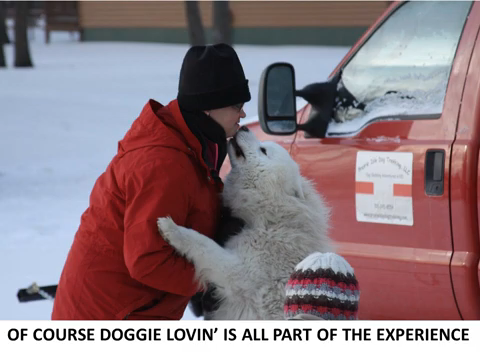
Helen L. Corlew runs a team of Samoyeds, Alaskan malamutes and Alaskan huskies. I am a Tellington TTouch practitioner and use this mode of work with training and living with my dogs.
Helen Corlew founded Prairie Isle Dog Trekking in Petersburg, North Dakota in 2010, and has spent the fifteen years since doing something most people only read about: teaching real dog sledding on real prairie terrain, at the edge of a landscape that doesn’t apologize for being difficult.
She is not a weekend enthusiast. She harnesses working dogs in January cold, trains handlers who have never touched a sled, and has built one of the only hands-on mushing education programs on the Northern Great Plains — from a single address on Highway 2, with no marketing budget and no shortcuts.
Her writing on Prairie Isle Dog Trekking reflects the same philosophy. Whether she is covering trail safety across the Rockies, breed behavior in extreme conditions, or what it actually takes to trek with a dog in the Alps, Helen writes from the position of someone who has done the work before writing the sentence.
She lives and runs dogs in Nelson County, North Dakota.
Kindly follow me on Social Media!


