


Hiking the Appalachian Trail with a dog covers 2,198 miles of marked trail from Springer Mountain in Georgia to Mount Katahdin in Maine. Dogs are permitted on approximately 83% of the AT’s total length. 3 sections prohibit dogs entirely: Great Smoky Mountains National Park, Baxter State Park, and the Bear Mountain Zoo crossing in New York.
What Is Hiking the Appalachian Trail with a Dog?
Hiking the Appalachian Trail (AT) with a dog is long-distance trail travel with a canine companion along the eastern United States’ primary ridgeline trail system. The AT passes through 14 states, including Georgia, Virginia, Pennsylvania, New York, Vermont, New Hampshire, and Maine. The Appalachian Trail Conservancy (ATC) manages the trail and sets dog policy in coordination with each state’s land management agencies. For the previous guide in this series, see Dog Friendly National Parks: 7 Best Parks, NPS Rules, and Trail Guide for the USA.
Are Dogs Allowed on the Appalachian Trail?
Dogs are allowed on 83% of the Appalachian Trail. The Appalachian Trail Conservancy confirms that dogs must remain on a leash no longer than 6 feet at all times on the AT. 3 sections permanently prohibit dogs:
- Great Smoky Mountains National Park (GSMNP) — 72 miles in North Carolina and Tennessee. Dogs are prohibited on all backcountry trails. The only exception is the Newfound Gap Road (US-441) paved corridor.
- Baxter State Park — approximately 14 miles in Maine, including the final summit approach to Mount Katahdin. Dogs are banned under Maine state park regulations.
- Bear Mountain Trinnity Zoo crossing — a short paved section through the Trailside Museum and Zoo in New York. Dogs are banned under New York State Parks rules.
What Are the 9 Essential Rules for Hiking the Appalachian Trail with a Dog?
There are 9 essential rules for hiking the Appalachian Trail with a dog. These cover legal requirements, gear, shelter, and trail safety.
1. Does a Dog Need Permits for the Appalachian Trail?
A dog does not need a specific AT permit, but 2 sections require advance permits for overnight camping. Shenandoah National Park in Virginia requires a backcountry permit and mandates dogs on a 6-foot leash. Dogs are not permitted on most Shenandoah park trails. The Delaware Water Gap National Recreation Area in New Jersey and Pennsylvania permits dogs on all trails with a leash.
2. What Vaccinations Does a Dog Need for the Appalachian Trail?
A dog hiking the AT needs 4 core vaccinations: rabies, distemper, parvovirus, and leptospirosis. The American Veterinary Medical Association (AVMA) recommends leptospirosis vaccination for trail dogs exposed to wildlife urine and standing water. Carry a current vaccination record. Shelters in several AT states, including Virginia and North Carolina, require proof of rabies vaccination for overnight dog stays at hostel facilities.
3. What Gear Does a Dog Need for the Appalachian Trail?
A dog needs 8 essential gear items for a multi-day AT hike:
- Dog hiking pack — carries the dog’s own food, water bowl, and waste bags (maximum 25% of body weight)
- Fitted chest harness — reduces neck strain on steep AT ascents and descents
- Collapsible water bowl — the AT has water sources every 1 to 5 miles depending on the section
- Dog-specific first aid kit — includes wound wrap, antiseptic wipes, tweezers, and moleskin for paw care
- Dog sleeping bag or insulated pad — temperatures on the AT fall below freezing in spring and autumn above 4,000 feet
- 6-foot non-retractable leash — required by ATC rules on the entire AT
- Paw wax or dog booties — rocky Pennsylvania sections cause significant paw abrasion
- Reflective collar with ID tag and GPS tracker — dense AT forest sections reduce visibility and cell signal
4. How Much Water Does a Dog Need on the Appalachian Trail?
A dog needs 1 ounce of water per pound of body weight per day on the AT. A 60-pound dog requires a minimum of 60 ounces daily. High-risk low-water sections include Pennsylvania in summer and Virginia ridgelines during drought conditions. Filter all AT water using a dog-safe filter or iodine treatment before offering to a dog.
5. What Should a Dog Eat During a Multi-Day AT Hike?
Feed a dog a high-protein, high-fat diet during multi-day AT sections. Physical exertion over 8 to 12 miles per day increases caloric need by 30 to 50% above baseline. Carry calorie-dense trail snacks. Examples include freeze-dried meat, high-fat training biscuits, and protein jerky strips. Feed a light meal 2 hours before the first daily ascent to reduce bloat risk.
6. What Wildlife Hazards Affect Dogs on the Appalachian Trail?
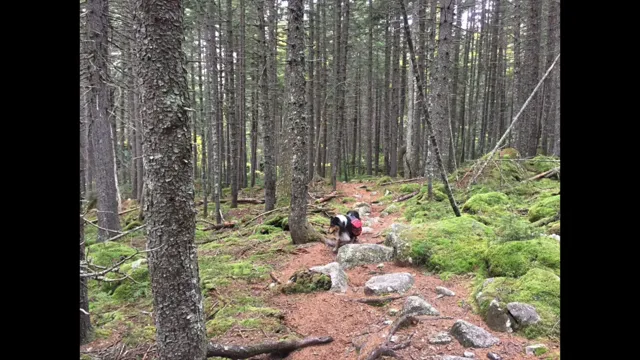

There are 6 wildlife hazards that affect dogs on the Appalachian Trail:
- Black bears: Present across all 14 AT states. Bear activity peaks in Virginia, North Carolina, and New Hampshire. Keep dogs leashed at all shelters and campsites.
- Rattlesnakes: Timber rattlesnakes occupy rocky ridgelines from Georgia to New England. They are most active on the AT between April and October.
- Copperheads: Common in the mid-Atlantic states. Examples include sections in Virginia, Maryland, and Pennsylvania below 3,000 feet.
- Ticks: Lone star ticks, deer ticks, and American dog ticks are present across all AT sections. Apply monthly tick prevention before entering the trail.
- Porcupines: Found from New England to the mid-Atlantic states. Porcupine quill removal requires veterinary care if quills penetrate the mouth or eyes.
- Coyotes: Active at dawn and dusk on open ridgeline sections from Georgia through New England.
7. Can a Dog Stay at Appalachian Trail Shelters?
Dogs are permitted at most AT shelters but are not allowed inside the shelter structure. The ATC states that dogs must remain on a leash at all AT shelters and tent sites. Dogs sleep outside or in a tent with their owner. Georgia, North Carolina, Tennessee, and Maine have the most shelter restrictions due to high wildlife interaction zones.
8. How Do You Manage a Dog at AT Water Crossings?
Water crossings on the AT include 3 types: rock hops, log bridges, and ford crossings. Ford crossings occur primarily in spring during snowmelt in Vermont, New Hampshire, and Maine. Use a 6-foot leash during all crossings. Dogs weighing under 20 pounds face downstream displacement risk in fast-moving water above knee depth. Carry the dog across crossings where water velocity exceeds walking pace.
9. What Is the Best AT Section for a First Hiking Trip with a Dog?
The best AT section for a first dog hike is the Virginia section between Damascus and Pearisburg, covering approximately 180 miles. This section offers the highest density of water sources on the AT, moderate elevation gain between 1,500 and 4,000 feet, and no dog-prohibited zones. The Virginia Creeper Trail near Damascus serves as an accessible warm-up route for dogs new to multi-day hiking.
What Are the 5 Dog-Prohibited Sections and Restriction Details on the AT?
There are 5 zones with partial or full dog restrictions on the Appalachian Trail.
|
Section |
State |
Miles |
Restriction Type |
Alternative Route |
|---|---|---|---|---|
|
Great Smoky Mountains NP |
NC / TN |
72 miles |
Full ban on backcountry trails |
Road walk on US-441 |
|
Baxter State Park |
ME |
14 miles |
Full ban including Katahdin |
No dog-permitted alternative |
|
Shenandoah NP |
VA |
101 miles |
Leash required; most trails closed to dogs |
Parallel road walk sections |
|
Bear Mountain Zoo crossing |
NY |
0.5 miles |
Full ban through zoo grounds |
Alternate bypass route available |
|
Delaware Water Gap NRA |
NJ / PA |
70 miles |
Leash required; dogs permitted all trails |
No restriction on main AT route |
How Do You Train a Dog for Appalachian Trail Hiking?
Training a dog for the Appalachian Trail follows a 6-week progressive conditioning plan:
- Week 1–2: Walk 5 to 8 km daily on varied terrain. Reinforce heel, recall, and stay commands.
- Week 3–4: Increase to 12 to 16 km. Introduce 300 to 500 metres of elevation gain. Fit the dog pack at 10% of body weight.
- Week 5–6: Complete a 2-day overnight hike with full gear. Increase pack weight to 20% of body weight. Practice water filtering and shelter camping routines.
Hiking the Appalachian Trail with a Dog: Key Takeaways
Hiking the Appalachian Trail with a dog requires preparation across 4 areas: legal compliance with dog-prohibited sections, appropriate gear, wildlife hazard management, and physical conditioning. The 9 essential rules in this guide ensure leash law compliance, shelter access, and safe trail management across all 14 AT states.

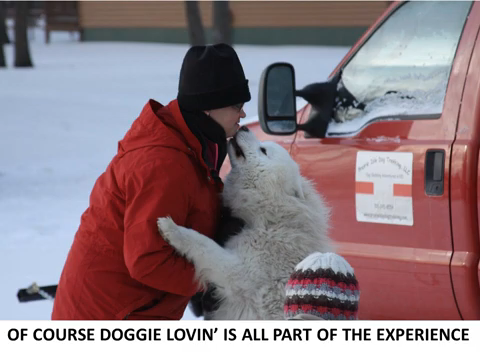
Helen L. Corlew runs a team of Samoyeds, Alaskan malamutes and Alaskan huskies. I am a Tellington TTouch practitioner and use this mode of work with training and living with my dogs.
Helen Corlew founded Prairie Isle Dog Trekking in Petersburg, North Dakota in 2010, and has spent the fifteen years since doing something most people only read about: teaching real dog sledding on real prairie terrain, at the edge of a landscape that doesn’t apologize for being difficult.
She is not a weekend enthusiast. She harnesses working dogs in January cold, trains handlers who have never touched a sled, and has built one of the only hands-on mushing education programs on the Northern Great Plains — from a single address on Highway 2, with no marketing budget and no shortcuts.
Her writing on Prairie Isle Dog Trekking reflects the same philosophy. Whether she is covering trail safety across the Rockies, breed behavior in extreme conditions, or what it actually takes to trek with a dog in the Alps, Helen writes from the position of someone who has done the work before writing the sentence.
She lives and runs dogs in Nelson County, North Dakota.
Kindly follow me on Social Media!


