
The family asked about it during the warm-up walk, the mother holding her phone out before I’d even finished explaining how to approach the dogs from the side. Terminal cancer, she said. Fourteen hundred miles. A golden retriever. I glanced at the screen long enough to see the photograph and said something noncommittal and got them moving toward the team.
That was October. I’ve been thinking about it since.
Not the way I usually think about these stories, which is to file them under things people send me because I have dogs and move on. This one stayed. I pulled the article up that night in my truck, heat on full, breath still visible in the cab, and I read the whole thing and then sat there a while without starting the engine.
What stopped me wasn’t the distance. Wasn’t the illness, which was real and ugly in the way those things are, no softening in the details she gave. It was a single line buried about two-thirds through, where the woman described the dog’s behavior in the weeks before she got too sick to continue. How the dog had started sleeping differently. Closer. How it had adjusted its pace when hers slowed, without being asked, without training for that specific thing. How on the bad days the dog just waited.
I know that behavior.
I’ve watched it in working dogs when something goes wrong on trail. Not the dramatic version people expect, not a dog pulling toward help or barking out a warning. The quiet version. A dog that should be moving and isn’t. Positioned close. Decided.
I’ve been doing this long enough to stop romanticizing what dogs do. They are not furry people. They do not love the way people love or grieve the way people grieve, and most of what gets written about them is a human putting human feeling into an animal that has its own feeling and doesn’t need the translation. That’s my position and I hold it.
But that detail about the pace opened something up.

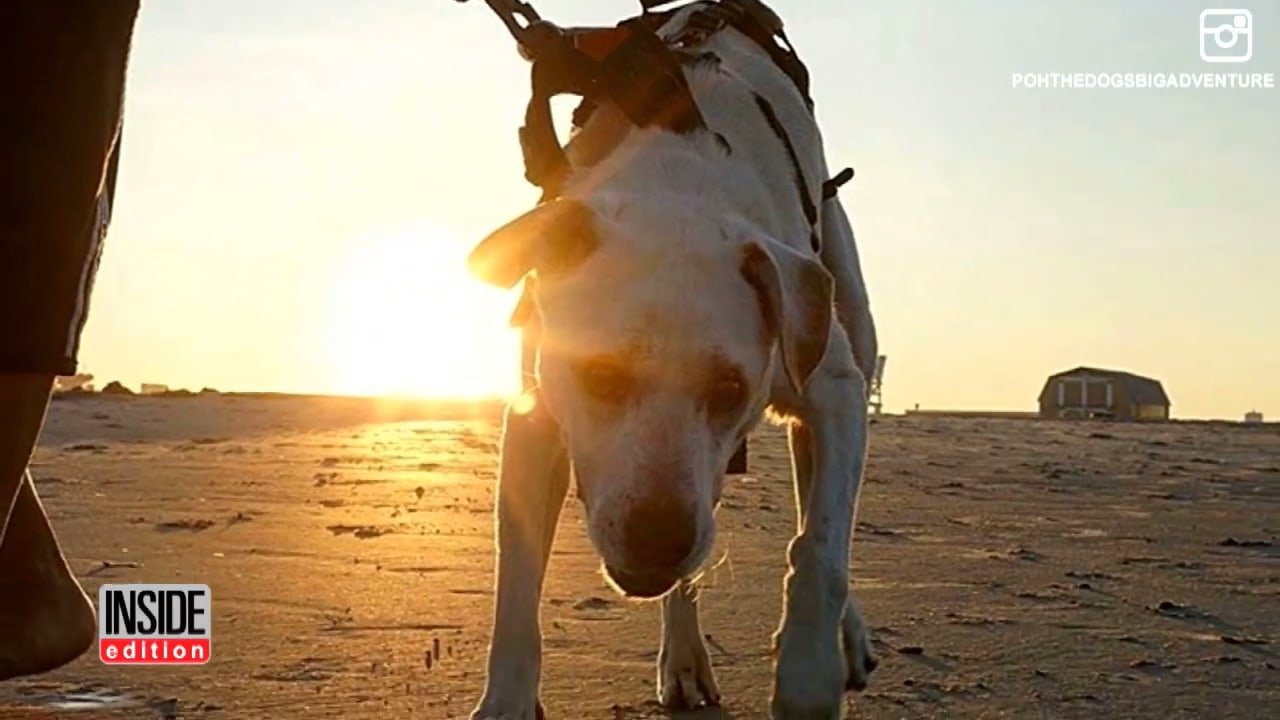
Pace is a working concept in my world. A dog that adjusts its pace to protect the team, to manage a weaker runner at the back, to compensate for ice or a bad line, that dog is doing something real. Something functional. It is reading conditions and responding to conditions, and the condition in this case was a woman whose body was failing, and the dog read it and responded to it and kept responding to it for over a thousand miles.
That is not a pet trick. That is not the golden retriever of the greeting card, soft and decorative and emotionally available on cue. That is a dog working.
The woman understood this. Not in the language I’d use, but she understood it. She said in the article that the dog didn’t comfort her exactly. The dog just kept going, and so she kept going, and that’s a different thing from comfort and she knew it. She wasn’t looking for a witness. She was looking for a reason to keep moving, and the dog was built for movement, and for fourteen hundred miles that was enough.
The coverage missed this almost entirely. What I read elsewhere was about the bond, the love, the inspiration of it. One piece called the dog her angel. I understand why. It’s easier to read. But what the dog was doing had nothing angelic about it. It was physical, specific, and earned over every mile they walked together.
Minus fifteen this morning. The air burns different at this temperature than at minus five. At minus five it’s sharp. At minus fifteen it goes past sharp into something else, something that sits in your chest and makes you deliberate about breathing. I was checking harnesses in that air, thinking about a woman I never met and a dog whose name I can’t remember, and what I kept coming back to wasn’t the loss of her, though that’s real, but what the dog did in the presence of it.
She died knowing her dog had worked for her. That’s not a small thing to know.

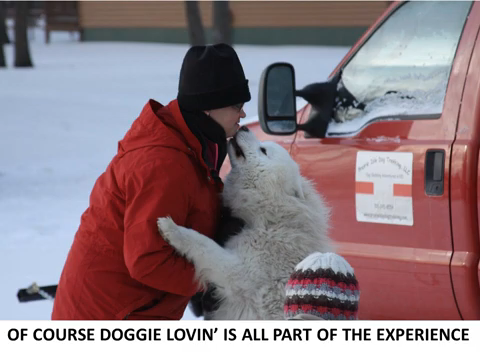
Helen L. Corlew runs a team of Samoyeds, Alaskan malamutes and Alaskan huskies. I am a Tellington TTouch practitioner and use this mode of work with training and living with my dogs.
Helen Corlew founded Prairie Isle Dog Trekking in Petersburg, North Dakota in 2010, and has spent the fifteen years since doing something most people only read about: teaching real dog sledding on real prairie terrain, at the edge of a landscape that doesn’t apologize for being difficult.
She is not a weekend enthusiast. She harnesses working dogs in January cold, trains handlers who have never touched a sled, and has built one of the only hands-on mushing education programs on the Northern Great Plains — from a single address on Highway 2, with no marketing budget and no shortcuts.
Her writing on Prairie Isle Dog Trekking reflects the same philosophy. Whether she is covering trail safety across the Rockies, breed behavior in extreme conditions, or what it actually takes to trek with a dog in the Alps, Helen writes from the position of someone who has done the work before writing the sentence.
She lives and runs dogs in Nelson County, North Dakota.
Kindly follow me on Social Media!