

The letter arrived in February, on the kind of day where the cold had settled in for good and even the dogs were running quieter than usual, that flat prairie silence pressing down so hard you could hear the gangline clips rattle from inside the kennel. The return address was Minneapolis. An organization called the Northern Breed Welfare Consortium, which I’d been reading about for six months without having any particular opinion yet. They wanted to know if I’d participate in their voluntary kennel registry. DNA panels for every working dog. Welfare assessments. Full transparency on breeding lineages going back three generations.
I set the letter on the workbench and went back to what I was doing, which was untangling a harness that had frozen into a knot overnight, the nylon stiff and smelling like cold I couldn’t quite name. I said yes three weeks later. Not because anyone pressured me. Because I wanted to know what they’d find.
What they found was not what I expected, and not what I expected to feel about it.
The DNA results on my fourteen dogs came back clean in the ways that mattered: no genetic markers for the degenerative conditions that have been quietly moving through certain Siberian lines, no inbreeding coefficients that should alarm anyone. What I hadn’t anticipated was the lineage mapping. Four of my dogs traced back to a kennel in Montana that had been the subject of one of the Consortium’s welfare lawsuits two years prior. Not the same dogs. Nothing that implicated me directly. But the same bloodlines, purchased through a broker I’d trusted for a decade, and I sat with that chart for a long time in the kennel quiet.
I didn’t do anything wrong. That’s not the point.
The point is that the sled dog world has operated for generations on reputation and handshake and the assumption that serious mushers know each other well enough to self-regulate. That assumption was always partly true and partly comfortable. The Consortium’s registry is making it less comfortable, which is not the same thing as making it wrong.
The lawsuit side of their operation is where people in the mushing community get loud. Two lawsuits in three years, both against kennels with documented evidence of overbreeding and inadequate veterinary oversight. Both settled. The community response, in the forums and at regional meets, has been almost uniformly defensive. Outside interference. People who don’t understand working dogs imposing pet-owner values on a working tradition.
I’ve listened to that argument. I understand where it comes from.

It’s also being used to avoid a conversation that needs to happen.
The Consortium isn’t wrong that some kennels produce more dogs than they can properly maintain. The evidence in both lawsuits was not ambiguous. Veterinary records, facility photographs, breeding frequency data that no responsible operation would be comfortable defending. You can disagree with the legal mechanism and still be honest about what the evidence showed.
What DNA testing changes is the paper trail. Bloodlines that used to be traceable only through word of mouth are now traceable through a database. A dog that came from a kennel with welfare violations doesn’t disappear into the next transaction. That information persists. For people running clean operations, that’s not a threat. For people who’ve been relying on the opacity of the market, it is.
The mushing community’s argument against outside oversight assumes the community’s self-regulation is working. That assumption has not been recently tested by anyone with standing to push on it. Until now.
My dogs’ results are in the registry. The lineage chart is on the wall above the workbench, next to the temperature logs and the veterinary records. I look at it when I’m thinking about the next breeding decision, which I do more carefully than I did before February.
The Consortium will make enemies in this community. They already have. Some of those enemies are people protecting real traditions worth protecting. Some of them are protecting something else entirely, and they’ve been counting on everyone being too polite or too insular to say so plainly.
Knowing the difference has always required paying attention. The DNA panel just gives you more to pay attention to.

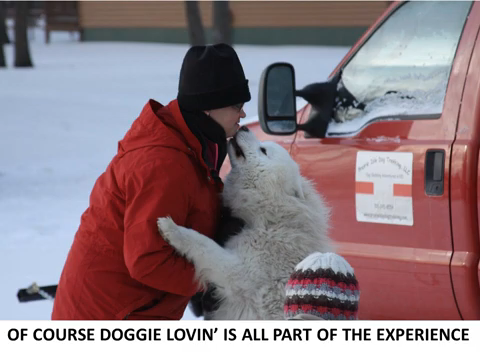
Helen L. Corlew runs a team of Samoyeds, Alaskan malamutes and Alaskan huskies. I am a Tellington TTouch practitioner and use this mode of work with training and living with my dogs.
Helen Corlew founded Prairie Isle Dog Trekking in Petersburg, North Dakota in 2010, and has spent the fifteen years since doing something most people only read about: teaching real dog sledding on real prairie terrain, at the edge of a landscape that doesn’t apologize for being difficult.
She is not a weekend enthusiast. She harnesses working dogs in January cold, trains handlers who have never touched a sled, and has built one of the only hands-on mushing education programs on the Northern Great Plains — from a single address on Highway 2, with no marketing budget and no shortcuts.
Her writing on Prairie Isle Dog Trekking reflects the same philosophy. Whether she is covering trail safety across the Rockies, breed behavior in extreme conditions, or what it actually takes to trek with a dog in the Alps, Helen writes from the position of someone who has done the work before writing the sentence.
She lives and runs dogs in Nelson County, North Dakota.
Kindly follow me on Social Media!


