


What to feed a dog on a hike depends on the dog’s body weight, trail distance, and ambient temperature. Dogs expend 30% to 50% more calories during hiking than during rest, according to data published by the Merck Veterinary Manual. The 6 best foods for dogs on hikes are regular kibble, freeze-dried dog food, high-protein training treats, dehydrated meat chews, dog-specific energy bars, and fresh vegetables such as carrots and cucumber slices.
What Do Dogs Eat on a Hike?
Dogs eat their regular diet supplemented with portable, high-protein snacks on a hike. Maintain the dog’s standard food type to prevent digestive upset. Sudden dietary changes during physical exertion cause gastrointestinal distress in the majority of dogs, particularly diarrhea and vomiting, as confirmed by the American Kennel Club (AKC). For the previous guide in this series, see Dog Trekking Photography: Camera Gear, Trail Techniques, and 8 Composition Rules.
3 food categories suitable for trail feeding include:
- Main meal food — Regular kibble or freeze-dried raw food measured to match daily caloric needs plus hiking expenditure
- Trail snacks — High-protein, low-sodium treats consumed every 60 to 90 minutes on trail
- Recovery food — A full measured meal served 30 minutes after completing the hike
How Many Calories Does a Dog Need on a Hike?
A dog needs 25% to 50% more calories on hiking days than on rest days. A 50-lb moderately active dog requires approximately 1,200 calories per day at rest. On a 5-mile hike, caloric needs increase to 1,500 to 1,800 calories. On hikes exceeding 10 miles, daily caloric requirements reach 2,000 to 2,400 calories for the same 50-lb dog.
|
Dog Weight |
Rest Day Calories |
5-Mile Hike Calories |
10-Mile Hike Calories |
|---|---|---|---|
|
20 lbs |
600 kcal |
750–900 kcal |
900–1,100 kcal |
|
50 lbs |
1,200 kcal |
1,500–1,800 kcal |
2,000–2,400 kcal |
|
80 lbs |
1,800 kcal |
2,250–2,700 kcal |
2,900–3,400 kcal |
What Are the 6 Best Foods to Feed a Dog on a Hike?
The 6 best foods to feed a dog on a hike are selected based on caloric density, portability, digestibility, and sodium content. High-sodium human trail foods, such as jerky and salted nuts, are not safe for dogs.
- Regular kibble — Familiar, digestively safe, and calorie-dense at 300 to 450 kcal per cup; pre-measure daily portions at home
- Freeze-dried raw dog food — Lightweight and calorie-dense at 400 to 500 kcal per oz; rehydrates with water if needed
- High-protein training treats — Examples include Zuke’s Mini Naturals and Wellness Soft WellBites; deliver 3 to 5 kcal per treat for consistent energy top-ups
- Dehydrated meat chews — Examples include beef liver, chicken strips, and salmon skins; provide 30 to 50 kcal per chew and high digestibility
- Dog-specific energy bars — Examples include Ruffwear Lunker Bar and PetRx Energy Chews; formulated for sustained endurance activity
- Fresh vegetables — Carrots, cucumber slices, and apple pieces (seeds removed) provide hydration and natural sugars with low caloric load
What Are the Best High-Energy Snacks for Dogs on Hikes?
The best high-energy snacks for dogs on hikes are freeze-dried meat treats, dehydrated liver chews, and dog-specific energy bars. These deliver concentrated protein and fat without excess sodium or artificial preservatives. Feed trail snacks every 60 to 90 minutes during active hiking to maintain stable blood glucose levels and sustained endurance output.
When Should You Feed a Dog Before a Hike?
Feed a dog its main meal 2 to 3 hours before a hike begins. Feeding within 1 hour of strenuous exercise increases the risk of gastric dilatation-volvulus (GDV), a life-threatening condition where the stomach twists. The American College of Veterinary Surgeons (ACVS) confirms that large and deep-chested breeds, such as Great Danes, German Shepherds, and Dobermans, carry the highest GDV risk from post-meal exercise.
How Long Before a Hike Should a Dog Eat?
A dog should eat its main meal 2 to 3 hours before a hike to allow full gastric emptying. For hikes beginning early in the morning, feed a light portion of 50% of the regular meal size 1.5 to 2 hours before departure. Provide the remaining 50% as trail snacks distributed across the first 2 hours of hiking.
How Much Water Does a Dog Need on a Hike?
A dog needs 1 oz of water per pound of body weight per day at rest. During hiking, water requirements increase to 0.5 to 1 oz per pound per hour of active exercise. A 50-lb dog hiking for 4 hours requires 25 to 50 oz (0.75 to 1.5 liters) of water during the hike alone, in addition to its baseline daily intake.
|
Dog Weight |
Water at Rest (Per Day) |
Water Per Hour of Hiking |
|---|---|---|
|
20 lbs |
20 oz (0.6 liters) |
10–20 oz |
|
50 lbs |
50 oz (1.5 liters) |
25–50 oz |
|
80 lbs |
80 oz (2.4 liters) |
40–80 oz |
How Often Should a Dog Drink Water on a Hike?
A dog drinks water every 15 to 20 minutes during active hiking. Offer water at every rest stop regardless of whether the dog shows signs of thirst. Dogs regulate body temperature through panting, which accelerates water loss significantly compared to human perspiration. A dog that refuses water after 30 minutes of hiking in temperatures above 75°F (24°C) displays an early sign of heat exhaustion.
What Foods Are Dangerous for Dogs on Hikes?
10 foods are dangerous for dogs on hikes and must never be included in a trail pack:
- Grapes and raisins — Cause acute kidney failure in dogs; even small amounts are toxic
- Macadamia nuts — Cause muscle weakness, vomiting, and hyperthermia
- Xylitol — Artificial sweetener found in many human energy bars and gels; causes rapid insulin release and liver failure
- Chocolate — Contains theobromine, which causes seizures and cardiac arrhythmia
- Onions and garlic — Destroy red blood cells and cause hemolytic anemia
- Salted human trail mix — Excess sodium causes hypernatremia (sodium poisoning) and neurological symptoms
- Avocado — Contains persin, which causes vomiting and diarrhea
- Caffeinated products — Energy gels and coffee cause tachycardia and tremors
- Alcohol — Even small amounts cause rapid intoxication and respiratory depression
- Apple seeds and cherry pits — Contain cyanogenic compounds toxic to dogs
Can Dogs Drink from Streams on a Hike?
Dogs drink from streams on hikes, but natural water sources carry 4 primary contamination risks: blue-green algae, Giardia, Leptospira bacteria, and agricultural runoff. The CDC confirms that Giardia is present in most natural freshwater sources across the United States. Always carry clean drinking water as the primary hydration source. Allow stream drinking only from fast-moving, clear water away from agricultural land.
How Do You Feed a Dog on a Long-Distance Hike?
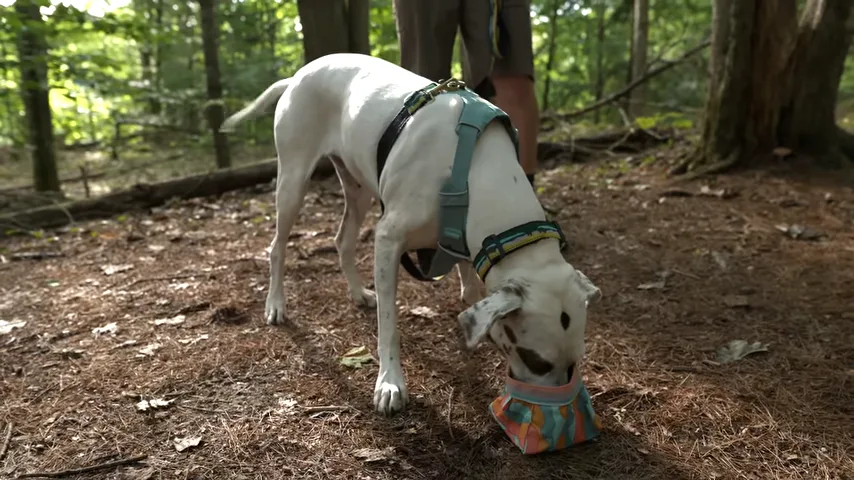

Feed a dog on a long-distance hike of 10 or more miles using a structured meal and snack schedule distributed across the full day. Divide the total daily caloric requirement into 3 portions: a pre-hike meal, mid-trail snacks, and a post-hike recovery meal.
What Is the Best Feeding Schedule for a Dog on a Hike?
The best feeding schedule for a dog on a hike follows a 3-stage structure:
Stage 1 — Pre-Hike (2 to 3 hours before departure)
- Feed 40% of daily caloric requirement
- Use regular kibble or freeze-dried food
- Provide full water access
Stage 2 — On Trail (every 60 to 90 minutes)
- Feed 30% of daily caloric requirement in high-protein trail snacks
- Offer water at every snack break
- Monitor for signs of fatigue: lagging, excessive panting, and disinterest in food
Stage 3 — Post-Hike (30 minutes after completing the trail)
- Feed remaining 30% of daily caloric requirement
- Use regular kibble to support muscle recovery
- Provide unlimited water access for 1 hour post-hike
How Do You Store Dog Food on a Hike?
Store dog food in airtight, odor-proof containers inside a daypack or dog backpack. Pre-measured meal portions pack in individual resealable bags to reduce weight and prevent overfeeding. On multi-day hikes in bear-active areas, store all dog food in a bear canister or suspended bear hang at least 200 feet from the sleeping area, as required by Leave No Trace guidelines.
3 storage rules for dog food on hikes:
- Use airtight, odor-proof bags or containers to prevent wildlife attraction
- Separate daily portions before departure to avoid overfeeding at trail stops
- Never store dog food in a tent or sleeping area on overnight hiking trips
Related guides
- Benefits of Hiking for Dogs: 10 Proven Physical and Mental Health Advantages
- Dog Hiking Paw Care: 7 Proven Methods to Protect and Condition Your Dog’s Paws on Trail

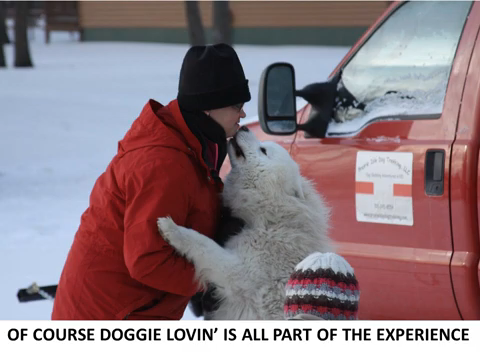
Helen L. Corlew runs a team of Samoyeds, Alaskan malamutes and Alaskan huskies. I am a Tellington TTouch practitioner and use this mode of work with training and living with my dogs.
Helen Corlew founded Prairie Isle Dog Trekking in Petersburg, North Dakota in 2010, and has spent the fifteen years since doing something most people only read about: teaching real dog sledding on real prairie terrain, at the edge of a landscape that doesn’t apologize for being difficult.
She is not a weekend enthusiast. She harnesses working dogs in January cold, trains handlers who have never touched a sled, and has built one of the only hands-on mushing education programs on the Northern Great Plains — from a single address on Highway 2, with no marketing budget and no shortcuts.
Her writing on Prairie Isle Dog Trekking reflects the same philosophy. Whether she is covering trail safety across the Rockies, breed behavior in extreme conditions, or what it actually takes to trek with a dog in the Alps, Helen writes from the position of someone who has done the work before writing the sentence.
She lives and runs dogs in Nelson County, North Dakota.
Kindly follow me on Social Media!


