

What Gets Kept
The boy couldn’t tie a bowline. That wasn’t the surprise. Most adults who come through here can’t tie a bowline either, and I’ve stopped expecting it. The surprise was that when I showed him, slowly, twice, he looked up at me and asked if there was an app that did this part.
He was eleven. It was minus eight. His hands were already going clumsy from the cold.
I told him no, there wasn’t an app for the part where your dog gets a line wrapped around her foreleg in the dark and you have four minutes before the situation gets worse. He looked at me for a second. Then he looked down at the rope. He tied it. Badly at first, then better, then well enough to use.
That moment keeps coming back to me when I read about schools like the one in Minnesota, the piece going around about kids learning traditional mushing and what it means to carry a skill that not enough people are carrying anymore. I read it carefully. I’m glad the school exists.
And I want to say something about what on the verge of being lost actually means when you’re standing in it.
It doesn’t feel elegiac. It doesn’t feel like a museum. It feels like a Tuesday in February when a twelve-year-old from a Minneapolis suburb steps into my yard for the first time, and the dogs are loud, and the cold is real, and everything she knows how to do well is suddenly useless in a way she can’t quite name yet. Her phone doesn’t work at minus fifteen, not reliably, the battery dropping like a stone. Her social fluency doesn’t work here either. The dogs aren’t impressed by her and they’re not unkind about it. They just don’t notice her yet.
That’s where it starts. Not with the skill. With the humility that makes room for the skill.
I’ve been doing this long enough to know what gets lost first when a practice starts dying out. Not the techniques. Techniques get written down, archived, posted in videos by well-meaning people with good cameras. What gets lost is the physical grammar of it, the way your body learns to read a dog’s weight shift before your mind processes what it means, the way you stop looking at your hands when you’re harnessing because your hands already know where they’re going, the way cold stops being an obstacle and becomes just information you use.
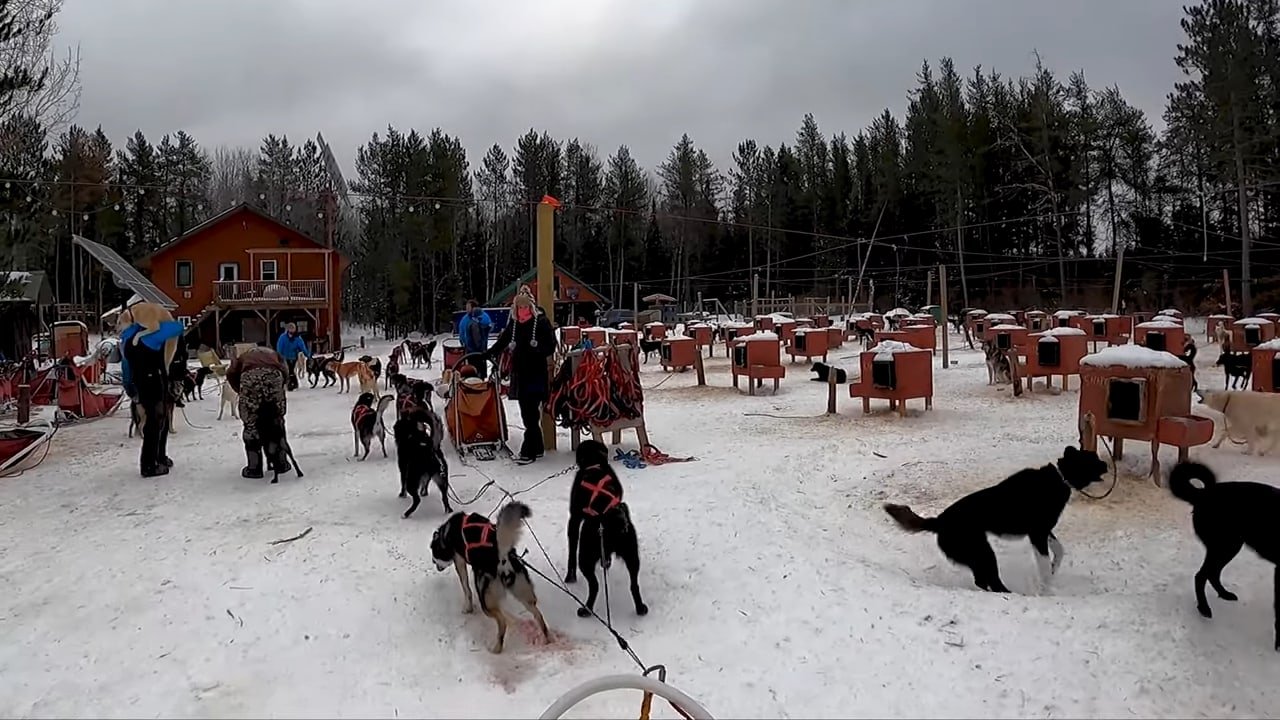
You can’t archive that. It lives in repetition or it doesn’t live.
The Minnesota school is teaching repetition. That’s what the piece is really about, even if it doesn’t say it plainly. Kids showing up week after week, handling the same dogs, making the same mistakes in a cold that doesn’t care about their feelings, getting better because getting better is the only way to stay comfortable and the body is smart about comfort.
I had a girl here three winters running, came with her father the first time as part of a church group and then asked to come back, just her, and the second winter she was useful in a basic way and the third winter she was someone I watched without worrying about her. Not because she’d become expert. Because she’d become present. The cold burned her nose the same as mine. She heard what the dogs were telling her. When the tug line went slack on her team she’d already felt it coming.
That’s fifteen months of Saturdays. That’s what it cost.
The schools teaching this, here in North Dakota and apparently now in Minnesota and wherever else someone is still running a real dog yard and letting kids into it, they’re not preserving a heritage skill the way you’d preserve a quilt pattern or a recipe. They’re doing something harder and less photogenic. They’re asking kids to be bad at something physical for long enough that they come out the other side knowing something real.
The bowline boy came back the following winter with his school group. He was the one who showed the other kids how to tie it. He didn’t make a production of it. He just did it, and I watched his hands work in the cold without fumbling, and the dog stood patient while he ran the line, and that was the whole thing.
Some knowledge only stays alive in the hands that are using it.
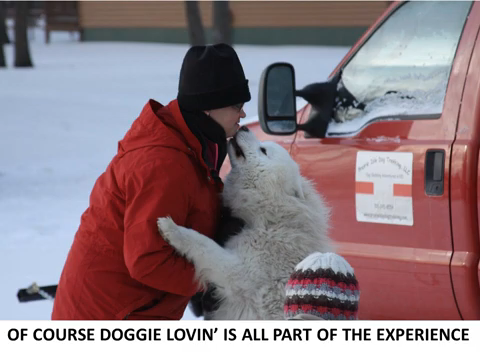
Helen L. Corlew runs a team of Samoyeds, Alaskan malamutes and Alaskan huskies. I am a Tellington TTouch practitioner and use this mode of work with training and living with my dogs.
Helen Corlew founded Prairie Isle Dog Trekking in Petersburg, North Dakota in 2010, and has spent the fifteen years since doing something most people only read about: teaching real dog sledding on real prairie terrain, at the edge of a landscape that doesn’t apologize for being difficult.
She is not a weekend enthusiast. She harnesses working dogs in January cold, trains handlers who have never touched a sled, and has built one of the only hands-on mushing education programs on the Northern Great Plains — from a single address on Highway 2, with no marketing budget and no shortcuts.
Her writing on Prairie Isle Dog Trekking reflects the same philosophy. Whether she is covering trail safety across the Rockies, breed behavior in extreme conditions, or what it actually takes to trek with a dog in the Alps, Helen writes from the position of someone who has done the work before writing the sentence.
She lives and runs dogs in Nelson County, North Dakota.
Kindly follow me on Social Media!
