

Nearly Perfect
The smell hit Wren before I saw what she was tracking. We were doing a loose run, post-season, nothing formal, and she pulled hard left off the trail we’d been following and I let her go because you learn fast that arguing with a dog’s nose is a losing proposition. Forty yards into the tree break she stopped at a collapsed drift, stiff-legged, not barking, just present in that particular way that means: here. It was a dead whitetail, half-buried, frozen solid since probably November. Nothing to do about it. But the point is I hadn’t smelled anything. Minus twenty does something particular to scent, compresses it, holds it close to the ground, and Wren had caught it from a distance I still can’t calculate and she was right and I was just along for the walk.
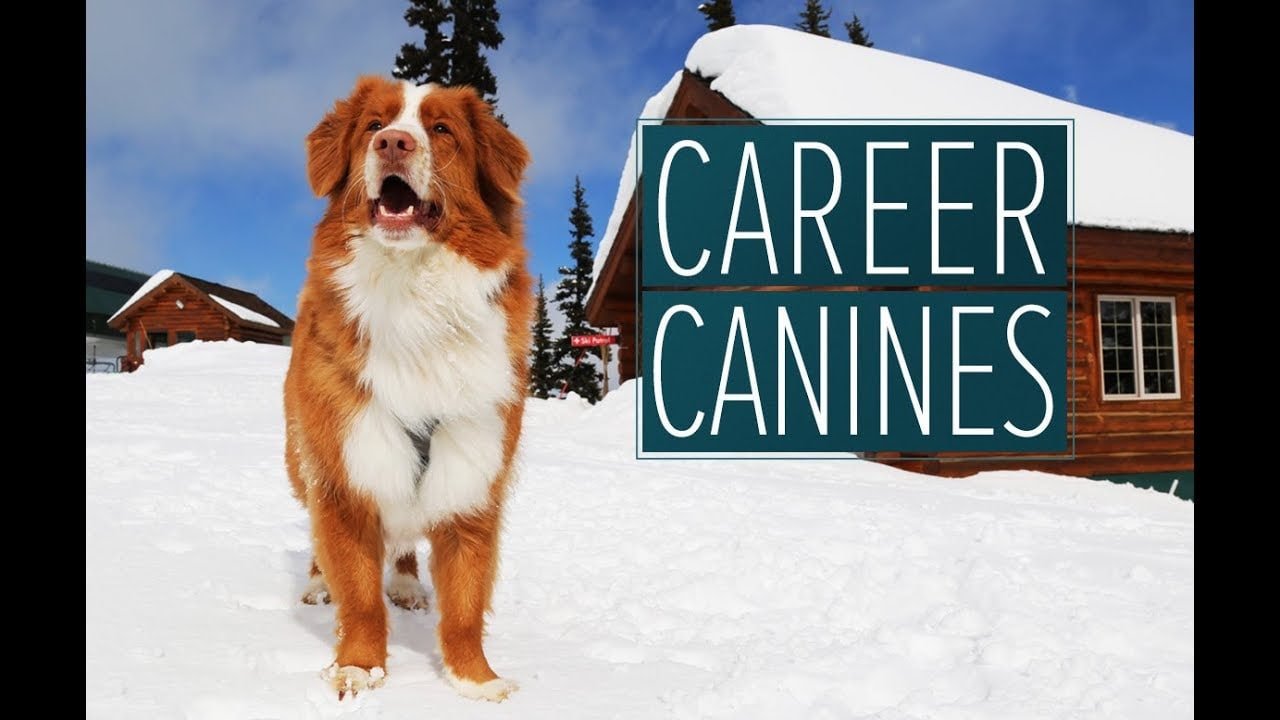
I read the piece about the Cascades dogs last month. Search and rescue, near-perfect record, trained to find missing hikers in terrain that would swallow a person whole. The writing was good. The dogs were impressive. The record speaks for itself.
But the word that snagged me was trained.
Not because it’s wrong. It isn’t. Those dogs are trained, rigorously, by handlers who know what they’re doing and work harder than the article suggests. But trained implies the human built the capability, installed it, switched it on. What actually happened is more complicated and less comfortable for people to think about.
The dog already had the nose. The dog already had the drive, the focus, the particular obsessive quality that makes a working dog different from a pet in ways that matter when someone’s life is on the line. The training gave it a frame. The handler gave it a direction. But the thing itself, the actual search capability, the ability to parse scent across wind and elevation and time, that was already there when the dog was born and it would have found an outlet one way or another.
I’ve had dogs come to me that other people couldn’t work with. Too much. Too focused. Too unwilling to disengage from whatever had caught their attention. Those dogs aren’t problems. They’re dogs that need a job that matches what they actually are. Give them that and they’ll work until you physically stop them. Don’t give them that and you get a different kind of problem entirely.
The first time I let a first-timer take lead position on a run, really take it, not just hold the bar while I stood two feet away, was a woman named Greta who’d driven four hours from Minot and had never been near a working dog in her life. She was terrified, which she admitted and which I respected. We stood in the cold for ten minutes before we started, the team already screaming to go, that wall of sound and leaning dog energy that hits you in the sternum if you’re not used to it, and I watched her breathe through it and find something steady underneath the fear.
The dogs felt it when she steadied. I watched it move through the team, front to back, a kind of settling. They knew before she did that she was ready.
That’s not training either. That’s communication running on a frequency most people have stopped listening to.
The Cascades dogs find missing hikers because they are built to find things and because someone was paying enough attention to see what they were built for and put them somewhere that mattered. The nearly perfect record isn’t a training achievement. It’s a matching achievement. Someone looked at a dog and saw the dog clearly and said: here is the work that deserves you.
Most dogs never get that. They get a yard and a food bowl and someone who loves them fine but doesn’t know what they’re looking at.
Wren finished her investigation of the dead deer and came back to me and sat down and looked up waiting for what was next. No drama. Just ready. The cold was burning the deep specific minus-twenty burn at the back of my sinuses and the prairie was flat and white and indifferent in every direction and she was sitting there full of capability she’d been born with, and I’d spent years learning how to not waste it.
The missing hikers who came home because of those Cascades dogs, they don’t know what they owe. They can’t. The debt is to something older than training, older than rescue programs, older than whatever we’ve decided to call the relationship between people and working dogs.
The dog found you. That’s the whole story.
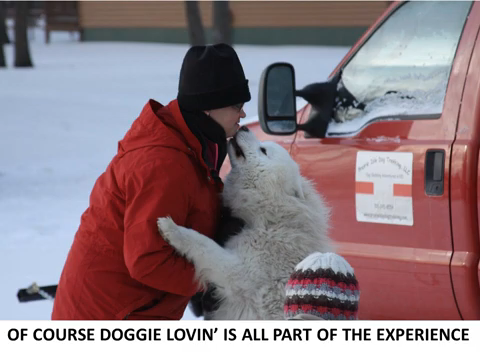
Helen L. Corlew runs a team of Samoyeds, Alaskan malamutes and Alaskan huskies. I am a Tellington TTouch practitioner and use this mode of work with training and living with my dogs.
Helen Corlew founded Prairie Isle Dog Trekking in Petersburg, North Dakota in 2010, and has spent the fifteen years since doing something most people only read about: teaching real dog sledding on real prairie terrain, at the edge of a landscape that doesn’t apologize for being difficult.
She is not a weekend enthusiast. She harnesses working dogs in January cold, trains handlers who have never touched a sled, and has built one of the only hands-on mushing education programs on the Northern Great Plains — from a single address on Highway 2, with no marketing budget and no shortcuts.
Her writing on Prairie Isle Dog Trekking reflects the same philosophy. Whether she is covering trail safety across the Rockies, breed behavior in extreme conditions, or what it actually takes to trek with a dog in the Alps, Helen writes from the position of someone who has done the work before writing the sentence.
She lives and runs dogs in Nelson County, North Dakota.
Kindly follow me on Social Media!
