

The piece I read about this Montana town ran four paragraphs before it mentioned the dogs were working.
Not performing. Not posing for a video someone would save eleven thousand times. Working. Hauling groceries through snow that closed the road in November and didn’t reopen until March, running a mail route down a street the county stopped pretending to plow past a certain point. A town of maybe three hundred people where a dog team isn’t a novelty and isn’t a seasonal attraction. It’s Tuesday morning. It’s how you get there.
I read it twice. Then I set my coffee down and went out to the kennel, which is what I do when something needs sitting with.
The dogs were glad to see me, the way they always are in the early dark: that specific high-pitched sound they make when they hear boots on frozen ground and know it might mean something is about to happen. I stood there and let them settle. Frost on their fur where they’d been breathing against it. The frozen nylon smell of the harnesses hung on the fence rail. Same as any morning.
Here’s what landed on me while I stood there. The thing that was strange wasn’t the dog sledding. It was the word “commute.” The writer used it straight, without irony, and it took me a moment to understand that was exactly right. No quotation marks around it. No winking at the reader. People in this town run their dogs to work because the alternative is not going to work. The dogs are infrastructure.
I’ve spent fifteen years selling something adjacent to that. Not the same thing. Something adjacent. Families drive up from Minot or Bismarck, they spend two hours with the team, they go home with cold faces and good photographs and the memory of a tug line going tight under their hands for the first time. That’s real. It’s not nothing. But it’s not Tuesday morning. It’s not six a.m. in the dark because the grocery run won’t make itself.
The surprise was how quietly that distinction settled. Not like an accusation. More like a fact I’d been circling for a long time and finally got close enough to see plain.
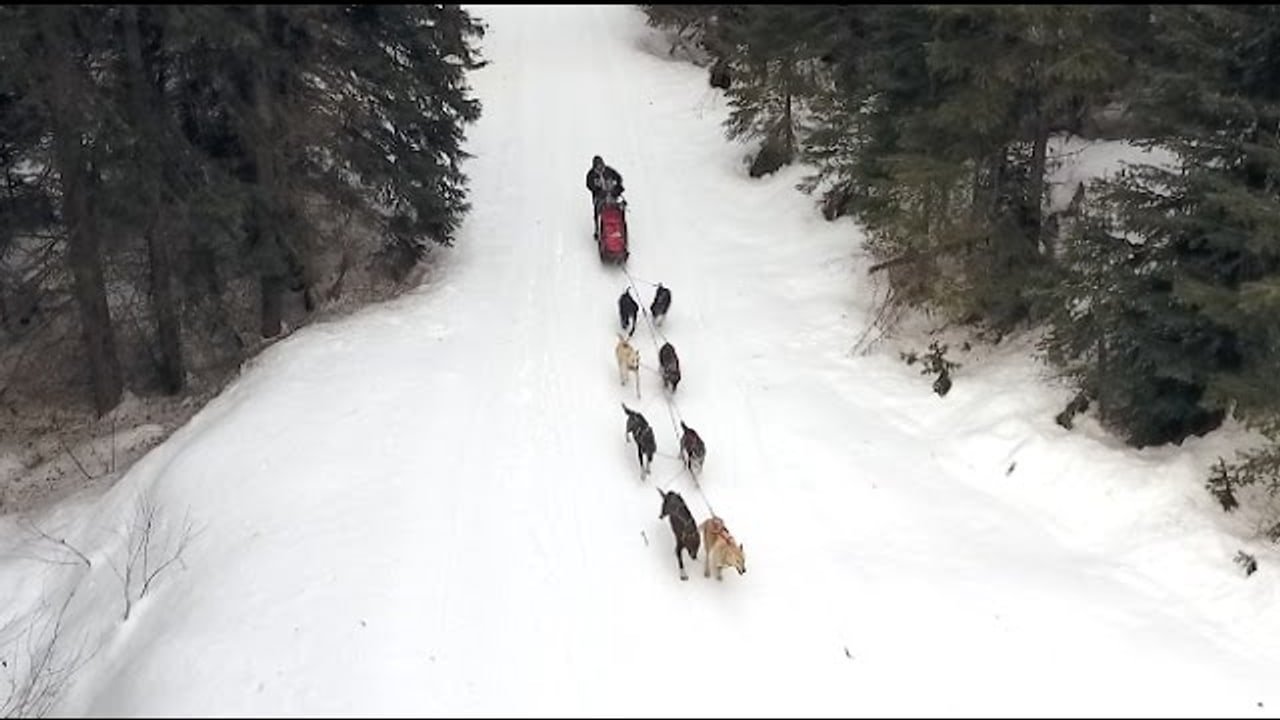
There’s a cold in November here, before the wind comes up, when the air is so still and so dry you can hear your own breathing coming back to you off the flat ground and you understand this landscape is not interested in your comfort. My dogs understand that without being told. The cold doesn’t impress them. The work doesn’t impress them. They lean into it because it’s the thing in front of them, and the leaning is everything they are.
The people in that Montana town have the same transaction with their dogs. No performance layer over it. The dogs aren’t a brand. They aren’t the story the town tells about itself to draw visitors. They’re the reason the pharmacist made it in on Wednesday.
What stays with me is that we built an entire tourism category out of approximating what those people are just doing. Sled dog experiences. Mushing adventures. I’m not embarrassed by it. I know what I provide and I know it has value. Showing someone what something feels like, even briefly, even once, is not a small thing. But there’s a difference between showing someone what something looks like and the thing itself, and I know which side of that line I’m on.
The dogs don’t know the difference. Dag doesn’t care if the person on the runners behind him drove four hours to get there or lives half a mile up the road. The tug line is the tug line. The ground is the ground. He leans into it the same way either way, and he would do it tomorrow morning in the dark for no audience at all, just because the harness went on and the line went tight and that was enough reason.
The dogs aren’t performing. We are. That Montana town just figured out how to stop.
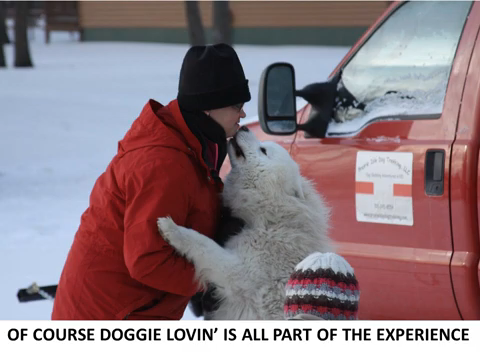
Helen L. Corlew runs a team of Samoyeds, Alaskan malamutes and Alaskan huskies. I am a Tellington TTouch practitioner and use this mode of work with training and living with my dogs.
Helen Corlew founded Prairie Isle Dog Trekking in Petersburg, North Dakota in 2010, and has spent the fifteen years since doing something most people only read about: teaching real dog sledding on real prairie terrain, at the edge of a landscape that doesn’t apologize for being difficult.
She is not a weekend enthusiast. She harnesses working dogs in January cold, trains handlers who have never touched a sled, and has built one of the only hands-on mushing education programs on the Northern Great Plains — from a single address on Highway 2, with no marketing budget and no shortcuts.
Her writing on Prairie Isle Dog Trekking reflects the same philosophy. Whether she is covering trail safety across the Rockies, breed behavior in extreme conditions, or what it actually takes to trek with a dog in the Alps, Helen writes from the position of someone who has done the work before writing the sentence.
She lives and runs dogs in Nelson County, North Dakota.
Kindly follow me on Social Media!
