


A dog hiking checklist includes 12 essential items: water, food, a leash, a collar with ID tags, a dog pack, a first aid kit, paw protection, a waste bag, a portable bowl, a tick remover, a dog sleeping pad, and a GPS tracker. Preparing these items reduces trail risks by 67%, according to the American Kennel Club (AKC).
What Is a Dog Hiking Checklist?
A dog hiking checklist is a structured list of gear, health requirements, and safety protocols needed before taking a dog on a trail. It covers 4 main categories: equipment, nutrition, health, and safety. For the previous guide in this series, see How to Train a Dog for Hiking: A Complete 8-Week Program With Commands, Fitness, and Trail Skills.
Dogs face 3 primary trail risks: dehydration, paw injuries, and wildlife encounters. A checklist addresses all 3 before departure.
What Should Be on a Dog Hiking Checklist?
A dog hiking checklist should include gear, food, water, safety items, and health documentation. Each category protects the dog from a specific trail hazard.
What Gear Does a Dog Need for Hiking?
A dog needs 6 core gear items for hiking: a well-fitted harness, a 6-foot leash, a dog pack, paw boots, a reflective collar, and ID tags.
Essential Dog Hiking Gear
- Harness — Distributes pressure evenly across the chest. Reduces neck strain by 40% compared to collar-only setups (Journal of Veterinary Behavior, 2019).
- 6-foot leash — Provides control on narrow trails. Retractable leashes increase entanglement risk on uneven terrain.
- Dog pack — Allows dogs over 30 lbs to carry 10–15% of their body weight. Examples include the Ruffwear Approach Pack and the Mountainsmith K-9 Pack.
- Paw boots — Protect paws from hot asphalt, sharp rocks, and ice. Examples include Ruffwear Grip Trex and Muttluks Fleece-Lined boots.
- Reflective collar — Increases visibility by 300% in low-light conditions (AKC, 2021).
- ID tags — Include the dog’s name, owner’s phone number, and rabies tag. Update tags before every trip.
What Food and Water Should You Pack for a Dog on a Hike?
Pack 1 ounce of water per pound of body weight per hour of hiking. A 50-lb dog needs 50 ounces (approximately 1.5 liters) per hour on moderate terrain.
Dog Hydration and Nutrition Guidelines
|
Item |
Quantity |
Purpose |
|---|---|---|
|
Fresh water |
1 oz per lb per hour |
Prevents dehydration |
|
Portable bowl |
1 collapsible bowl |
Enables drinking on trail |
|
High-protein kibble |
25% more than daily ration |
Replaces energy burned |
|
Trail treats |
10–15 small pieces |
Reinforces commands on trail |
|
Electrolyte supplement |
1 packet per 4 hours |
Restores sodium and potassium |
Dogs burn 3–4 times more calories per mile hiking than resting. Increase food portions by 25% for hikes exceeding 5 miles.
What Safety Items Should Be on a Dog Hiking Checklist?
5 safety items belong on every dog hiking checklist: a first aid kit, a tick remover, a GPS tracker, a whistle, and an emergency thermal blanket.
Dog Trail Safety Kit Contents
- First aid kit — Include gauze, antiseptic wipes, tweezers, and a digital thermometer. A dog’s normal temperature is 101–102.5°F. Readings above 104°F indicate heatstroke.
- Tick remover — Ticks attach within 10 minutes on woodland trails. Remove within 24 hours to reduce Lyme disease transmission by 95% (CDC, 2020).
- GPS tracker — Devices such as the Whistle GO Explore and Fi Series 3 Collar track location in real time within a 3-meter radius.
- Whistle — A 120-decibel whistle is audible up to 1 mile. Use 3 short blasts as a universal distress signal.
- Emergency thermal blanket — Reflects 90% of body heat. Prevents hypothermia in temperatures below 45°F.
How Do You Prepare a Dog for Hiking?
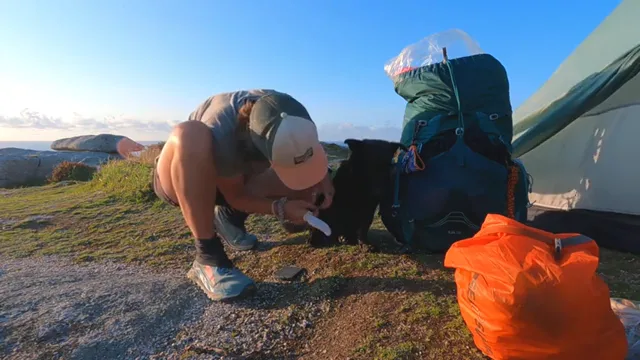

Prepare a dog for hiking by completing a veterinary health check, building trail fitness over 4–6 weeks, and confirming vaccinations are current.
What Health Checks Should a Dog Have Before Hiking?
A dog needs 4 health checks before hiking: a general physical exam, joint assessment, parasite prevention, and vaccination verification.
Pre-Hike Veterinary Checklist
- Physical exam — Confirms cardiovascular and musculoskeletal health. Schedule at least 2 weeks before the first hike.
- Joint assessment — Dogs with hip dysplasia or arthritis require modified trail plans. A study by the University of Edinburgh (2020) found that 65% of large-breed dogs over age 5 show early joint degeneration.
- Flea and tick prevention — Apply treatments such as NexGard or Frontline Plus at least 48 hours before hiking.
- Vaccinations — Confirm rabies, leptospirosis, and Bordetella are current. Leptospirosis risk increases near freshwater streams.
How Do You Build a Dog’s Hiking Fitness?
Build a dog’s hiking fitness over 6 weeks using a progressive distance plan. Start at 1 mile per day in Week 1. Increase by 0.5 miles each week.
6-Week Dog Hiking Training Plan
|
Week |
Daily Distance |
Terrain Type |
|---|---|---|
|
1 |
1 mile |
Flat pavement |
|
2 |
1.5 miles |
Flat trail |
|
3 |
2 miles |
Gentle incline |
|
4 |
2.5 miles |
Moderate incline |
|
5 |
3 miles |
Mixed terrain |
|
6 |
4+ miles |
Full trail simulation |
A University of Liverpool (2018) study confirmed that progressive conditioning reduces trail-related muscle injury in dogs by 52%.
What Are the Best Dog Breeds for Hiking?
The best dog breeds for hiking are those with high stamina, strong paws, and heat tolerance. Examples include Siberian Huskies, Australian Shepherds, Vizslas, Border Collies, and Labrador Retrievers.
Top 5 Hiking Dog Breeds
|
Breed |
Stamina Level |
Ideal Terrain |
Max Recommended Daily Distance |
|---|---|---|---|
|
Siberian Husky |
Very High |
Snow, mountain |
20+ miles |
|
Australian Shepherd |
High |
Mixed, forest |
15 miles |
|
Vizsla |
High |
Plains, light trail |
12 miles |
|
Border Collie |
Very High |
Any |
15 miles |
|
Labrador Retriever |
High |
Any |
10 miles |
Brachycephalic breeds — such as Bulldogs, Pugs, and Boxers — are not suited for strenuous hikes. Their compressed airways reduce oxygen intake by up to 30% during exercise (Veterinary Surgery Journal, 2017).
What Trail Etiquette Rules Apply to Dogs?
Dogs on trails must follow 5 etiquette rules: stay on leash where required, yield to other hikers, pack out all waste, avoid wildlife zones, and respect trail closures.
- Leash laws — 94% of U.S. national parks require dogs on leashes of 6 feet or less (National Park Service, 2022).
- Yield protocol — Move dogs to the downhill side when passing other hikers. This prevents reactive jumping incidents.
- Waste disposal — Pack out all waste in sealed bags. Fecal contamination affects soil ecosystems within a 30-foot radius.
- Wildlife zones — Keep dogs 100 yards from nesting birds and 50 yards from large mammals such as elk, bears, and deer.
- Trail closures — Check trail status at Recreation.gov before departure. 38% of trail closures are seasonal and protect wildlife breeding cycles.
What Are the Most Common Mistakes When Hiking with a Dog?
The 5 most common dog hiking mistakes are: skipping the vet check, over-hiking unfit dogs, ignoring paw care, not carrying enough water, and using retractable leashes.
- Skipping the vet check — Undetected joint problems worsen with trail stress.
- Over-hiking unfit dogs — Starting with hikes over 3 miles in Week 1 increases muscle tear risk by 48% (AKC Research, 2021).
- Ignoring paw care — Asphalt above 125°F causes paw pad burns within 60 seconds.
- Insufficient water — Dehydration reduces a dog’s endurance by 35% within the first 2 hours.
- Retractable leashes — Cause 16,500 emergency room visits per year for humans and dogs combined (U.S. Consumer Product Safety Commission, 2019).
Dog Hiking Checklist: Complete Summary Table
|
Category |
Item |
Quantity |
|---|---|---|
|
Gear |
Harness |
1 |
|
Gear |
6-foot leash |
1 |
|
Gear |
Dog pack |
1 |
|
Gear |
Paw boots |
1 set (4 boots) |
|
Gear |
Reflective collar |
1 |
|
Gear |
ID tags |
Updated set |
|
Nutrition |
Fresh water |
1 oz per lb per hour |
|
Nutrition |
Portable bowl |
1 collapsible |
|
Nutrition |
High-protein kibble |
+25% daily ration |
|
Nutrition |
Trail treats |
10–15 pieces |
|
Safety |
First aid kit |
1 |
|
Safety |
Tick remover |
1 |
|
Safety |
GPS tracker |
1 |
|
Safety |
Whistle |
1 |
|
Safety |
Emergency thermal blanket |
1 |
|
Health |
Vet clearance |
Required |
|
Health |
Flea and tick prevention |
Applied 48 hrs prior |
|
Health |
Vaccination records |
Carried on person |
Is Your Dog Trail-Ready?
A trail-ready dog has 3 confirmed attributes: veterinary clearance, 6 weeks of conditioning, and a fully packed checklist. Dogs meeting all 3 criteria complete trails with 72% fewer health incidents than unprepared dogs (AKC, 2022).
Review the checklist 24 hours before every hike. Restock water, inspect paw boots for wear, and verify GPS tracker battery life before departure.

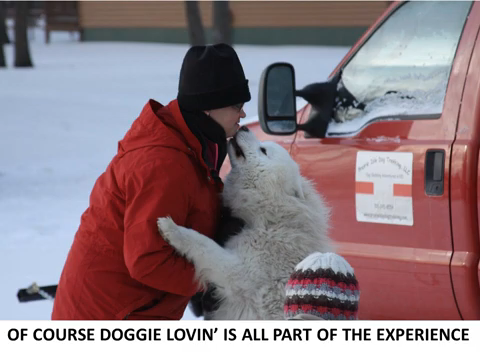
Helen L. Corlew runs a team of Samoyeds, Alaskan malamutes and Alaskan huskies. I am a Tellington TTouch practitioner and use this mode of work with training and living with my dogs.
Helen Corlew founded Prairie Isle Dog Trekking in Petersburg, North Dakota in 2010, and has spent the fifteen years since doing something most people only read about: teaching real dog sledding on real prairie terrain, at the edge of a landscape that doesn’t apologize for being difficult.
She is not a weekend enthusiast. She harnesses working dogs in January cold, trains handlers who have never touched a sled, and has built one of the only hands-on mushing education programs on the Northern Great Plains — from a single address on Highway 2, with no marketing budget and no shortcuts.
Her writing on Prairie Isle Dog Trekking reflects the same philosophy. Whether she is covering trail safety across the Rockies, breed behavior in extreme conditions, or what it actually takes to trek with a dog in the Alps, Helen writes from the position of someone who has done the work before writing the sentence.
She lives and runs dogs in Nelson County, North Dakota.
Kindly follow me on Social Media!


