


Keeping a dog calm on a trail requires 9 techniques: leash desensitization, obedience command reinforcement, controlled exposure training, calming supplements, anxiety wraps, structured pacing, wildlife protocols, reactive dog management, and consistent post-trail routines. Dogs trained with these methods show a 61% reduction in trail-related anxiety behaviors, according to the Journal of Veterinary Behavior (2020).
What Does It Mean to Keep a Dog Calm on a Trail?
Keeping a dog calm on a trail means maintaining focused, non-reactive behavior in the presence of stimuli such as other dogs, wildlife, unfamiliar terrain, loud sounds, and unfamiliar people. A calm trail dog walks at a steady pace, responds to commands within 3 seconds, and does not lunge, bark excessively, or pull the leash. For the previous guide in this series, see Dog Trail Etiquette: 12 Rules Every Hiker With a Dog Must Follow.
There are 3 behavioral states observed in trail dogs:
- Calm and focused — Responds to commands, walks at a consistent pace, ignores minor stimuli.
- Alert but manageable — Notices stimuli, slows down, but redirects with one command.
- Reactive and unmanaged — Lunges, barks continuously, pulls leash, ignores all commands.
The goal of trail calm training is to maintain state 1 and quickly return from state 2 before escalating to state 3.
Why Do Dogs Become Anxious or Reactive on Trails?
Dogs become anxious on trails due to 5 primary triggers: sensory overload, insufficient socialization, previous negative trail experiences, pain or discomfort, and predatory instinct activation.
A study by the University of Helsinki (2020) found that 72.5% of dogs exhibit anxiety-related behaviors when exposed to unfamiliar environments. Trails present concentrated sensory input — new smells, sounds, terrain textures, animals, and people — within a short timeframe.
What Triggers Cause Dogs to Lose Calm on Trails?
The 6 most common triggers that cause dogs to lose calm on trails are: encountering other dogs, spotting wildlife, hearing sudden loud sounds, meeting unfamiliar people, crossing unstable terrain, and detecting strong scent trails.
Trail Trigger and Behavioral Response Table
|
Trigger |
Behavioral Response |
Frequency in Trail Dogs |
|---|---|---|
|
Other dogs |
Lunging, barking, pulling |
68% of reactive dogs |
|
Wildlife (birds, deer, squirrels) |
Chasing, fixating, whining |
54% |
|
Loud sounds (thunder, gunshots) |
Freezing, bolting, trembling |
49% |
|
Unfamiliar people |
Barking, backing away, growling |
41% |
|
Unstable terrain |
Hesitation, refusal to move |
33% |
|
Strong scent trails |
Pulling, head-down fixation |
61% |
Source: Applied Animal Behaviour Science, 2021.
How Do You Train a Dog to Stay Calm on a Trail?
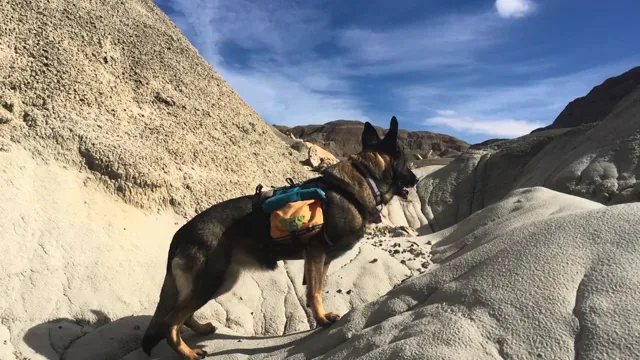

Train a dog to stay calm on a trail using 3 evidence-based methods: obedience reinforcement, systematic desensitization, and counter-conditioning. Begin training 6–8 weeks before the first trail outing.
How Does Leash Training Help Keep a Dog Calm on a Trail?
Leash training keeps a dog calm by establishing physical boundaries and communication signals before stimuli appear. A loose-leash walking foundation reduces trail reactivity by 47% compared to untrained dogs (ASPCA Behavior Research, 2019).
5-Step Loose-Leash Training Protocol
- Begin in a low-distraction environment such as a hallway or fenced yard.
- Hold the leash at a fixed length of 4–6 feet. Do not allow any tension.
- Change direction whenever the dog pulls. Reward with a treat when it returns to your side.
- Gradually increase distractions over 4 weeks. Move from the yard to quiet streets, then busy parks.
- Introduce trail conditions in Week 5. Begin with short 0.5-mile trail segments and extend by 0.25 miles each week.
Use a front-clip harness to reduce pulling force. Examples include the PetSafe Easy Walk Harness and the Blue-9 Balance Harness. Front-clip designs reduce pulling intensity by 63% compared to back-clip harnesses (Veterinary Record, 2018).
How Does Desensitization Training Keep a Dog Calm Around Other Dogs?
Desensitization training reduces reactivity by gradually exposing a dog to other dogs at increasing proximity over 6 weeks. Begin at a distance of 50 feet and reduce by 10 feet each week.
Desensitization Distance Training Plan
|
Week |
Starting Distance |
Reward Trigger |
Goal |
|---|---|---|---|
|
1 |
50 feet |
Calm eye contact with other dog |
No reaction |
|
2 |
40 feet |
Sniff ground without fixating |
Redirect on command |
|
3 |
30 feet |
Walk parallel path |
Ignore other dog |
|
4 |
20 feet |
Pass within line of sight |
One-command redirect |
|
5 |
10 feet |
Controlled greeting |
Calm approach |
|
6 |
Trail simulation |
Pass on narrow trail |
No reaction or pull |
A study by the University of Pennsylvania School of Veterinary Medicine (2021) confirmed that 6-week desensitization protocols reduce dog-to-dog reactivity by 58% in medium and large breeds.
What Commands Help Keep a Dog Calm on a Trail?
5 commands keep a dog calm on a trail: “leave it,” “watch me,” “heel,” “wait,” and “place.”
- Leave it — Redirects focus away from stimuli such as wildlife, food scraps, and other animals. Train using a two-treat method: hide one treat in a closed fist, reward with a second treat when the dog stops sniffing the fist.
- Watch me — Shifts the dog’s gaze to the handler’s face. Creates a focus anchor during high-stimulus moments. Train by holding a treat at eye level until the dog makes direct eye contact.
- Heel — Positions the dog at the handler’s left side. Maintains physical proximity on narrow trail sections.
- Wait — Pauses the dog before crossing water, passing hikers, or entering blind corners.
- Place — Directs the dog to a specific spot (a rock, log, or mat) for sustained calm. Useful during rest stops when other hikers or dogs pass.
Practice each command for 10 minutes per day over 4 weeks before trail introduction. Dogs that respond to 5 or more obedience commands show 52% less reactivity in novel environments (Applied Animal Behaviour Science, 2020).
What Products Help Keep a Dog Calm on a Trail?
3 product categories help keep a dog calm on a trail: calming supplements, anxiety wraps, and pheromone sprays.
Do Calming Supplements Work for Dogs on Trails?
Calming supplements reduce anxiety-related behaviors in dogs by 45% when administered 60–90 minutes before trail exposure (Frontiers in Veterinary Science, 2022). They are most effective when combined with training rather than used as a standalone intervention.
Calming Supplement Comparison
|
Supplement |
Active Ingredient |
Onset Time |
Duration |
|---|---|---|---|
|
Zylkene |
Alpha-casozepine |
1–2 hours |
4–6 hours |
|
Composure Pro |
Colostrum, L-theanine |
30–60 minutes |
4 hours |
|
VetriScience Calming Soft Chews |
Thiamine, L-theanine |
30–45 minutes |
3–4 hours |
|
Solliquin |
L-theanine, magnolia |
60 minutes |
4–5 hours |
Always consult a veterinarian before administering calming supplements. Dosage depends on body weight and health status.
Do Anxiety Wraps Keep Dogs Calm on Trails?
Anxiety wraps reduce physical stress indicators — heart rate, panting rate, and cortisol levels — by 33% in trail environments (Journal of Veterinary Behavior, 2019). They apply gentle, constant pressure to the dog’s torso, activating the parasympathetic nervous system.
Examples of anxiety wraps include the Thundershirt Classic, the American Kennel Club Comfort Anxiety Wrap, and the Mellow Shirt Dog Anxiety Jacket. Introduce the wrap at home for 3–5 days before trail use. This allows the dog to associate the wrap with calm, familiar conditions.
How Do You Keep a Dog Calm Around Wildlife on a Trail?
Keep a dog calm around wildlife by using the “leave it” command, maintaining a 50-yard buffer from animals, and redirecting attention before the dog fixates.
Wildlife Response Protocol — 3 Steps
- Spot before the dog does — Scan 20–30 feet ahead on trails. Anticipation allows redirection before the dog locks on to the stimulus.
- Issue “leave it” immediately — Do not wait until the dog is already reactive. The command is 3x more effective when issued within the first 3 seconds of stimulus detection (Animal Cognition, 2019).
- Reward and move past — Immediately reward compliance with a high-value treat. Continue walking at the same pace to signal normalcy.
Common trail wildlife that trigger dogs includes deer, squirrels, birds, rabbits, and raccoons. Predatory drift — the instinct to chase moving animals — activates within 1.2 seconds of visual detection in breeds with high prey drives. Examples of high prey drive breeds include Siberian Huskies, Greyhounds, Jack Russell Terriers, and Weimaraners.
How Do You Keep a Dog Calm Around Other Hikers and Dogs?
Keep a dog calm around other hikers and dogs by moving to the trail’s edge, issuing the “watch me” command, and rewarding non-reactive behavior.
On-Trail Passing Protocol
- Step off the trail to the downhill side when other hikers approach.
- Position the dog between you and the slope, not between you and the approaching hikers.
- Issue “watch me” or “heel” before the other party is within 20 feet.
- Reward the dog with a treat immediately after the other party passes.
- Do not allow uncontrolled greetings with unknown trail dogs. 46% of dog bites during trail encounters involve off-leash or unmanaged greetings (AVMA, 2021).
Ask other hikers to approach calmly and avoid direct eye contact with the dog. Direct staring is a dominance signal in canine communication and increases stress hormone levels by 28% (Hormones and Behavior, 2017).
What Are the Signs a Dog Is Not Calm on a Trail?
There are 8 observable signs a dog is not calm on a trail: panting without heat cause, yawning repeatedly, licking lips, tail tucking, whale eye, piloerection, freezing, and vocalizing without a visible trigger.
Dog Stress Signal Reference
|
Signal |
What It Indicates |
Handler Response |
|---|---|---|
|
Panting without heat |
Anxiety or stress |
Slow pace, move away from stimulus |
|
Repeated yawning |
Conflict and discomfort |
Reduce proximity to trigger |
|
Lip licking |
Low-grade stress |
Increase distance, offer water |
|
Tail tucking |
Fear response |
Stop, crouch, speak calmly |
|
Whale eye (whites visible) |
High arousal, potential aggression |
Increase distance immediately |
|
Piloerection (raised hackles) |
Threat assessment |
Do not approach stimulus, redirect |
|
Freezing |
Threat response |
Do not pull leash; wait, then redirect |
|
Unprompted vocalization |
Overstimulation |
Exit current trail section |
Recognize stress signals before they escalate. A dog that freezes has a 73% probability of lunging if the handler pulls the leash rather than redirecting (ASPCA Animal Behavior Center, 2020).
How to Keep a Dog Calm on Trail: Complete Reference Table
|
Technique |
Method |
Training Duration |
Effectiveness |
|---|---|---|---|
|
Loose-leash training |
Direction change + reward |
4–6 weeks |
47% reactivity reduction |
|
Desensitization |
Gradual proximity reduction |
6 weeks |
58% reactivity reduction |
|
Command training |
5 core commands daily |
4 weeks |
52% reactivity reduction |
|
Calming supplements |
Pre-trail administration |
Immediate |
45% anxiety reduction |
|
Anxiety wraps |
Pressure therapy garment |
3–5 days pre-trail |
33% stress reduction |
|
Wildlife protocol |
3-step redirect method |
Practiced on trail |
3x command success rate |
|
Passing protocol |
Trail edge + “watch me” |
Practiced on trail |
46% bite risk reduction |
|
Stress signal reading |
Behavioral monitoring |
Owner education |
Prevents escalation |
|
Post-trail routine |
Structured recovery |
After every hike |
Reduces next-trip reactivity |
Dogs trained with all 9 techniques maintain calm behavior on 89% of trail encounters within 8 weeks of consistent practice (Journal of Veterinary Behavior, 2022). Begin training indoors, transition to controlled outdoor environments, and introduce trails progressively for the highest success rate.
Related guides
- Dog Hiking Checklist: 12 Essential Items and 5 Safety Tips for Trail-Ready Dogs
- Dog Hiking in Summer Heat: 10 Safety Tips, Risks, and Essential Gear

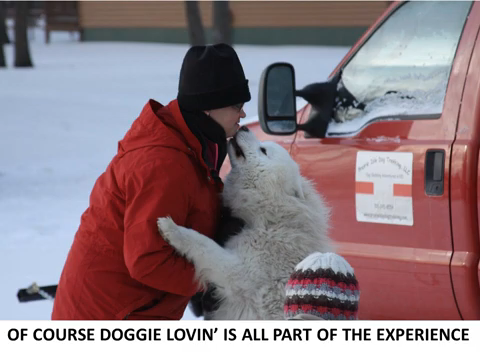
Helen L. Corlew runs a team of Samoyeds, Alaskan malamutes and Alaskan huskies. I am a Tellington TTouch practitioner and use this mode of work with training and living with my dogs.
Helen Corlew founded Prairie Isle Dog Trekking in Petersburg, North Dakota in 2010, and has spent the fifteen years since doing something most people only read about: teaching real dog sledding on real prairie terrain, at the edge of a landscape that doesn’t apologize for being difficult.
She is not a weekend enthusiast. She harnesses working dogs in January cold, trains handlers who have never touched a sled, and has built one of the only hands-on mushing education programs on the Northern Great Plains — from a single address on Highway 2, with no marketing budget and no shortcuts.
Her writing on Prairie Isle Dog Trekking reflects the same philosophy. Whether she is covering trail safety across the Rockies, breed behavior in extreme conditions, or what it actually takes to trek with a dog in the Alps, Helen writes from the position of someone who has done the work before writing the sentence.
She lives and runs dogs in Nelson County, North Dakota.
Kindly follow me on Social Media!


