


Dog trail etiquette is a set of 12 conduct standards that govern how dog owners behave on shared hiking trails to protect wildlife, other hikers, and the natural environment. A 2020 study published in Biological Conservation found that dogs without leash control disturb wildlife at distances up to 100 metres from the trail edge, causing nest abandonment in 35% of observed bird species and displacement in 19% of mammal populations studied.
Following trail etiquette protects 3 groups simultaneously: other trail users, native wildlife, and the dog itself. For the previous guide in this series, see Dog Hiking Safety Tips: 10 Proven Rules to Protect Your Dog on Every Trail.
What Is Dog Trail Etiquette?
Dog trail etiquette is a recognized code of conduct that defines how dogs and their owners behave on hiking trails, nature reserves, and shared outdoor spaces. It covers leash use, waste management, wildlife interaction, trail yielding, and campsite behavior. Examples of trail etiquette violations include allowing dogs off-leash in leash-required zones, leaving waste bags on trail, and allowing dogs to approach wildlife or other hikers without permission.
Dog trail etiquette applies across 4 trail environments:
- National and state parks — Enforce specific dog access rules and leash requirements
- Shared multi-use trails — Used by hikers, cyclists, and horse riders simultaneously
- Wildlife conservation areas — Apply strict proximity rules for animal protection
- Backcountry and wilderness routes — Require leave-no-trace compliance for all waste and impact
Why Does Dog Trail Etiquette Matter?
Dog trail etiquette matters because trail misconduct by dog owners is the leading cause of dog access restrictions in protected areas worldwide.
3 measurable consequences follow poor dog trail etiquette:
- Trail access loss — The American Hiking Society reports that off-leash incidents and waste complaints are the 2 most cited reasons park authorities restrict or ban dogs from trails
- Wildlife disruption — Research from the University of California confirms that dog scent alone triggers flight responses in deer, foxes, and ground-nesting birds within a 500-metre radius
- Conflict between trail users — A 2022 survey by the Outdoor Foundation found that 61% of hikers reported negative interactions involving unleashed or uncontrolled dogs on shared trails
What Are the 12 Dog Trail Etiquette Rules?
The 12 core dog trail etiquette rules cover leash control, waste management, wildlife interaction, trail yielding, noise, water source protection, campsite behavior, and gear identification.
Rule 1: Keep Your Dog on a Leash at All Times in Leash-Required Zones
A dog must remain on a fixed leash of 2 metres or less in all designated leash-required trail zones. Retractable leashes do not meet this standard on shared trails. They extend up to 8 metres, reducing handler control and increasing collision risk with passing hikers, cyclists, and horses.
Over 90% of managed hiking trails in the United States, United Kingdom, and Australia designate leash requirements on shared sections. Violating leash rules results in fines ranging from $50 to $500 in most jurisdictions.
When Can a Dog Be Off-Leash on a Trail?
A dog may be off-leash only in areas explicitly designated as off-leash zones by the managing land authority. Off-leash zones are marked with signage and are absent from wildlife corridors, sensitive habitat areas, and multi-use trail sections. Even in off-leash zones, a dog must respond reliably to the recall command within 3 seconds before being released from the leash.
Rule 2: Pick Up All Dog Waste Immediately
Dog waste must be collected immediately after deposit, bagged in a biodegradable waste bag, and carried out to the nearest disposal point. Dog faeces left on trails carries 4 human-transmissible pathogens:
- Toxocara canis — Roundworm larvae that survive in soil for up to 3 years
- Campylobacter jejuni — Causes severe gastrointestinal illness in humans
- Giardia lamblia — Contaminates water sources within a 10-metre radius of deposit
- Cryptosporidium parvum — Resistant to standard water filtration; causes prolonged diarrhoea
What Do You Do With Waste Bags in Remote Areas?
In areas without trail bins, carry waste bags out in a sealed, odour-proof bag. Do not leave filled bags on the trail’s edge for later collection. Research by Leave No Trace Center for Outdoor Ethics confirms that 43% of trail-side waste bags are never retrieved.
In true backcountry conditions where carrying out waste is impractical, bury dog faeces in a cat hole 15 centimetres deep and 60 metres from any water source, campsite, or trail edge. This is the minimum standard adopted by the Leave No Trace Seven Principles framework.
Rule 3: Yield to Other Trail Users Correctly

Dog owners yield to 3 categories of trail users in a defined priority order: horses first, then hikers travelling uphill, then cyclists.
Follow these 3 yielding protocols:
- Yielding to horses — Move the dog to the downhill side of the trail. Keep it close to the handler’s leg. Speak calmly to alert the horse riders of your presence. Horses have a flight response to sudden dog movement; maintain a minimum distance of 10 metres until the horse has fully passed.
- Yielding to uphill hikers — Step off the trail to the downhill side with the dog in a heel or down position. Uphill hikers maintain momentum and have right of way on narrow paths.
- Yielding to cyclists — Move to the trail edge and hold the dog securely by shortening the leash to 30 centimetres from the collar. Cyclists travel faster and have less reaction time than pedestrians.
Rule 4: Do Not Allow Your Dog to Approach Other Dogs Without Permission
Ask the approaching dog owner before allowing any dog-to-dog interaction on trail. Not all trail dogs are socialized. Reactive dogs, dogs in training, working dogs, and dogs recovering from illness or injury require space and should not be approached.
Use this 3-word standard before any trail dog greeting: “May they meet?” If the other owner declines, acknowledge calmly and continue. Do not take refusals personally; trail dogs have varied histories and management needs.
Rule 5: Do Not Allow Your Dog to Approach Other Hikers Without Permission
Assume that not every hiker wants contact with your dog. 15% of the global population reports cynophobia — a fear of dogs — according to the American Psychiatric Association. Allowing an uncontrolled dog to jump on, run toward, or circle strangers violates their right to use shared trail space without distress.
Place the dog in a heel or sit-stay position when passing other hikers. Release only when the interaction is invited explicitly.
Rule 6: Maintain a 50-Metre Buffer From Wildlife
Keep dogs at a minimum distance of 50 metres from all observed wildlife on trail. This is the international wildlife buffer standard adopted by the International Union for Conservation of Nature (IUCN).
Dogs instinctively pursue wildlife. Even a brief chase causes 3 measurable impacts:
- Elevated cortisol levels in the pursued animal lasting up to 72 hours after the encounter
- Nest or den abandonment in breeding season encounters
- Separation of juvenile animals from parent groups in herd species
Examples of wildlife requiring strict buffer distance include deer, foxes, nesting birds, wild boar, mountain goats, and bears. In areas with bear activity, keep the dog leashed and carry bear spray accessible at all times.
Rule 7: Prevent Your Dog From Entering Water Sources Used by Others
Dogs must not enter streams, lakes, or water sources within 60 metres of a downstream water collection point, campsite water supply, or designated swimming area.
Dog entry into water sources introduces 3 contaminants:
- Faecal coliforms from paw and coat contamination
- Giardia cysts shed in dog saliva and waste
- Chemical residues from flea and tick preventative treatments, including permethrin, which is acutely toxic to aquatic invertebrates
Allow dogs to drink from natural water sources at upstream points only, away from designated collection zones.
Rule 8: Control Trail Noise From Your Dog
A dog that barks continuously on trail disrupts wildlife, other hikers, and the natural soundscape that makes trail environments valuable. The National Park Service identifies excessive pet noise as a Category 2 disturbance under its wildlife protection guidelines.
Train the “quiet” command before the first trail outing. A dog that vocalizes for more than 30 seconds continuously in response to passing hikers, wildlife, or environmental sounds requires additional desensitization training before returning to shared trails.
Rule 9: Do Not Let Your Dog Dig, Trample, or Disturb Vegetation
Dogs that dig in trail-side vegetation destroy root systems, destabilize path edges, and damage habitat used by ground-nesting species. Examples of protected ground vegetation include heather, bracken, native wildflowers, and revegetation planting in restored trail sections.
Redirect digging behavior immediately with the “leave it” command. If the behavior persists, shorten the leash and move the dog away from the area.
Rule 10: Carry Identification and Ensure Your Dog Is Microchipped
Every trail dog must carry a visible ID tag with the owner’s name and contact number, and must be microchipped with updated registration details. In the United Kingdom, microchipping is a legal requirement for all dogs over 8 weeks of age under the Microchipping of Dogs (England) Regulations 2015. In the United States, microchipping is required in 44 municipalities and recommended universally by the AVMA.
A GPS tracker attached to the harness provides real-time location data in the event of separation on trail. Battery life for trail-grade GPS trackers ranges from 24 to 72 hours depending on model.
Rule 11: Follow Campsite Dog Etiquette on Overnight Trails
Dogs at trail campsites must remain leashed at all times, sleep within the owner’s tent or designated area, and produce no waste within 60 metres of the campsite perimeter.
Follow 4 campsite-specific dog rules:
- Never tie a dog to a tree or fixed object and leave it unattended overnight
- Store dog food in a bear canister or bear box alongside human food in areas with large predator activity
- Keep dogs away from communal cooking and eating areas to prevent food-seeking behavior toward other campers
- Conduct a full tick check on the dog at the end of each trail day before entering the tent
Rule 12: Know and Follow the Specific Rules of Every Trail You Visit
Trail regulations vary by land authority, season, and designated zone. A trail that permits dogs in summer may restrict access during spring nesting season. A trail that allows dogs on the lower section may prohibit them above the treeline.
Check 3 sources before every trail visit:
- The official land authority or park service website for current regulations
- Posted signage at the trailhead — regulations change seasonally
- AllTrails or a local hiking authority database for user-reported access updates
Ignorance of trail-specific rules is not accepted as a defense in trail violations. Fines for dog-related trail rule breaches range from $75 to $1,000 depending on jurisdiction and severity.
What Is the Leave No Trace Principle for Dogs on Trails?
The Leave No Trace principle for dogs requires that a dog’s presence on trail produces zero lasting impact on the environment, wildlife, or other trail users.
Leave No Trace for dogs covers 5 specific practices:
- Pack out all waste — including waste bags
- Maintain wildlife buffer distances at all times
- Prevent vegetation disturbance
- Avoid contaminating water sources
- Minimize noise impact on wildlife and other trail users
The Leave No Trace Center for Outdoor Ethics estimates that full compliance with these 5 practices reduces measurable trail impact from dogs by 78% compared to non-compliant dog trail use.
Summary
Dog trail etiquette covers 12 binding conduct standards that protect wildlife, other trail users, and the natural environment from the measurable impacts of unmanaged dog behavior on shared trails. The 3 most critical rules are leash control in designated zones, immediate waste collection and carry-out, and maintaining a 50-metre buffer from all wildlife. Consistent application of all 12 rules is the primary factor determining whether trails remain open and accessible to dogs long-term.
Related guides
- Dog Hiking Checklist: 12 Essential Items and 5 Safety Tips for Trail-Ready Dogs

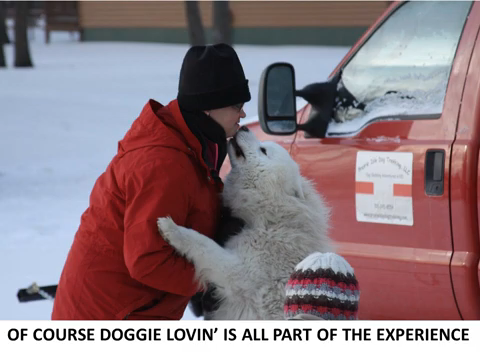
Helen L. Corlew runs a team of Samoyeds, Alaskan malamutes and Alaskan huskies. I am a Tellington TTouch practitioner and use this mode of work with training and living with my dogs.
Helen Corlew founded Prairie Isle Dog Trekking in Petersburg, North Dakota in 2010, and has spent the fifteen years since doing something most people only read about: teaching real dog sledding on real prairie terrain, at the edge of a landscape that doesn’t apologize for being difficult.
She is not a weekend enthusiast. She harnesses working dogs in January cold, trains handlers who have never touched a sled, and has built one of the only hands-on mushing education programs on the Northern Great Plains — from a single address on Highway 2, with no marketing budget and no shortcuts.
Her writing on Prairie Isle Dog Trekking reflects the same philosophy. Whether she is covering trail safety across the Rockies, breed behavior in extreme conditions, or what it actually takes to trek with a dog in the Alps, Helen writes from the position of someone who has done the work before writing the sentence.
She lives and runs dogs in Nelson County, North Dakota.
Kindly follow me on Social Media!


