

Dog trekking in Norway combines long-distance trail hiking with one of Europe’s most varied mountain and fjord landscapes. Norway’s national trail network, Turistforeningen (DNT), covers over 20,000 kilometres of marked routes open to dogs. Preparation across gear, trail selection, and seasonal safety determines the safety and success of a dog trek in Norway.
What Is Dog Trekking in Norway?
Dog trekking in Norway is multi-day or single-day trail hiking with a dog across Norwegian mountain terrain, fjord paths, and forested lowland routes. Norway’s allemannsretten (right to roam) law grants public access to uncultivated land, including dogs, from 20 August to 14 April each year. Between 15 April and 19 August, dogs must be kept on a leash in all Norwegian outfields (utmark) to protect wildlife during the breeding and nesting season. For the previous guide in this series, see Dog Hiking Scotland: 8 Best Trails, Access Laws, and Safety Rules.
Dog breeds commonly used for Norwegian trekking include Norwegian Elkhounds, Siberian Huskies, Alaskan Malamutes, Border Collies, and Labrador Retrievers.
Is Norway Dog-Friendly for Trekking?
Norway is one of Europe’s most dog-friendly trekking destinations. The Norwegian Trekking Association (DNT) permits dogs on the majority of its 550 mountain huts and trail sections. A 2022 report by the Norwegian Environment Agency confirmed that 68% of Norway’s national parks allow dogs on designated trails, provided leash rules are observed. Dogs are prohibited in core wildlife protection zones, such as parts of Hardangervidda during reindeer calving season.
What Are the Top 5 Dog Trekking Routes in Norway?
There are 5 premier dog trekking routes in Norway. Each offers distinct terrain, elevation, and seasonal access.
Which Norwegian Trail Is Best for Dog Trekking Beginners?
|
Trail |
Region |
Distance |
Difficulty |
Dog-Friendly Season |
|---|---|---|---|---|
|
Jotunheimen Traversal |
Central Norway |
80–120 km |
Moderate |
July–September |
|
Trollheimen Circuit |
Trøndelag |
60–90 km |
Moderate |
June–October |
|
Hardangervidda Plateau |
Western Norway |
50–200 km |
Easy to moderate |
August–September |
|
Rondane National Park |
Eastern Norway |
30–80 km |
Easy to moderate |
July–October |
|
Preikestolen Trail |
Rogaland |
8 km (day hike) |
Moderate |
May–October |
The Rondane National Park trail network is the best dog trekking option for beginners. Rondane was Norway’s first national park, established in 1962. It offers well-marked paths, gentle elevation gains of 200 to 500 metres, and DNT huts with dog accommodation across a 963 km² protected area.
What Are the 8 Essential Rules for Dog Trekking in Norway?

There are 8 essential rules for dog trekking in Norway. These cover Norwegian law, trail etiquette, gear, and seasonal restrictions.
1. Does Norway Require Dogs to Be Leashed on Trekking Trails?
Dogs must be leashed on all Norwegian trails from 1 April to 20 August. This is a statutory requirement under the Norwegian Nature Diversity Act (Naturmangfoldloven), Section 6. Outside this period, dogs may be off-leash in uncultivated land if they remain under effective voice control. Fines for unleashed dogs in restricted zones range from NOK 500 to NOK 5,000 (approximately €45 to €450).
2. What Vaccinations Does a Dog Need for Trekking in Norway?
A dog trekking in Norway needs 3 core vaccinations: rabies, distemper, and leptospirosis. Dogs entering Norway from outside Scandinavia must comply with EU pet passport regulations, including a rabies titre test completed at least 30 days before entry. The Norwegian Food Safety Authority (Mattilsynet) requires all incoming dogs to carry a valid EU health certificate or equivalent documentation.
3. What Gear Does a Dog Need for Norwegian Mountain Trekking?
A dog needs 7 essential gear items for Norwegian mountain trekking:
- Insulated dog jacket — mandatory for alpine sections above 1,200 metres in September and October
- Dog hiking boots — protects paws on sharp Norwegian scree and granite surfaces
- Fitted dog harness — distributes pack weight and leash pressure evenly
- Collapsible water bowl — Norway’s mountain streams are potable, but bowls allow controlled hydration
- Dog-specific first aid kit — includes wound wrap, antiseptic solution, tick remover, and a rectal thermometer
- Reflective vest — increases visibility during low-light Arctic summer nights and autumn fog
- Dog sleeping pad — required for overnight DNT hut stays and open bivouac camping
4. How Much Water Does a Dog Need on a Norwegian Trek?
A dog needs 1 ounce of water per pound of body weight during each trekking day. Norway’s mountain streams in Jotunheimen and Rondane are classified as potable by the Norwegian Institute of Public Health (Folkehelseinstituttet). Offer water every 20 minutes on ascent sections. Stagnant lowland water near farms carries leptospirosis and giardia risk.
5. What Should a Dog Eat During a Multi-Day Norwegian Trek?
Feed a dog a high-protein, high-fat diet during multi-day Norwegian treks. Cold temperatures increase caloric demand by 25 to 50% in dogs trekking above 800 metres. Feed 2 hours before the first daily ascent. During the trek, carry calorie-dense trail snacks. Examples include freeze-dried meat, salmon jerky, and high-fat training biscuits.
6. What Wildlife Hazards Affect Dogs on Norwegian Trails?
There are 5 wildlife hazards that affect dogs on Norwegian trekking trails:
- Reindeer herds: Semi-domestic reindeer in Hardangervidda and Finnmark are protected. Dogs chasing reindeer are subject to immediate leash enforcement and owner fines.
- Moose (Elg): Norwegian moose weigh 300 to 600 kg. A moose will charge dogs that approach within 30 metres during calving season (May–June).
- Ticks (Ixodes ricinus): Common in Norwegian coastal forests below 600 metres. Ticks carry Borrelia (Lyme disease) and tick-borne encephalitis (TBE). Apply tick prevention monthly.
- Wolverines (Jerv): Present in Finnmark and northern mountain zones. Wolverines attack dogs in remote terrain, particularly in winter.
- Eagles: Golden and white-tailed eagles are protected species. Small dogs (under 10 kg) face aerial predation risk in open Norwegian mountain terrain.
7. How Do You Identify Cold Stress in a Dog on a Norwegian Mountain Trek?
Cold stress in a dog presents with 4 visible signs: uncontrolled shivering, muscle stiffness, slowed pace, and reluctance to move. The Norwegian Veterinary Association states that dogs with single-layer coats are at risk of hypothermia when ambient temperatures fall below 5°C (41°F) combined with wind and rain. Place an insulated jacket on the dog immediately and seek shelter in the nearest DNT hut.
8. Are Dogs Permitted in DNT Mountain Huts in Norway?
Dogs are permitted in the majority of DNT mountain huts with advance booking. DNT operates 550 huts across Norway. Dogs are required to sleep on their own mat and are not permitted on sleeping platforms or in dining areas. Hut wardens charge a separate dog fee, typically NOK 50 to NOK 150 per night (approximately €5 to €14). Self-service huts (selvbetjeningshytter) accept dogs without advance booking during the open season.
What Are the 4 Best Seasons for Dog Trekking in Norway?
Dog trekking in Norway is accessible across 4 seasons, each with distinct conditions.
|
Season |
Trail Conditions |
Key Risk |
Recommended Region |
|---|---|---|---|
|
Summer (June–August) |
Accessible, green, long daylight |
Leash law in effect until 20 August |
Jotunheimen, Trollheimen |
|
Autumn (September–October) |
Stable weather, low crowds |
Early snowfall above 1,000 metres |
Rondane, Hardangervidda |
|
Winter (November–March) |
Snow trekking, ski trails |
Hypothermia, low visibility |
Trysil, Femundsmarka |
|
Spring (April–May) |
Snowmelt, rapid river crossings |
Leash law active from 1 April |
Coastal lowland trails |
Autumn is the optimal season for dog trekking in Norway. September and October offer stable weather, trail accessibility, and the end of the summer leash restriction period. Wildlife activity decreases, reducing reindeer and moose encounter risk after the calving season.
How Do You Prepare a Dog for Norwegian Mountain Trekking?
Preparing a dog for Norwegian mountain trekking follows a 4-week conditioning plan:
- Week 1: Complete 3 to 5 km daily walks on varied terrain. Reinforce heel, stay, and recall commands.
- Week 2: Increase to 8 to 10 km. Introduce inclines and rocky surfaces. Fit the harness and pack with light loads.
- Week 3: Complete a 12 to 15 km hike with 300 to 500 metres of elevation gain. Monitor paw condition throughout.
- Week 4: Cover 15 to 20 km with a loaded pack at 15% of the dog’s body weight, including a rest stop every 2 hours.
Dog Trekking Norway: Key Takeaways
Dog trekking in Norway requires preparation across 4 areas: Norwegian leash law compliance, seasonal trail selection, cold-weather gear, and wildlife awareness. Norway’s 20,000 km DNT trail network offers options for beginner and experienced trekkers. The 8 essential rules in this guide protect a dog’s joint health, prevent cold stress, and ensure legal compliance across all Norwegian trekking regions.
Related guides
- Dog Friendly National Parks: 7 Best Parks, NPS Rules, and Trail Guide for the USA

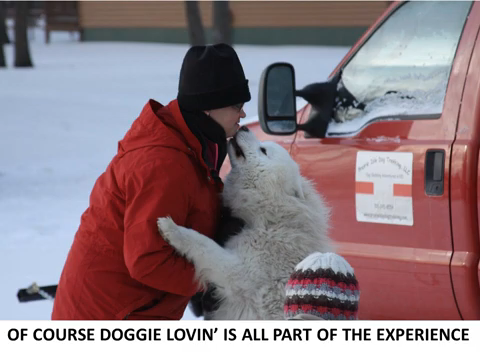
Helen L. Corlew runs a team of Samoyeds, Alaskan malamutes and Alaskan huskies. I am a Tellington TTouch practitioner and use this mode of work with training and living with my dogs.
Helen Corlew founded Prairie Isle Dog Trekking in Petersburg, North Dakota in 2010, and has spent the fifteen years since doing something most people only read about: teaching real dog sledding on real prairie terrain, at the edge of a landscape that doesn’t apologize for being difficult.
She is not a weekend enthusiast. She harnesses working dogs in January cold, trains handlers who have never touched a sled, and has built one of the only hands-on mushing education programs on the Northern Great Plains — from a single address on Highway 2, with no marketing budget and no shortcuts.
Her writing on Prairie Isle Dog Trekking reflects the same philosophy. Whether she is covering trail safety across the Rockies, breed behavior in extreme conditions, or what it actually takes to trek with a dog in the Alps, Helen writes from the position of someone who has done the work before writing the sentence.
She lives and runs dogs in Nelson County, North Dakota.
Kindly follow me on Social Media!


