

Lightweight dog hiking gear is trail equipment designed to protect and support a dog during hiking activity while keeping total pack weight within 25% of the dog’s body weight. A 2019 study in Applied Animal Behaviour Science confirms that dogs carrying loads above 30% of body weight show measurable gait alteration and increased lumbar stress within 20 minutes of sustained walking.
Selecting lightweight gear requires evaluating 5 factors: material weight, trail function, durability, fit, and weather suitability. For the previous guide in this series, see Dog Hiking Vest vs Harness: 6 Key Differences and Which One Your Dog Needs.
What Is Lightweight Dog Hiking Gear?
Lightweight dog hiking gear is a category of trail equipment engineered to minimise carry weight without reducing protective function. It differs from standard dog gear in material selection, construction method, and weight-to-durability ratio. Examples include ultralight nylon harnesses, collapsible silicone bowls, and foam-core sleeping pads that weigh under 200g each.
Lightweight dog hiking gear covers 6 equipment categories:
- Carry systems — Harnesses and backpacks
- Hydration equipment — Bowls and water storage
- Shelter and sleep systems — Sleeping pads and dog tent inserts
- Protective gear — Boots and coats
- Navigation and safety — GPS trackers and LED collar lights
- First aid — Compact trail medical kits
What Is the Weight Limit for Dog Hiking Gear?
A dog’s total gear load must not exceed 25% of its body weight across all items carried. This includes the backpack, contents, harness, boots, and any attached devices.
Here are safe load limits by dog weight:
| Dog Weight | Maximum Gear Load | Recommended Starting Load |
|---|---|---|
| 10 kg | 2.5 kg | 0.5 kg |
| 15 kg | 3.75 kg | 0.75 kg |
| 20 kg | 5.0 kg | 1.0 kg |
| 25 kg | 6.25 kg | 1.25 kg |
| 30 kg | 7.5 kg | 1.5 kg |
| 40 kg | 10.0 kg | 2.0 kg |
Build load tolerance over 4 weeks. Begin at 10% of body weight and increase by 5% each week until reaching the 25% maximum. Dogs under 18 months, over 8 years, or with joint conditions should carry no load beyond their own gear.
What Are the Essential Lightweight Dog Hiking Gear Items?
A complete lightweight dog hiking kit contains 8 essential items: a harness, backpack, collapsible bowl, water storage, sleeping pad, first aid kit, GPS tracker, and LED safety light.
Here is the full lightweight gear list with target weights:
| Gear Item | Target Weight | Material |
|---|---|---|
| Lightweight harness | 80–150g | Ripstop nylon or air mesh |
| Dog backpack | 200–400g | 210D ripstop nylon |
| Collapsible bowl | 30–60g | BPA-free silicone |
| Soft water bladder | 50–80g (empty) | TPU-coated nylon |
| Sleeping pad | 150–250g | Closed-cell EVA foam |
| Compact first aid kit | 100–180g | Nylon zipper pouch |
| GPS tracker | 35–95g | ABS housing |
| LED collar light | 10–20g | Polycarbonate housing |
Total kit weight for a 20 kg dog carrying its own gear: 655g to 1,235g. This leaves 3.7 to 4.3 kg of remaining capacity within the 25% load limit for supplies including food, water, and waste bags.
What Is the Best Lightweight Dog Hiking Harness?
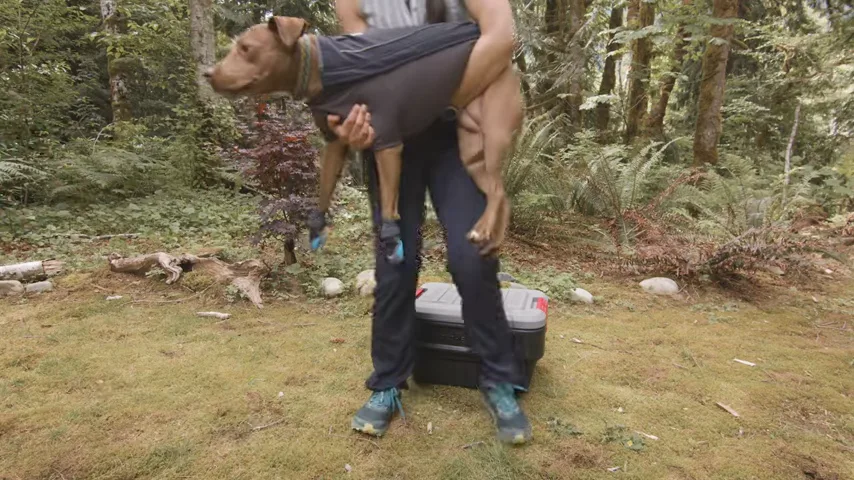
The best lightweight dog hiking harness weighs under 150g, uses a back-clip attachment, and distributes load across the chest and sternum without restricting shoulder movement.
A back-clip harness reduces leash pressure concentration at the throat and allows full scapular rotation on uneven terrain. Front-clip harnesses restrict forward shoulder movement and increase energy expenditure by 8 to 12% on incline terrain, according to biomechanical research published in Veterinary and Comparative Orthopaedics and Traumatology.
Look for 4 construction features in a lightweight hiking harness:
- Air mesh padding — Reduces weight by 30% compared to neoprene padding while maintaining ventilation
- Aluminium hardware — Weighs 60% less than steel at equivalent strength ratings
- Dual adjustment points — Neck and girth straps allow precise fit across changing coat thickness between seasons
- Integrated handle — A top-mounted grab handle assists the dog over obstacles without requiring leash use
What Is the Best Lightweight Dog Backpack for Hiking?
The best lightweight dog backpack for hiking weighs between 200g and 400g, uses 210D ripstop nylon construction, and features balanced saddlebag-style panniers that distribute load evenly across both sides.
Uneven load distribution causes lateral spinal stress. Each pannier must carry equal weight within 50g of the other. Weigh each side separately before departure using a kitchen scale.
A lightweight dog backpack requires 5 functional features:
- 210D ripstop nylon shell — Resists tearing from brush and rock contact at a fraction of canvas weight
- Waterproof base panel — Protects contents during stream crossings and rain without adding waterproof coating weight across the full pack
- Compression straps — Cinch loaded panniers to prevent load shift on descents and technical terrain
- Reflective piping — Adds trail visibility in low-light conditions without additional weight
- Quick-release buckles — Allow rapid pack removal in emergencies without fumbling with standard fasteners
How Do You Pack a Lightweight Dog Backpack?
Pack a dog backpack by placing dense items low and centered, with lighter items toward the top and outer pockets.
Follow this packing sequence:
- Place water storage or food in the bottom of each pannier equally
- Add waste bags, a first aid kit, and compact gear in the middle section
- Store treats and the dog’s bowl in the outer accessible pockets
- Confirm equal weight distribution between both panniers before fitting the pack
What Is the Best Lightweight Hydration System for Dog Hiking?
The best lightweight dog hiking hydration system combines a collapsible silicone bowl weighing under 60g with a soft TPU water bladder weighing under 80g when empty.
Rigid plastic bowls weigh 150 to 300g and occupy fixed volume in a pack. Collapsible silicone bowls compress to under 15 mm thickness and 30g to 60g weight while holding 500 ml to 750 ml of water per fill. A 25 kg dog on a 4-hour hike requires 6 litres of water. Distribute water across the dog’s pack and the owner’s pack to share carry weight.
Dogs require 60 ml of water per kilogram of body weight per hour of activity. Offer water every 15 to 20 minutes during active trail sections regardless of whether the dog signals thirst.
What Is the Best Lightweight Dog Sleeping Pad for Hiking?
The best lightweight dog sleeping pad for trail camping is a closed-cell EVA foam pad weighing 150 to 250g that insulates the dog from ground cold during overnight trail stays.
Ground temperature on alpine and forested campsites drops 5 to 10°C below ambient air temperature overnight. Dogs lose 40% of body heat through direct ground contact without insulation beneath them. Closed-cell foam pads provide R-values of 1.5 to 2.5, sufficient for above-freezing trail conditions.
Inflatable pads are not recommended for dogs due to puncture risk from paw nails. Closed-cell foam tolerates claw contact without performance loss and requires no maintenance between uses.
What Lightweight Protective Gear Does a Dog Need for Hiking?
A hiking dog needs 2 items of protective gear matched to trail conditions: rubber-soled boots for terrain protection and a lightweight insulated coat for temperatures below 5°C.
What Are the Lightest Dog Hiking Boots?
The lightest functional dog hiking boots weigh between 40g and 80g per boot and use a natural rubber sole with a ballistic nylon upper. A set of 4 boots weighs 160g to 320g total. Boots under 40g per unit typically use insufficient sole thickness — below 4 mm — that fails to protect against trail heat and sharp rock over distances above 5 km.
What Is the Lightest Dog Hiking Coat?
The lightest functional dog hiking coat weighs between 120g and 220g and uses a windproof ripstop nylon shell with 60g synthetic insulation fill. This construction provides warmth at temperatures down to −5°C while maintaining a packable form factor that compresses to the size of a 500 ml water bottle.
Down insulation coats weigh 30% less than synthetic equivalents but lose 80% of insulating capacity when wet. Synthetic insulation retains 85% of its thermal performance when saturated, making it the correct choice for trail conditions involving rain, stream crossings, and heavy dew.
What Should a Lightweight Dog Hiking First Aid Kit Contain?
A lightweight trail first aid kit for dogs contains 8 items and weighs between 100g and 180g.
The 8 items are:
- Antiseptic wound spray — 30 ml travel size
- Sterile gauze pads — 6 pieces, individually wrapped
- Self-adhesive bandage wrap — 1 roll, 5 cm width
- Blunt-tipped scissors — folding travel size
- Tick removal tool — fine-tipped card format, 3g
- Disposable gloves — 2 pairs, compressed
- Saline wound wash — 20 ml single-use pods, 3 units
- Emergency contact card — trail vet numbers and nearest clinic address
Remove bulky packaging from all items before packing. Repack into a 100g ultralight nylon zipper pouch. This reduces standard first aid kit weight by 35 to 45% without removing any functional item.
How Do You Reduce Dog Hiking Gear Weight Without Reducing Safety?
Reduce dog hiking gear weight across 4 strategies: material substitution, dual-purpose item selection, portion-controlled supply packing, and shared carry between owner and dog packs.
The 4 strategies applied together reduce total kit weight by 40 to 55% compared to standard non-lightweight gear selections:
- Material substitution — Replace neoprene with air mesh, steel hardware with aluminium, and rigid containers with collapsible silicone equivalents
- Dual-purpose items — A harness with an integrated handle eliminates a separate lifting strap. A sleeping pad with a reflective underside eliminates a separate emergency blanket.
- Portion-controlled supply packing — Pre-measure food and treats into single-day portions. Remove all manufacturer packaging before the hike.
- Shared carry — Transfer half the dog’s water supply to the owner’s pack on hikes where the dog carries a loaded backpack. Water weighs 1 kg per litre; splitting carry reduces per-pack load significantly on full-day hikes.
Summary
Lightweight dog hiking gear reduces total carry load while maintaining full trail protection across 8 equipment categories. The 25% body weight load limit, air mesh and ripstop nylon material selections, collapsible hydration systems, and 4 weight reduction strategies produce a functional trail kit that minimises physical strain on the dog across all terrain types and trail durations.
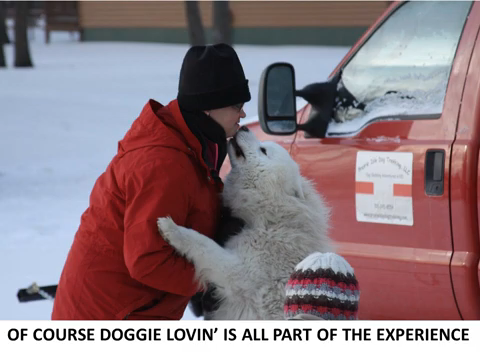
Helen L. Corlew runs a team of Samoyeds, Alaskan malamutes and Alaskan huskies. I am a Tellington TTouch practitioner and use this mode of work with training and living with my dogs.
Helen Corlew founded Prairie Isle Dog Trekking in Petersburg, North Dakota in 2010, and has spent the fifteen years since doing something most people only read about: teaching real dog sledding on real prairie terrain, at the edge of a landscape that doesn’t apologize for being difficult.
She is not a weekend enthusiast. She harnesses working dogs in January cold, trains handlers who have never touched a sled, and has built one of the only hands-on mushing education programs on the Northern Great Plains — from a single address on Highway 2, with no marketing budget and no shortcuts.
Her writing on Prairie Isle Dog Trekking reflects the same philosophy. Whether she is covering trail safety across the Rockies, breed behavior in extreme conditions, or what it actually takes to trek with a dog in the Alps, Helen writes from the position of someone who has done the work before writing the sentence.
She lives and runs dogs in Nelson County, North Dakota.
Kindly follow me on Social Media!
