


Why Won’t My Dog Let Me Walk It? 6 Causes and How to Fix Each One
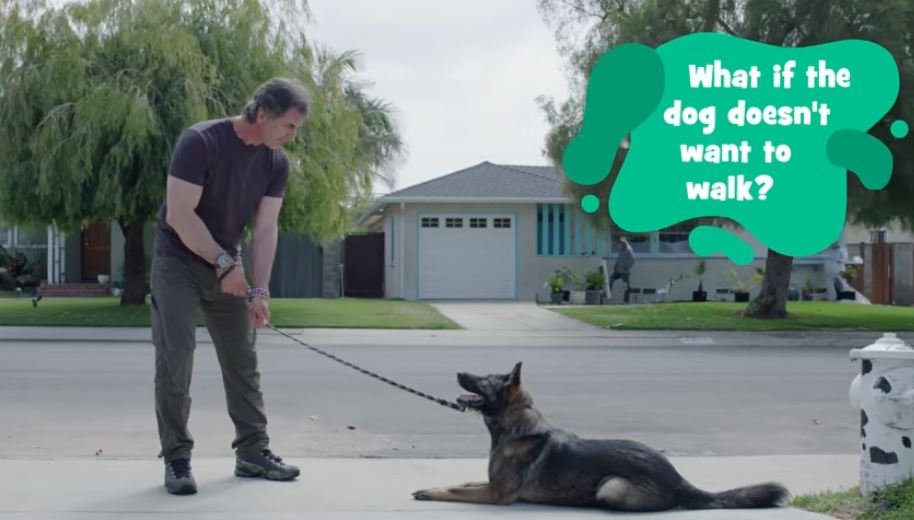
A dog refuses to walk because of pain, fear, leash discomfort, lack of training, weather, or overstimulation. Sudden refusal in a dog that previously walked without issue is the most important case. It is the one most likely to signal a medical problem.
What Are the Most Common Reasons a Dog Refuses to Walk?
6 reasons explain the majority of cases where a dog refuses to walk on a leash. The cause determines the correct response. Treating a fear-based refusal like a training problem makes the behaviour worse, not better.
| Cause | Most Common In | Key Sign |
|---|---|---|
| Pain or injury | Adult and senior dogs, sudden onset | Limping, shifting weight, reluctance to stand |
| Fear or bad association | Rescue dogs, puppies, anxious breeds | Tucked tail, lowered ears, scanning surroundings |
| Leash or harness discomfort | Dogs new to equipment | Freezing only when leash is clipped |
| No leash training | Puppies, rescue dogs | Never walked on leash before |
| Weather (heat or rain) | Flat-faced breeds, short-coated dogs | Lying down mid-walk, panting |
| Overstimulation | High-anxiety breeds | Freezing at busy roads, around other dogs |
Is My Dog in Pain?
Pain is the first cause to rule out, particularly when the refusal is sudden and the dog previously walked without issue. Conditions that cause walking refusal include arthritis, hip dysplasia, paw pad injuries, cracked nails, and soft tissue injuries.
Check 4 things before assuming the cause is behavioural:
- Inspect each paw for cuts, cracked pads, thorns, or torn nails.
- Watch how the dog moves when not on leash. Stiffness or limping indoors confirms a physical issue.
- Check whether the dog hesitates to stand up from rest. This is a key sign of joint pain.
- Note the dog’s age. Dogs over 7 years are at higher risk of arthritis, which worsens on hard pavement.
Is My Dog Afraid of the Leash or the Outdoors?
Fear is the second most common cause of leash refusal and is more prevalent in rescue dogs, puppies, and high-anxiety breeds such as Greyhounds, Border Collies, and Chihuahuas.
<cite index=”13-1″>A leash is a form of restraint. When a dog is leashed, it cannot go where it wants or escape from anything that frightens it. That feeling is intimidating for some dogs, and rather than seeing the leash as the start of an exciting walk, they see it as something frightening.</cite>
3 specific fear triggers produce leash refusal:
- A bad experience on a previous walk. A dog that was frightened by a car, another dog, or a loud noise associates that route or that time of day with the threat.
- Fear of the leash or collar itself. This is common in rescue dogs with no positive leash history.
- Fear of outdoor environments. Puppies not properly socialised between 3 and 14 weeks of age are statistically more likely to be fearful of traffic, crowds, and unfamiliar surfaces.
Is the Leash or Harness Causing Discomfort?

A poorly fitted collar, harness, or leash causes physical discomfort that makes a dog associate walking with pain. The dog is not being stubborn. It is avoiding something that hurts.
<cite index=”15-1″>A collar that is too tight causes chafing and irritation. This is a direct physical reason why a dog refuses to walk.</cite>
Check 3 things about the current equipment:
- Collar fit. Two fingers should fit comfortably between the collar and the dog’s neck. Tighter causes chafing. Looser allows escape.
- Harness pressure points. Some front-clip harnesses apply pressure to the chest or shoulders that restricts movement. If the dog walks more willingly with the harness removed, the equipment is the problem.
- Leash weight. Heavy chain leashes are uncomfortable for small breeds. A lightweight nylon or rope lead reduces resistance.
Does My Dog Have No Leash Training?
A dog with no leash training history freezes because the equipment and the experience are unfamiliar, not because it is disobedient. This is the most common cause in puppies and in rescue dogs with a history of neglect.
<cite index=”12-1″>Many owners assume that clipping a leash onto a dog is natural to the dog. It is not. Leash walking requires gradual training that introduces each element separately before combining them into a full walk.</cite>
A 4-stage introduction for untrained dogs:
- Introduce the collar or harness indoors. Leave it near the dog’s bed for 24 to 48 hours before fitting it.
- Fit the equipment indoors with high-value treats as a reward. Freeze-dried liver treats produce the strongest positive association.
- Attach the leash indoors and allow the dog to lead. Do not direct movement yet.
- Begin outdoor walks within 20 to 30 metres of home. <cite index=”13-1″>Carrying the puppy 20 to 30 feet from home and letting it walk back on its own allows it to experience the outdoors while moving toward the familiar, not away from it.</cite>
<cite index=”12-1″>Reward the dog when it is moving, not when it is stopping. Many owners return to the dog and reward the stationary behaviour, which reinforces the refusal.</cite>
Is the Weather Stopping My Dog from Walking?
Hot pavement and cold rain are 2 direct physical reasons a dog refuses to walk. Neither requires training or veterinary input. Both require a simple environmental adjustment.
Pavement temperature is the most overlooked cause of refusal in summer. <cite index=”18-1″>A dog that normally goes straight to the door may stop immediately if every step causes pain from hot or rough pavement.</cite>
The 5-second rule for pavement heat: place the back of your hand flat on the pavement. If you cannot hold it there for 5 seconds, the surface is above 50°C and will burn a dog’s paw pads within 60 seconds of contact.
Is My Dog Overstimulated or Overwhelmed?
Overstimulation causes a dog to freeze or shut down when the environment exceeds its stress threshold. This is different from fear of a specific trigger. It is a general overload response to too much sensory input at once.
Environments that trigger overstimulation include busy roads with heavy traffic, areas with multiple unfamiliar dogs, markets or crowded pedestrian areas, and construction sites with irregular loud noise.
3 adjustments reduce overstimulation immediately:
- Change the route to a quieter street or a park with low footfall.
- Walk at off-peak times. Before 8am and after 7pm produce significantly lower traffic and pedestrian volumes in most urban areas.
- Reduce walk distance. A 10-minute low-stimulation walk produces more progress than a 30-minute high-stimulation walk that ends in shutdown.
When Should I See a Vet About My Dog Refusing to Walk?
See a vet within 48 hours if the refusal is sudden, if the dog shows signs of limping or stiffness, or if the dog also refuses to stand or move indoors. These 3 signs together indicate pain, not behaviour.
See a vet if:
- Refusal appeared with no change to the route, the equipment, or the environment
- The dog is 7 years or older
- The dog whimpers, flinches, or vocalises when touched on the legs, back, or hips
- The dog has been less active indoors in the same period
Behavioural causes such as fear and overstimulation do not require a vet. They require patience, gradual desensitisation, and, in persistent cases, a certified dog behaviourist.

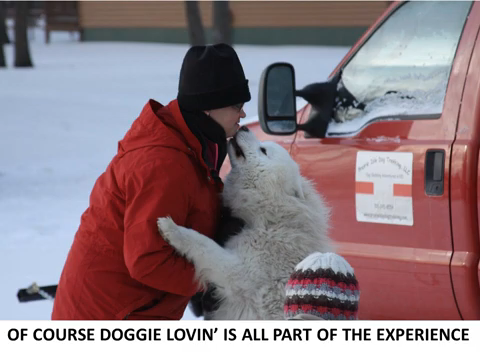
Helen L. Corlew runs a team of Samoyeds, Alaskan malamutes and Alaskan huskies. I am a Tellington TTouch practitioner and use this mode of work with training and living with my dogs.
Helen Corlew founded Prairie Isle Dog Trekking in Petersburg, North Dakota in 2010, and has spent the fifteen years since doing something most people only read about: teaching real dog sledding on real prairie terrain, at the edge of a landscape that doesn’t apologize for being difficult.
She is not a weekend enthusiast. She harnesses working dogs in January cold, trains handlers who have never touched a sled, and has built one of the only hands-on mushing education programs on the Northern Great Plains — from a single address on Highway 2, with no marketing budget and no shortcuts.
Her writing on Prairie Isle Dog Trekking reflects the same philosophy. Whether she is covering trail safety across the Rockies, breed behavior in extreme conditions, or what it actually takes to trek with a dog in the Alps, Helen writes from the position of someone who has done the work before writing the sentence.
She lives and runs dogs in Nelson County, North Dakota.
Kindly follow me on Social Media!


