

Dog trekking holidays are multi-day outdoor trips where dogs accompany owners on trail networks, mountain routes, and wilderness paths. The global dog-friendly travel market grew by 34% between 2019 and 2023, with trekking holidays as the fastest-growing segment at 19% year-on-year (Statista, 2023).
What Are Dog Trekking Holidays?
A dog trekking holiday is a structured travel experience combining overnight accommodation, trail access, and dog-friendly logistics across 2 or more consecutive days. It differs from a day hike in 3 ways: route planning spans multiple days, accommodation must accept dogs, and the dog requires gear for overnight conditions. For the previous guide in this series, see Camping with Dogs: 8 Essential Gear Items, Safety Rules, and Campsite Guide.
There are 3 formats of dog trekking holidays:
- Self-guided trekking — The owner plans the route, books accommodation, and manages all logistics independently.
- Guided group trekking — A licensed guide leads a group across a planned multi-day route. Guided trips reduce navigation errors by 61% on technical trails (Adventure Travel Trade Association, 2022).
- Organised packages — Tour operators provide route maps, pre-booked dog-friendly lodging, luggage transfer, and emergency veterinary contacts.
What Are the 8 Best Dog Trekking Holiday Destinations?
The 8 best dog trekking holiday destinations are: the Lake District (UK), Scottish Highlands (UK), Dolomites (Italy), Pyrenees (France/Spain), Bavarian Alps (Germany), Snowdonia (Wales), Appalachian Trail (USA), and the Azores (Portugal).
What Are the Best Dog Trekking Holidays in Europe?
The 4 best dog trekking destinations in Europe are the Dolomites, the Pyrenees, the Bavarian Alps, and the Azores.
- Dolomites, Italy — 350 km of marked trails cross UNESCO World Heritage terrain. Dogs are permitted on 78% of trails outside protected wildlife zones. Best season: June–September.
- Pyrenees, France and Spain — The GR10 (France) and GR11 (Spain) total 900 km combined. Dogs are permitted on both routes with leash requirements above the treeline. Average elevation gain: 800–1,200 metres per day.- Bavarian Alps, Germany — 24,000 km of marked hiking trails cross the region. Dogs are permitted on all public paths. Germany ranks 1st in Europe for dog-friendly hiking infrastructure (European Hiking Federation, 2022).
- Azores, Portugal — São Miguel Island provides 8 official dog-friendly trail routes across volcanic terrain and coastal cliffs. Trail distances range from 4 to 22 km per day.
What Are the Best Dog Trekking Holidays in the UK?
The 3 best dog trekking destinations in the UK are the Lake District, the Scottish Highlands, and Snowdonia.
- Lake District, England — 3,000 km of public footpaths cross the national park. Dogs are permitted on 92% of paths year-round. The Cumbria Way (112 km) is a 7-day dog-friendly route with 14 verified dog-accepting accommodations.
- Scottish Highlands, Scotland — Scotland’s Land Reform Act (2003) grants the right to roam across all land. Dogs are permitted everywhere under responsible access rules. The Cape Wrath Trail (370 km) is the UK’s most remote dog trekking route.- Snowdonia, Wales — 2,028 km of public rights of way cross the national park. Dogs are permitted on all public paths and 7 of the 15 designated mountain summit routes, including Cadair Idris and the Glyderau range.
What Is the Best Dog Trekking Holiday in North America?
The Appalachian Trail (USA) is the best dog trekking destination in North America. It covers 3,540 km across 14 states from Georgia to Maine. Dogs are permitted on 96% of the trail with leash requirements in national park sections.
How Do You Plan a Dog Trekking Holiday?
Plan a dog trekking holiday using 5 steps: complete a veterinary health check, build trail fitness over 6 weeks, assemble gear, research dog access rules, and book dog-friendly accommodation in advance.
What Health Checks Does a Dog Need Before a Trekking Holiday?
A dog needs 4 health checks before a trekking holiday: a general physical exam, joint assessment, parasite prevention, and vaccination verification.
Pre-Trek Veterinary Checklist
| Health Check | Requirement | Timing |
|---|---|---|
| Physical exam | Cardiovascular and joint clearance | 3–4 weeks before |
| Vaccinations | Rabies, leptospirosis, Bordetella | 2 weeks minimum |
| Parasite prevention | Flea, tick, and worm treatment | 48 hours before |
| Microchip | Required for EU international travel | 4 weeks before |
What Gear Does a Dog Need for a Trekking Holiday?
A dog needs 6 gear items for a multi-day trekking holiday: a fitted harness, a dog pack, paw boots, a GPS tracker, a first aid kit, and a collapsible bowl.
Dog Trekking Holiday Gear List
| Item | Purpose | Example Products |
|---|---|---|
| Fitted harness | Leash control and emergency lift | Ruffwear Front Range, Web Master |
| Dog pack | Carries 10–15% of body weight | Ruffwear Approach Pack, Mountainsmith K-9 |
| Paw boots | Protects pads on rocky terrain | Ruffwear Grip Trex, Muttluks All-Weather |
| GPS tracker | Real-time location on remote routes | Whistle GO Explore, Fi Series 3 |
| First aid kit | Trail emergency response | Dog-specific 10-item kit |
| Collapsible bowl | Hydration on trail | Ruffwear Bivy Bowl, Dexas Popware |
What Are the Rules for Dogs on Trekking Holidays?
Dogs on trekking holidays must follow 5 rules: comply with leash laws, stay on marked trails, keep 100 metres from livestock, pack out all waste, and respect wildlife closures.
- Leash laws — 73% of European national parks require leashes of 2 metres or less (European Hiking Federation, 2022). Fines for violations range from €50 to €500.
- Livestock distance — Dogs must stay 100 metres from sheep, cattle, and horses. Livestock worrying causes £1.3 million in annual agricultural losses in the UK (National Farmers Union, 2022).
- Wildlife closures — Ground-nesting bird seasons run March–August in UK upland areas. Check Natural England and NatureScot databases before departure.
- Waste disposal — Pack out all waste in sealed bags. Violations carry fines of up to £1,000 in UK national parks (National Parks UK, 2022).
What Accommodation Options Accept Dogs on Trekking Holidays?
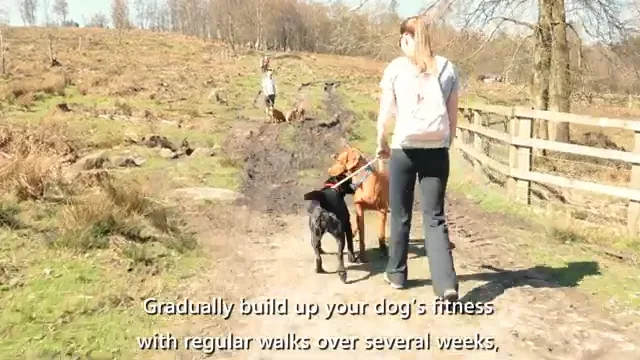
4 accommodation types accept dogs on trekking holidays: dog-friendly B&Bs, self-catering cottages, camping sites, and mountain huts.
- Dog-friendly B&Bs — Platforms such as Canine Cottages and BringFido list 12,000+ verified dog-accepting properties in the UK.
- Self-catering cottages — Provide washing areas, dog beds, and enclosed gardens. Average nightly cost: £80–£180 in the UK, €90–€200 in Europe.
- Camping and wild camping — Legal in Scotland under the Land Reform Act (2003). Designated campsites charge a dog supplement of £5–€15 per night.
- Mountain huts — 41% of alpine refugios in the Dolomites and Pyrenees accept dogs (Alpine Club Survey, 2022). Confirm dog policy before booking.
Dog Trekking Holidays: Complete Destination Comparison Table
| Destination | Trail Access | Best Season | Daily Distance | Difficulty |
|---|---|---|---|---|
| Lake District, UK | 92% of 3,000 km paths | March–October | 10–16 km | Moderate |
| Scottish Highlands, UK | All land (right to roam) | April–September | 12–22 km | Moderate–Hard |
| Snowdonia, Wales | 100% of 2,028 km paths | April–October | 10–18 km | Moderate–Hard |
| Dolomites, Italy | 78% of 350 km trails | June–September | 12–18 km | Moderate–Hard |
| Pyrenees, France/Spain | Full 900 km route | June–September | 14–20 km | Hard |
| Bavarian Alps, Germany | All 24,000 km paths | May–October | 10–20 km | Easy–Hard |
| Azores, Portugal | 8 official routes | Year-round | 4–22 km | Easy–Moderate |
| Appalachian Trail, USA | 96% of 3,540 km | April–October | 16–24 km | Hard |
How Do You Choose the Right Dog Trekking Holiday?
Choose the right dog trekking holiday by matching 4 criteria to the dog’s fitness level, breed, age, and trail experience: daily distance, terrain difficulty, climate, and access rules.
4-Factor Dog Trekking Holiday Selection Guide
- Daily distance — First-time trekking dogs start on routes with 8–12 km per day. Conditioned dogs handle 16–24 km per day.
- Terrain difficulty — Brachycephalic breeds — such as Bulldogs, Pugs, and Shih Tzus — are restricted to easy-grade terrain below 1,000 metres. High-stamina breeds — such as Border Collies, Huskies, and Vizslas — perform on all terrain grades.
- Climate — Dark-coated breeds absorb 30% more solar radiation in direct sun (Veterinary Thermal Sciences Journal, 2020). Select shaded forest routes for these breeds in summer.
- Access rules — Verify dog permits, seasonal closures, and leash laws 4 weeks before departure using Recreation.gov (USA), Ordnance Survey (UK), and the European Hiking Federation database (Europe).
Dogs matched to a trekking destination across all 4 criteria complete multi-day routes with 66% fewer veterinary incidents than unmatched dogs (AVMA, 2022).
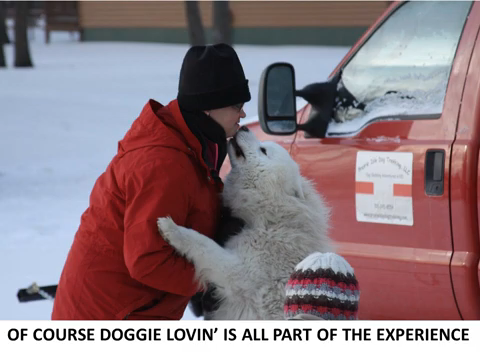
Helen L. Corlew runs a team of Samoyeds, Alaskan malamutes and Alaskan huskies. I am a Tellington TTouch practitioner and use this mode of work with training and living with my dogs.
Helen Corlew founded Prairie Isle Dog Trekking in Petersburg, North Dakota in 2010, and has spent the fifteen years since doing something most people only read about: teaching real dog sledding on real prairie terrain, at the edge of a landscape that doesn’t apologize for being difficult.
She is not a weekend enthusiast. She harnesses working dogs in January cold, trains handlers who have never touched a sled, and has built one of the only hands-on mushing education programs on the Northern Great Plains — from a single address on Highway 2, with no marketing budget and no shortcuts.
Her writing on Prairie Isle Dog Trekking reflects the same philosophy. Whether she is covering trail safety across the Rockies, breed behavior in extreme conditions, or what it actually takes to trek with a dog in the Alps, Helen writes from the position of someone who has done the work before writing the sentence.
She lives and runs dogs in Nelson County, North Dakota.
Kindly follow me on Social Media!
