

Canicross is a cross-country running sport where a human and dog run together connected by a bungee line attached to a waist belt and a dog harness. A beginner canicross team covers 2–5 km (1.2–3.1 miles) per session and builds to competitive 5–10 km (3.1–6.2 miles) race distances over 8–12 weeks of structured training.
What Is Canicross?
Canicross is an off-road running discipline in which a runner is attached to one or more dogs via a bungee towline and a padded waist belt, with the dog running in front and providing forward pull assistance. The sport originated in Europe as an off-season conditioning activity for sled dog teams and has grown into a globally competed discipline with organized events in over 30 countries. For the previous guide in this series, see Dog Trekking Holidays: 8 Best Destinations and 5 Planning Tips for Trail-Ready Dogs.
Canicross differs from standard dog running in 3 ways:
- Fixed attachment system — the dog is connected to the runner via a bungee line, not held by a hand-held leash
- Dog-led running position — the dog runs ahead of the runner at all times, not beside or behind
- Command-based directional control — the dog responds to verbal directional commands including “gee” (right), “haw” (left), and “whoa” (stop)
What Are the Benefits of Canicross for Beginners?
There are 6 proven benefits of canicross for beginners: improved cardiovascular fitness, increased running pace through dog-assisted pull, stronger owner-dog communication, mental stimulation for high-energy breeds, structured outlet for working dog drives, and reduced behavioral issues linked to under-exercise.
A 2019 study published in BMC Veterinary Research found that dogs participating in canicross 3 times per week show 38% lower rates of destructive behavior and anxiety-related symptoms compared to dogs exercised through standard leash walks alone. The forward pull mechanic of canicross engages a dog’s natural opposition reflex, channeling energy into productive movement.
What Dogs Are Best for Canicross?
The best dog breeds for canicross are Siberian Huskies, Alaskan Malamutes, Vizslas, Weimaraners, Border Collies, German Shorthaired Pointers, Belgian Malinois, and Rhodesian Ridgebacks. These breeds combine high aerobic capacity, forward drive, and structural fitness for sustained running on varied terrain.
| Breed | Weight | Ideal Distance | Running Style |
|---|---|---|---|
| Siberian Husky | 35–60 lbs | 10–20 km | Endurance |
| Vizsla | 44–60 lbs | 8–15 km | Endurance and speed |
| Border Collie | 30–55 lbs | 8–12 km | Speed and agility |
| Weimaraner | 55–90 lbs | 10–15 km | Endurance |
| German Shorthaired Pointer | 45–70 lbs | 8–15 km | Speed and endurance |
| Belgian Malinois | 40–80 lbs | 8–12 km | Speed and drive |
Table: Best canicross dog breeds with weight, ideal training distance, and running style.
Dogs must be a minimum of 18 months old before beginning canicross training. Growth plates in most medium and large breeds close between 12–18 months. Running on a towline before skeletal maturity increases the risk of growth plate fractures by up to 40%, according to the American College of Veterinary Sports Medicine and Rehabilitation (ACVSMR).
What Dogs Should Not Do Canicross?
Brachycephalic breeds, dogs under 18 months, dogs over 8 years without veterinary clearance, and dogs with active joint disease should not participate in canicross. These groups cannot sustain the cardiovascular and musculoskeletal demands of towline running.
Breeds excluded from canicross due to respiratory limitations include:
- Bulldogs (English and French)
- Pugs
- Boxers
- Boston Terriers
- Shih Tzus
What Gear Does a Beginner Need for Canicross?
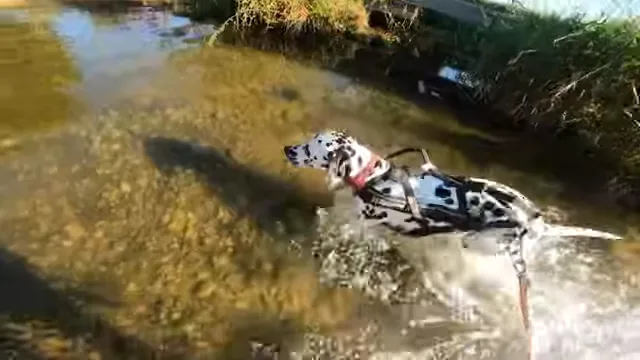
A beginner canicross runner needs 5 essential gear items: a padded canicross waist belt, a bungee towline, a canicross-specific dog harness, a dog water bottle, and trail running shoes with grip soles.
Beginner canicross gear checklist:
- Canicross waist belt — padded, hip-hugging design that distributes dog pull force across the lower back and hips; width minimum 10 cm (4 inches) for back support
- Bungee towline — elastic cord 2–2.5 m (6.5–8.2 ft) in length; absorbs shock from sudden acceleration and reduces spinal impact on the runner by up to 60%
- X-back or Y-front canicross harness — distributes pull load across the dog’s chest and shoulders; avoids tracheal compression caused by collar-based attachment
- Dog water bottle — 20–32 oz capacity; offer water every 15–20 minutes during runs exceeding 30 minutes
- Trail running shoes — minimum 4 mm lug depth for grip on grass, mud, and forest floor surfaces
Avoid using a standard walking harness for canicross. Walking harnesses restrict shoulder movement and reduce forward pull efficiency by 30%–45%. Use only harnesses designed specifically for canicross or sled sports.
What Is the Best Canicross Harness for a Beginner Dog?
The best canicross harness for a beginner dog is an X-back sled harness or a Y-front sport harness that attaches the towline at the base of the tail, not the back or collar. Tail-base attachment aligns the pull vector with the dog’s natural center of gravity, reducing strain on the spine during acceleration.
Recommended beginner canicross harnesses include:
- Non-stop Dogwear Freemotion Harness — Y-front design; suits dogs with broad chests
- Hurtta Active Harness — padded shoulder panels; fits girth 40–90 cm (16–35 inches)
- Ruffwear Flagline Harness — 5-point adjustment; suitable for narrow and wide chest profiles
How Do You Train a Dog for Canicross?
Train a dog for canicross in 4 stages over 8–12 weeks: harness familiarization, forward drive development, directional command training, and progressive distance building.
Follow this 8-step beginner canicross training plan:
- Week 1–2 — Harness introduction: Place the harness on the dog for 10–15 minutes daily indoors. Reward with high-value treats. Do not attach the towline until the dog shows no stress response to the harness.
- Week 2–3 — Forward drive on long line: Attach a 5 m (16 ft) long line to the harness. Walk behind the dog and reward forward pulling movement with verbal praise and treats.
- Week 3–4 — Towline attachment: Connect the bungee towline to the waist belt and harness. Walk at a brisk pace for 1–2 km (0.6–1.2 miles). Allow the dog to lead; do not correct pace.
- Week 4–5 — Introduce running intervals: Alternate 1 minute of running with 2 minutes of walking over a 2 km (1.2 mile) route. Reward consistent forward position.
- Week 5–6 — Introduce “gee” and “haw” commands: Practice directional commands at trail junctions. Use treats placed on the ground in the correct direction to reinforce the command association.
- Week 6–7 — Increase run ratio: Shift to 3 minutes of running per 1 minute of walking. Target 3 km (1.9 miles) per session.
- Week 7–8 — Build to continuous running: Complete a continuous 3–4 km (1.9–2.5 miles) run at a controlled pace. Introduce the “whoa” stop command at natural stopping points.
- Week 9–12 — Progressive distance building: Increase weekly distance by no more than 10% per week. Target 5 km (3.1 miles) as the beginner race distance benchmark.
What Are the Safety Rules for Beginner Canicross?
There are 6 safety rules every beginner canicross team must follow: run on soft terrain during the first 8 weeks, never run a dog in temperatures above 15°C (59°F) at race pace, check all equipment connections before every run, carry water on all runs over 20 minutes, avoid road surfaces, and stop running at the first sign of lameness or breathing distress.
Temperature management is the highest canicross safety priority. Dogs cool exclusively through panting. Running at race pace in temperatures above 15°C (59°F) reduces a dog’s ability to dissipate heat fast enough to prevent hyperthermia. The International Federation of Sleddog Sports (IFSS) caps competitive canicross events at a maximum air temperature of 15°C (59°F) for this reason.
How Do You Warm Up a Dog for Canicross?
Warm up a dog for canicross with 5 minutes of brisk walking before transitioning to running pace. Cold muscle tissue in dogs has 25%–30% lower elasticity than warmed tissue, increasing the risk of muscle tears and tendon strain during sudden acceleration on the towline.
Follow this 3-step canicross warm-up protocol:
- Walk at a brisk pace for 3–5 minutes to elevate core muscle temperature
- Perform 2–3 slow direction changes using “gee” and “haw” commands to activate neuromuscular control
- Begin the first 500 m (0.3 miles) of the run at 60%–70% of target pace before reaching full speed
Canicross Beginner Guide: 8-Point Final Checklist
Canicross is accessible to any runner with a healthy, structurally sound dog over 18 months of age. Apply this 8-point beginner checklist before the first session:
- Obtain veterinary clearance confirming the dog’s joint and cardiovascular fitness
- Confirm the dog is a minimum of 18 months old and growth plates are closed
- Purchase a canicross-specific X-back or Y-front harness; avoid walking harnesses
- Fit the padded waist belt at hip level, not waist level, for correct pull alignment
- Begin all sessions at walking pace before introducing running intervals
- Keep all beginner sessions below 15°C (59°F) air temperature
- Carry a dog water bottle on all runs exceeding 20 minutes
- Increase weekly mileage by no more than 10% per week to prevent overuse injuries
Canicross is one of the fastest-growing dog sports in Europe and North America, with registered membership in the UK’s Canicross governing body (Canicross UK) growing by 62% between 2018 and 2023. Beginners who follow structured training protocols and correct gear selection build competition-ready teams within 12 weeks, while simultaneously improving the physical fitness and behavioral stability of their dogs.
Related guides
- Bikejoring with Dogs: 5 Key Skills, Best Breeds, and a Complete Setup Guide
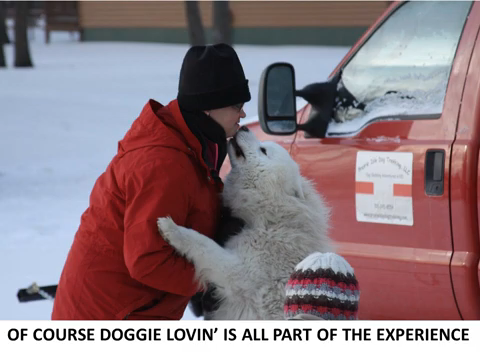
Helen L. Corlew runs a team of Samoyeds, Alaskan malamutes and Alaskan huskies. I am a Tellington TTouch practitioner and use this mode of work with training and living with my dogs.
Helen Corlew founded Prairie Isle Dog Trekking in Petersburg, North Dakota in 2010, and has spent the fifteen years since doing something most people only read about: teaching real dog sledding on real prairie terrain, at the edge of a landscape that doesn’t apologize for being difficult.
She is not a weekend enthusiast. She harnesses working dogs in January cold, trains handlers who have never touched a sled, and has built one of the only hands-on mushing education programs on the Northern Great Plains — from a single address on Highway 2, with no marketing budget and no shortcuts.
Her writing on Prairie Isle Dog Trekking reflects the same philosophy. Whether she is covering trail safety across the Rockies, breed behavior in extreme conditions, or what it actually takes to trek with a dog in the Alps, Helen writes from the position of someone who has done the work before writing the sentence.
She lives and runs dogs in Nelson County, North Dakota.
Kindly follow me on Social Media!
