


Dog trekking in the Alps covers over 1,200 marked trails across 5 countries — France, Switzerland, Italy, Austria, and Germany — with elevation ranges between 800 metres and 3,500 metres and trail conditions that require breed-specific preparation, country-specific regulations, and alpine-grade protective gear. The Alpine Club of Austria confirms that dogs accompany owners on more than 2.3 million alpine trail visits annually, making the Alps the most dog-frequented mountain range in Europe.
Trekking the Alps with a dog differs from standard trail hiking across 6 variables: altitude physiology, cross-border regulation compliance, mountain rescue access, technical terrain, wildlife protection zones, and rapid weather change management. For the previous guide in this series, see Dog-Friendly Hiking Trails by Region: 5 U.S. Regions and 20 Top Routes.
What Is Dog Trekking in the Alps?
Dog trekking in the Alps is a multi-day or single-day hiking activity conducted on alpine trail networks above 800 metres elevation, where a dog accompanies its owner across mountain terrain shared with protected wildlife, other trekkers, and livestock. Examples of popular alpine dog trekking routes include the Tour du Mont Blanc, the Salzburg Alpine Trail, the Via Alpina, and the Alta Via 1 in the Dolomites.
Alpine dog trekking falls into 3 difficulty categories:
- Valley and foothill trails — Elevation 800 to 1,500 metres; suitable for conditioned dogs of most breeds
- Mid-alpine trails — Elevation 1,500 to 2,500 metres; requires breed stamina assessment and altitude acclimatisation
- High alpine routes — Elevation above 2,500 metres; restricted to high-stamina breeds with full alpine gear and veterinary clearance
What Are the Dog Regulations for Trekking the Alps by Country?
Dog regulations for alpine trekking vary across all 5 Alpine countries and cover leash requirements, protected zone access, mountain hut admission, and mandatory documentation.
Here are the regulations by country:
|
Country |
Leash Requirement |
Protected Zone Access |
Mountain Hut Dog Policy |
Mandatory Documents |
|---|---|---|---|---|
|
Switzerland |
Mandatory on marked trails |
Prohibited in national park zones |
Hut-dependent; confirm in advance |
Rabies vaccination certificate |
|
France |
Mandatory in national parks |
Prohibited April–June in wildlife zones |
Majority prohibit dogs indoors |
EU pet passport |
|
Italy |
Mandatory on all marked trails |
Prohibited in Parco Nazionale Gran Paradiso |
Permitted in rifugios with prior booking |
EU pet passport |
|
Austria |
Mandatory in nature reserves |
Prohibited in designated bird nesting zones |
Majority of huts permit dogs |
Rabies vaccination certificate |
|
Germany |
Mandatory in Berchtesgaden NP |
Prohibited May–July in ground-nesting zones |
Permitted in most alpine huts |
Rabies vaccination certificate |
What Documents Does a Dog Need for Alpine Trekking Across Borders?
A dog crossing alpine country borders requires 3 documents: an EU pet passport, a valid rabies vaccination certificate issued at least 21 days before travel, and a microchip registered to the owner’s current address.
Non-EU countries including Switzerland require the same documentation under bilateral veterinary agreements. Dogs without valid rabies certification are refused entry at border crossings and removed from trail access in national park zones.
Which Breeds Are Best for Alpine Dog Trekking?
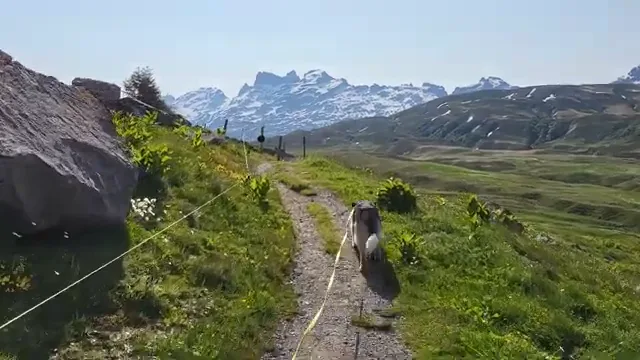

High-stamina, double-coated, medium-to-large breeds with compact paws and cold-weather tolerance are best suited for alpine trekking above 1,500 metres.
Here are 8 breeds suited to alpine conditions with their performance specifications:
|
Breed |
Altitude Tolerance |
Cold Tolerance |
Daily Distance Range |
Terrain Suitability |
|---|---|---|---|---|
|
Bernese Mountain Dog |
High |
High |
15–22 km |
Alpine origin; all mountain terrain |
|
Greater Swiss Mountain Dog |
High |
High |
14–20 km |
Rocky and mixed alpine terrain |
|
Siberian Husky |
Very High |
Very High |
25–35 km |
Snow, ice, and high-elevation routes |
|
Border Collie |
High |
Moderate–High |
22–30 km |
Technical and mixed alpine terrain |
|
German Shepherd |
High |
Moderate–High |
18–25 km |
All alpine terrain types |
|
Labrador Retriever |
Moderate–High |
Moderate |
15–22 km |
Valley and mid-alpine trails |
|
Australian Shepherd |
High |
Moderate |
18–26 km |
Mixed terrain; moderate altitude |
|
Entlebucher Mountain Dog |
High |
High |
16–22 km |
Alpine origin; rocky terrain |
Which Breeds Are Not Suited for Alpine Dog Trekking?
3 breed categories are not suitable for high-alpine trekking:
- Brachycephalic breeds — Examples include Bulldogs, Pugs, and French Bulldogs. Reduced oxygen exchange at altitude compounds existing airway restriction, increasing respiratory failure risk above 1,500 metres.
- Toy and miniature breeds — Examples include Chihuahuas, Toy Poodles, and Miniature Dachshunds. Rapid heat loss on exposed alpine ridgelines and insufficient leg length for technical terrain limit safe altitude to below 1,000 metres.
- Short-coated, low-body-fat breeds — Examples include Greyhounds, Whippets, and Vizslas. Alpine temperature drops of 6.5°C per 1,000 metres of elevation gain exceed the thermoregulatory capacity of these breeds without full coat coverage.
How Does Altitude Affect Dogs on Alpine Treks?
Altitude reduces available oxygen by 3% for every 300 metres of elevation gain above sea level, measurably reducing a dog’s aerobic performance and increasing dehydration rate at elevations above 2,000 metres.
Dogs show 4 altitude-related responses on alpine trails:
- Increased respiratory rate — Dogs breathe 20 to 35% faster above 2,500 metres to compensate for reduced oxygen partial pressure
- Elevated water loss — Faster breathing increases respiratory moisture loss by 30 to 40% compared to sea-level hiking
- Reduced stamina — Aerobic output capacity drops by 15 to 25% at 2,500 metres compared to equivalent effort at 800 metres
- Appetite suppression — Dogs consume 10 to 20% less food at high altitude due to altitude-induced appetite changes
What Is the Safe Altitude Limit for Dog Trekking in the Alps?
The safe altitude limit for most dog breeds on alpine trails is 3,000 metres. Above this elevation, oxygen availability drops below the threshold required for sustained safe aerobic activity in non-acclimatised dogs. High-stamina double-coated breeds including Siberian Huskies and Bernese Mountain Dogs tolerate elevations up to 3,500 metres with gradual acclimatisation over 3 to 5 days.
Acclimatise dogs by ascending no more than 300 metres per day above 2,000 metres. Allow a full rest day for every 600 metres of altitude gained above this threshold.
What Gear Does a Dog Need for Alpine Trekking?
A dog trekking the Alps requires 8 gear items matched to alpine conditions: a fitted harness, rubber-soled boots, an insulated waterproof coat, a GPS tracker with offline mapping, a collapsible hydration system, a dog backpack, a compact first aid kit, and a reflective safety vest.
Here is the alpine-specific gear list with weight targets:
|
Gear Item |
Alpine Function |
Weight Target |
|---|---|---|
|
Fitted back-clip harness |
Trail control on technical terrain |
100–150g, air mesh |
|
Alpine rubber-soled boots |
Rock, ice, and scree paw protection |
50–80g per boot |
|
Insulated waterproof coat |
Protects against alpine temperature drops and wind chill |
150–250g, ripstop shell |
|
GPS tracker with offline maps |
Tracks location in areas without cellular coverage |
35–95g, IPX7 rated |
|
Insulated collapsible bowl |
Prevents water freezing at high altitude |
30–60g, silicone |
|
Dog backpack |
Carries dog’s own food and supplies |
200–400g, 210D nylon |
|
Compact first aid kit |
Treats altitude and terrain injuries |
100–180g |
|
Reflective safety vest |
Visibility during low-cloud and foggy alpine conditions |
60–100g |
What Are the 5 Main Safety Risks of Dog Trekking in the Alps?
Alpine dog trekking presents 5 safety risks not present on standard trails: rapid weather change, livestock guardian dog encounters, altitude sickness, technical terrain falls, and mountain rescue limitations.
Here is a breakdown of each risk with management protocols:
|
Risk |
Alpine Trigger |
Management Protocol |
|---|---|---|
|
Rapid weather change |
Alpine storms develop in under 20 minutes |
Check MeteoSwiss or mountain forecasts every 3 hours; carry full rain gear |
|
Livestock guardian dog encounters |
Dogs protect sheep flocks on alpine pastures |
Leash immediately; circle wide around flocks; do not run |
|
Altitude sickness |
Elevations above 2,500 metres in non-acclimatised dogs |
Ascend maximum 300 m per day; rest one full day per 600 m gained |
|
Technical terrain falls |
Scree, wet rock, and narrow ridgeline paths |
Fit boots; use a short leash on exposed sections; use a harness handle |
|
Mountain rescue limitations |
Helicopter rescue does not include dogs in most Alpine regions |
Carry an emergency bivouac; register trail plan with local rescue coordination |
How Do You Handle a Livestock Guardian Dog Encounter on Alpine Trails?
A livestock guardian dog encounter on an alpine trail requires 4 immediate actions to prevent conflict.
The 4 actions are:
- Stop moving and leash the dog immediately at 30 cm from the collar
- Identify the flock location and plan a wide arc route of at least 50 metres around the perimeter
- Speak in a calm, low voice to signal non-aggression to the guardian dogs
- Move slowly and continuously without turning back; retreating triggers pursuit behavior in guardian breeds
Livestock guardian breeds common on Alpine pastures include the Maremma Sheepdog, Pyrenean Mountain Dog, and Kangal. These dogs patrol flock perimeters and respond to perceived threats from unfamiliar dogs with sustained aggression.
What Are the Best Alpine Dog Trekking Routes in the Alps?
The 5 best alpine dog trekking routes allow dogs on leash, provide accessible water sources, and avoid protected wildlife exclusion zones across their primary sections.
The 5 routes are:
- Salzburg Alpine Trail, Austria — 350 km across the Salzburg Alps; dog-friendly mountain huts on the majority of stages; elevation 600 to 2,600 metres
- Alta Via 1, Dolomites, Italy — 120 km through the eastern Dolomites; rifugios permit dogs with advance booking; dramatic rocky terrain suited to agile breeds
- Via Alpina Green Route, Switzerland — 390 km from Vaduz to Montreux; crosses 5 cantons with consistent leash requirements; mid-alpine elevation profile
- Haute Route, France-Switzerland — 180 km Chamonix to Zermatt; high-alpine route above 2,000 metres; suited to conditioned large breeds only; confirm hut dog policy per stage
- Zugspitze Approach Trails, Germany — Day hiking network below 2,960 metres; dogs permitted on approach trails; restricted above the summit zone
How Do You Plan a Multi-Day Alpine Dog Trek?
Multi-day alpine dog trekking requires planning across 6 areas: route selection, hut reservation with dog confirmation, daily distance calculation, food and water portioning, veterinary documentation, and emergency exit mapping.
Follow this 6-step planning process:
- Select a dog-permitted route — Confirm dog access on every stage; some routes restrict dogs on specific sections seasonally
- Reserve mountain huts with dog confirmation — Contact each hut directly; email confirmation of dog permission is standard practice in Switzerland and Austria
- Calculate daily distance — Apply a 30% reduction to warm-season distance capacity for alpine terrain; add 1 km equivalent per 300 metres of cumulative elevation gain
- Portion food for altitude — Increase daily food by 25 to 50% on alpine stages; high-altitude metabolism and cold exposure increase caloric demand
- Carry current veterinary documents — EU pet passport and rabies certificate required at all cross-border trail sections
- Map emergency exit routes — Identify the nearest valley descent and road access point for every trail stage before departure
Summary
Dog trekking in the Alps requires regulatory compliance across 5 countries, breed assessment against altitude and cold-weather thresholds, 8 alpine-specific gear items, and safety protocols for 5 mountain-specific risks including livestock guardian encounters and rapid weather events. The 5 best dog-friendly alpine routes provide structured access to the Alps’ most rewarding terrain for prepared dogs and owners who complete veterinary clearance, altitude acclimatisation planning, and mountain hut confirmation before departure.

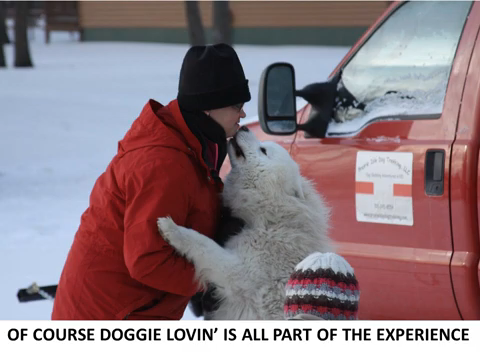
Helen L. Corlew runs a team of Samoyeds, Alaskan malamutes and Alaskan huskies. I am a Tellington TTouch practitioner and use this mode of work with training and living with my dogs.
Helen Corlew founded Prairie Isle Dog Trekking in Petersburg, North Dakota in 2010, and has spent the fifteen years since doing something most people only read about: teaching real dog sledding on real prairie terrain, at the edge of a landscape that doesn’t apologize for being difficult.
She is not a weekend enthusiast. She harnesses working dogs in January cold, trains handlers who have never touched a sled, and has built one of the only hands-on mushing education programs on the Northern Great Plains — from a single address on Highway 2, with no marketing budget and no shortcuts.
Her writing on Prairie Isle Dog Trekking reflects the same philosophy. Whether she is covering trail safety across the Rockies, breed behavior in extreme conditions, or what it actually takes to trek with a dog in the Alps, Helen writes from the position of someone who has done the work before writing the sentence.
She lives and runs dogs in Nelson County, North Dakota.
Kindly follow me on Social Media!


