

The Year the Industry Started Watching Itself
I had a handler here in February who arrived with a GPS tracking collar, a heart rate monitor, and a spreadsheet template for logging daily training load. She had never correctly fitted a harness in her life. The collar data was excellent. The dog was developing a pressure sore behind the left shoulder that she had not noticed for six days.
This is 2026 in the working dog world. The technology is ahead of the knowledge. The accountability conversation is real and necessary and missing about half of what actually matters.
The Mat-Su kennel deaths in April moved something in this community that previous incidents had not. Twenty-five dogs dead after months of ignored warnings is not a fringe failure. It is the result of a system that had no functional mechanism for acting on credible information from people who knew what they were seeing.
The Finnish Lapland investigations added a second data point that the industry cannot dismiss as an Alaskan outlier. Welfare failures in commercial sled dog operations are not regional problems. They are structural ones, and the structure has not changed enough yet.
I have been running dogs on the Northern Great Plains for long enough to remember when accountability meant your reputation in the community where you worked. That system functioned when the community was small, interconnected, and willing to enforce its own standards informally. None of those conditions reliably hold now.
The generational shift happening in mushing and working dog sport is real. Younger handlers are bringing higher welfare expectations and lower tolerance for the old culture of silence. That is genuinely good. It is also creating a tension with experienced practitioners who hold knowledge that has not been adequately documented or transferred.
I watch this tension play out in online forums regularly. A newcomer asks a legitimate welfare question and receives either genuine help or defensive dismissal depending entirely on who sees it first. Neither response constitutes a system. Both are just individuals doing what individuals do.
The new monitoring technology is genuinely useful when it is in the hands of someone who knows what to do with the data. A GPS track showing a dog slowing on the back half of a run is meaningful information. It is only meaningful, however, if the handler knows to check the dog’s feet, shoulders, and hip flexors before attributing the slowdown to motivation or temperature.

I use TTouch before and after every serious training session and before any public contact. That is not a technology solution. It is a tactile, systematic read of a dog’s physical and nervous system state. No collar currently manufactured can tell me what I learn in four minutes of structured body contact with a dog I know well.
The accountability shift being described across working dog publications in 2026 is largely about external mechanisms. Inspection requirements, reporting systems, technology-based monitoring, welfare audit frameworks. All of those things are necessary. None of them substitute for handler competence.
Here is what the industry conversation is not saying clearly enough. The welfare failures that generated public pressure and regulatory response were not primarily technology failures. They were knowledge and culture failures. People in positions of authority over working dogs did not know how to read the animals in their care, or they knew and did not act.
A mandatory GPS collar on every dog in a commercial kennel would not have saved the Mat-Su dogs. People were calling animal control for months. The information was available. The competence and authority to act on it were not present.
The accountability shift matters most where it changes what individual handlers do with individual dogs on ordinary training days. It matters least as a set of reporting requirements that operators learn to satisfy on paper while continuing to operate as before. Both versions are currently being built simultaneously.
I am not dismissing the structural changes happening in 2026. Elevated welfare expectations are shifting what the community considers acceptable, and that shift has teeth that earlier welfare conversations did not. The generational change is real and the public pressure is real and together they are producing something that looks like genuine movement.
But movement toward accountability is not the same as accountability. The distance between those two things is still measured in what happens inside a kennel at five in the morning in minus twenty when nobody is watching.
The question 2026 has not answered yet is who is responsible for the dog when the monitoring app is off and the inspector has not visited and the only accountability in the yard is the handler’s own knowledge and honesty.
That accountability has always been the one that mattered most. It is still not the one receiving the most attention.
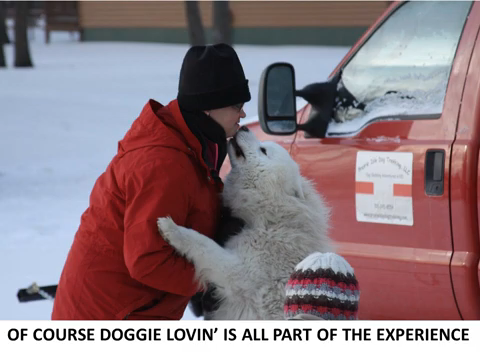
Helen L. Corlew runs a team of Samoyeds, Alaskan malamutes and Alaskan huskies. I am a Tellington TTouch practitioner and use this mode of work with training and living with my dogs.
Helen Corlew founded Prairie Isle Dog Trekking in Petersburg, North Dakota in 2010, and has spent the fifteen years since doing something most people only read about: teaching real dog sledding on real prairie terrain, at the edge of a landscape that doesn’t apologize for being difficult.
She is not a weekend enthusiast. She harnesses working dogs in January cold, trains handlers who have never touched a sled, and has built one of the only hands-on mushing education programs on the Northern Great Plains — from a single address on Highway 2, with no marketing budget and no shortcuts.
Her writing on Prairie Isle Dog Trekking reflects the same philosophy. Whether she is covering trail safety across the Rockies, breed behavior in extreme conditions, or what it actually takes to trek with a dog in the Alps, Helen writes from the position of someone who has done the work before writing the sentence.
She lives and runs dogs in Nelson County, North Dakota.
Kindly follow me on Social Media!
